
Congolese city turns its plastic problem into profit

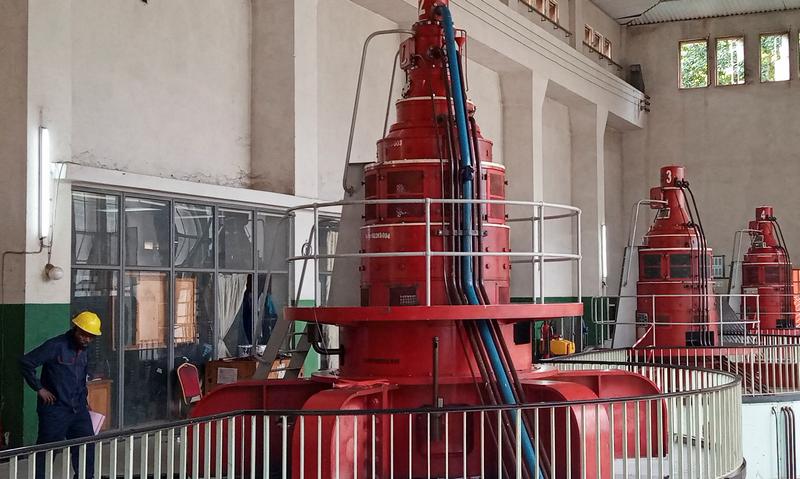
BUKAVU, Democratic Republic of Congo (Reuters) – In Bukavu, eastern Democratic Republic of Congo, the thousands of plastic bottles thrown into the Ruzizi River routinely clog the hydropower station’s turbines, shutting it down for months at a time and plunging the city into darkness.
But for Elie Mapenzi Matabaro, the city’s plastic problem is an asset, allowing him to both make money and create jobs for young people.
Seven years ago, his company, FDA Group, started transforming the bottles and other city waste into cheap, hard-wearing paving slabs that grace driveways and forecourts across the city.
“There was no system for protection of the environment. We started our business to help resolve the waste problem,” Mapenzi said.
The city’s mayor, Meschac Bilubi Ulengabo, said Bukavu has no proper dump for its 1.6 million residents, a situation which is far from unique in Africa.
The United Nations Environment Program estimates that 70%–80% of the municipal solid waste generated across the continent is recyclable, yet only 4% is recycled.
Every day, Mapenzi’s trash collectors deposit mountains of plastic at the factory, where it is melted down and scraped into hexagonal metal moulds.
Once the plastic has cooled, it is tapped out, piled high and sold to customers.
“The advantage of these cobblestones is that they are less expensive compared to cement cobblestones,” said Obedi Erodia, who has paved his driveway in red and black tessellating blocks.
Erodia likes the plastic paving because it is easy to clean and helps fight environmental pollution in his province, he said.
At the hydropower station, men with scuba gear dive to clear the turbine inlets of trash, while others in boats gather the waste floating on the surface.
A trash blockage has jammed one of the turbines for the last two and a half months, leading to interruptions in power supplies across the city, said Lievin Chizungu from the National Society of Electricity, which runs the plant.
“Unfortunately, there are no dumps and people throw their waste in the gutters and it just comes washed up here at the dam,” Chizungu said.
Mapenzi has struck a deal with the plant operator to take away the plastics.
“It is business that helps us to turn an environmental problem to an economic resource,” he said.
This story was first published by Antigua News on : antigua.news/2022/04/07/congolese-city-turns-its-plastic-problem-into-profit. © 2022 Antigua News. Republication without permission is not allowed.

About the author
The Editorial Staff refers to all reporters employed by Antigua.news. When an article is not an original creation of Antigua.news—such as when it is based on a press release, other media articles, letters to the editor, or court decisions—one of our staff members is responsible for overseeing its publication.
Read our editorial standards and corrections policy. Spotted an error? Contact the newsroom.
More from Business and Finance
View section
Liechtenstein register hack exposes the privacy risks of financial transparency
Data concerning 31,000 legal entities were stolen from the principality’s beneficial ownership register. As access moves to an identity-checked service in Vaduz, the unresolved question is whether stronger entry controls can protect the people behind the records.
By Dario Item

How much is Hormuz really adding to Caribbean fuel prices?
The disruption is raising the cost of gasoline and diesel far beyond the Gulf. But refinery shortages, shipping costs and changes to subsidies must be separated to establish what motorists are paying for.
By Dario Item

From Potters to Dallas: Antiguan and Barbudan Ryancia Henry Rises to Top Luxury Hotel Management Role
By Shermain Bique-Charles

Twenty-Three Days to Close a EUR2bn Case Built on Hundreds of Pages: The Novo Banco Judgment That Should Shock Europe’s Bond Market
By Dario Item
Comments
Be the first to comment.