
WHO says Covid-19 is no longer a global health emergency

SOURCE: CNN
Covid-19 is no longer a global health emergency, the World Health Organization said on Friday.
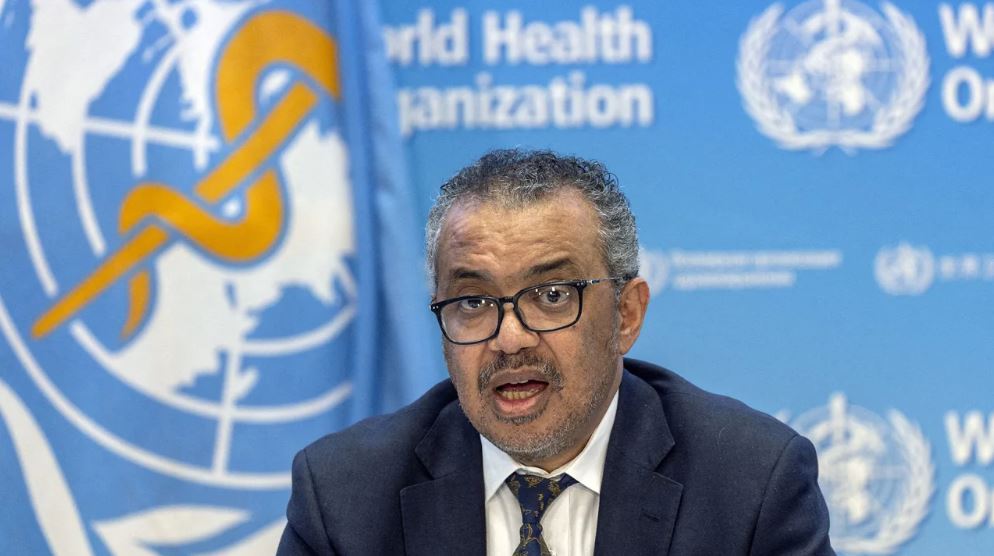
WHO’s International Health Regulations Emergency Committee discussed the pandemic on Thursday at its 15th meeting on Covid-19, and WHO Director-General Tedros Adhanom Ghebreyesus concurred that the public health emergency of international concern, or PHEIC, declaration should end.
“For more than a year the pandemic has been on a downward trend,” Tedros said at a news conference Friday.
“This trend has allowed most countries to return to life as we knew it before Covid-19,” Tedros said. “Yesterday, the emergency committee met for the 15th time and recommended to me that I declare an end to the public health emergency of international concern. I have accepted that advice.”
The organization declared the coronavirus outbreak to be a public health emergency of international concern in January 2020, about six weeks before characterizing it as a pandemic.
A PHEIC creates an agreement between countries to abide by WHO’s recommendations for managing the emergency. Each country, in turn, declares its own public health emergency – declarations that carry legal weight. Countries use them to marshal resources and waive rules in order to ease a crisis.
The United States is set to let its Covid-19 public health emergency end on May 11.
Covid-19 continues to spread, the virus is evolving and remains a global health threat, but at a lower level of concern, according to WHO officials.
“There’s still a public health threat out there, and we all see that every day in terms of the evolution of this virus, in terms of its global presence, its continued evolution and continued vulnerabilities in our communities, both societal vulnerabilities, age vulnerabilities, protection vulnerabilities, and many other things,” said Dr. Mike Ryan, executive director of WHO’s Health Emergencies Programme.
“So, we fully expect that this virus will continue to transmit, but this is the history of pandemics,” Ryan said. “In most cases, pandemics truly end when the next pandemic begins. I know that’s a terrible thought but that is the history of pandemics.”
Dr. Maria Van Kerkhove, WHO’s Covid-19 technical lead and head of its program on emerging disease, said that the emergency phase of the Covid-19 crisis is over but the disease is “here to stay” and the coronavirus that causes the disease is not going away any time soon.
“While we’re not in the crisis mode, we can’t let our guard down,” Van Kerkhove said. “Epidemiologically, this virus will continue to cause waves. What we are hopeful of is that we have the tools in place to ensure that the future waves do not result in more severe disease, don’t result in waves of death and we can do that with the tools we have at hand. We just need to make sure that we are tracking the virus because it will continue to evolve.”
There have been more than 765 million confirmed Covid-19 cases since the start of the pandemic, according to WHO data. Nearly 7 million people have died. Europe has had the most confirmed cases overall, but the Americas have reported the most deaths. About 1 in 6 total deaths have been in the US.
Cases peaked in December 2022 as Omicron swept the globe, hitting the Western Pacific particularly hard. But billions of vaccine doses have been administered globally, and deaths have remained far below previous peaks.
Now, Covid-19 cases and deaths are about the lowest they’ve been in three years. Still, more than 3,500 people died in the last week of April and billions remain unvaccinated.
Tedros said that, if needed, he would not hesitate to convene another emergency committee meeting and declare a global health emergency again if there is a significant rise in Covid-19 cases or deaths in the future.
“Covid-19 has left and continues to leave deep scars on our world. Those scars must serve as a permanent reminder of the potential for new viruses to emerge with devastating consequences,” Tedros said.
“One of the greatest tragedies of Covid-19 is that it didn’t have to be this way. We have the tools and technologies to prepare for pandemics better, detect them earlier, respond to them faster, and communicate their impact. But globally, a lack of coordination, a lack of equity, and lack of solidarity meant that those tools were not used as effectively as they could have been,” Tedros said. “We must promise ourselves and our children and grandchildren that we will never make those mistakes again.”
This story was first published by Antigua News on : antigua.news/2023/05/05/who-says-covid-19-is-no-longer-a-global-health-emergency. © 2023 Antigua News. Republication without permission is not allowed.

About the author
The Editorial Staff refers to all reporters employed by Antigua.news. When an article is not an original creation of Antigua.news—such as when it is based on a press release, other media articles, letters to the editor, or court decisions—one of our staff members is responsible for overseeing its publication.
Read our editorial standards and corrections policy. Spotted an error? Contact the newsroom.
More from World
View section
Kenyan Preacher Paul Mackenzie Convicted of Murdering 191 People in Shakahola Massacre
Former church leader found guilty alongside 28 others in a case involving the deaths of 190 children and one adult who were allegedly subjected to deadly religious fasting.
By Cory Wayland

Priest Speaks About Life and Death in Final Sermon Before Falling Crucifix Kills Him During Mass
Father Patricio Sánchez urged worshippers to cherish their time with God and loved ones before a large wooden crucifix fell and fatally struck him during a church service in Ecuador.
By Cory Wayland

Florida Attorney General James Uthmeier Announces Arrest Warrant for Former Cuban Leader Raúl Castro Over 1996 Aircraft Shootdown
James Uthmeier confirms murder conspiracy charge against the 95-year-old former president over the 1996 shootdown of two civilian aircraft that killed four men.
By Cory Wayland

France and Italy Count the Cost as Protests Turn Violent Across Europe
Burned public buildings and looted shops have overshadowed demands for better schools and relief from living costs, as unrest takes different forms across Europe.
By Editorial Staff
Comments
Be the first to comment.