


















by Mick the Ram
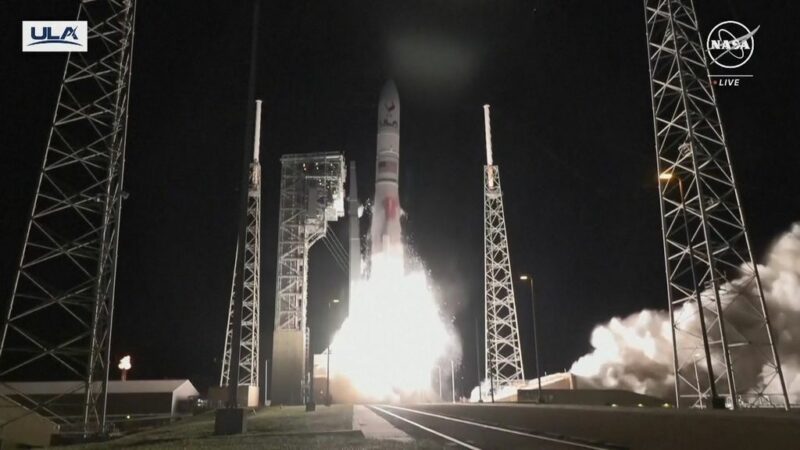
The private company behind the US spacecraft that was spectacularly launched from Cape Canaveral in Florida on 8 January, aiming to perform a controlled landing on the Moon, has announced that a successful touch-down on the lunar surface is no longer going to be possible.
Pittsburgh-based Astrobotic’s robotic lander, named Peregrine, was sent on its way by a brand new rocket called Vulcan, with the intention of studying the surface environment, with a view to manned missions later in the decade.
The take off was declared as flawless and all seemed well when the craft ejected and began its pathway towards the Moon. However, problems were identified soon afterwards when engineers diagnosed a major leak in the propulsion system, that was having the effect of pushing Peregrine out of alignment.
This would quickly have the knock-on effect of disabling the lander from maintaining the aim of its solar panels directly into the sun, to keep up its necessary charge. It will rapidly lose its power and the mission will come to an abrupt end.
Not since the last Apollo mission in 1972 has there been any US effort to place a spacecraft softly on the Moon’s surface and this launch signalled the first of several that NASA have lined up, having joined forces with three different US companies, with the intention of sending a lander to the target in the coming months.
Firefly will launch later this year, but it is Intuitive Machines based out of Houston who will be the next to try in the middle of next month, so will look to learn from any issues experienced by Astrobotic.
Fuel running out rapidly with only one outcome
The 1.2-tonne Peregrine lander was intended to land on the Moon’s northern hemisphere in late February, but it now seems its days in space are numbered. In order to continue on the correct orientation in flight, its thrusters have had to work well beyond their expected service life cycles, consuming vast quantities of a diminishing fuel supply.
With no further sunlight being collected, reserves of power will soon be exhausted and then the craft will enter into an uncontrollable tumble.
Cashing in on the payloads
Onboard are 20 payloads for customers, including five science payloads operated by NASA under its Commercial Lunar Payload Services (CLPS) program. In space terms, a payload refers to elements of a spacecraft specifically dedicated to producing mission data and relaying it back to earth for analysis.
Odd combinations make up the “passenger” list
Mexico’s space agency has five miniature autonomous rovers onboard, which were set to undertake the country’s first Moon mission.
Other payloads include: a piece of Mount Everest, some human remains and DNA, a miniaturized library, photos, drawings, plaques, and numerous audio recordings from people around the world.
Now the landing is no longer achievable it is unclear what will become of the payloads.

Exciting times ahead
The partnership that private companies have reached with NASA is very exciting, despite the disappointment of this first attempt by Astrobotic. The firms development teams have designed the spacecrafts and are essentially in command of each mission as they progress, hence the additional payload spaces that were purchased for this attempt.
Creating success
Fundamentally, NASA are the customer for the three commercial partners and this will help to reduce costs in the delivery of scientific instrumentation, and general supplies, moving forward.
It also allows a lot of creative thinking to come together, to accelerate the technical know-how required to enable a lasting presence on the Moon.
The agency were prepared for some of the missions not to work, believing that a fleet of missions will increase the chances of success.



0 Comments