

















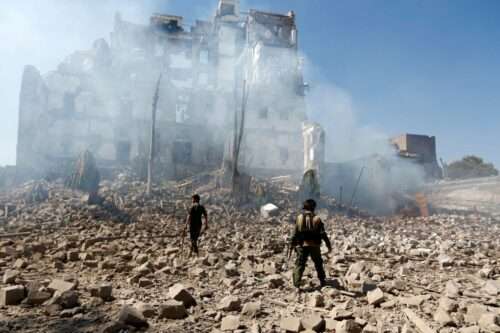
US and UK carry out air strikes on rebel sites in Yemen killing at least 5 people
After repeated attacks by Houthi rebels on commercial ships seeking to navigate a narrow passage through the Red Sea, and numerous warnings from the US and UK for this to stop, the two powerful western allies took the next step overnight Friday (12 January) and launched missile strikes on specific targets within Yemen.
Acting on reliable intelligence, the US says it “executed deliberate strikes on over 60 targets, at 16 Iranian-backed Houthi militant locations.”
The Pentagon confirmed that the strikes were on military, not civilian targets using “precision weapons” and large explosions were reported in the capital Sanaa, which is under the control of the rebels, together with the Houthi Red Sea port of Hodeidah, Dhamar and the group’s northern stronghold of Saada.
Meanwhile the UK concentrated on drone and missile operational sites in the north-west of the country.
A Houthi spokesperson said five of its members had been killed and six others injured. Their deputy foreign minister Hussein al-Izzi, speaking later on Yemeni TV, chillingly stated: “The US and UK will pay a heavy price for this blatant aggression”.
The foreign minister of Iran – who are strongly suspected of supplying the Houthi rebels with weapons – condemned the strikes as a “clear violation of Yemen’s sovereignty and territorial integrity” as well as a violation of international laws.
Strategic targets identified
After weeks of threats, it was probably inevitable that the US and UK would act sooner rather than later. They described their targets as radar systems, drone and missile storage and launch sites, logistical hubs, arms depots, air defence systems and Houthi command positions.
UK launch from Cyprus
The missiles were land attack cruise Tomahawk’s, launched from US Navy warships programmed to fly evasively. Meanwhile, the UK confirmed they sent four RAF Typhoons from their base at Akrotiri on Cyprus, carrying Paveway IV 500 lbs, guided bombs.
The round trip of several thousand miles required refuelling from an RAF Voyager tanker, which accompanied them. They do have their own Royal Navy warships in the Red Sea, but neither the air defence destroyer HMS Diamond, or the frigate HMS Lancaster, can fire land attack missiles.
No escalation is wish but…
The message coming out of the Pentagon however is they do not want this action to be a trigger for the widening of the conflict in the Middle East, indicating that any future US-led military action would be limited and most likely just more of the same, strategically identifying targets from a safe distance.

Ominous reaction from Houthi leader
They also will not be foolish enough to believe these actions will eliminate the Houthis threat, and if they did they were left in no doubt by the rebels immediate reaction.
The group’s leader Mohammed al-Bukhaiti said the US and UK would “soon realise this action was the greatest folly in their history.”
Undeterred group promise attacks will continue
Another of their spokespeople said that the west were wrong to think they could deter Yemen’s support for Palestinians, or in any way alter their position regarding Red Sea attacks, which they insist are carried out to prevent ships affiliated with Israel from crossing the route.
Could be just the start
Houthi attacks on shipping in the region increased 500% in the final two months of 2023, forcing major companies to divert away and find an alternative route, due to the inevitable rise in insurance cover.
The rebels can also claim to have overcome far worse attacks, having survived years of being targeted by the Saudi Air Force.



0 Comments