


















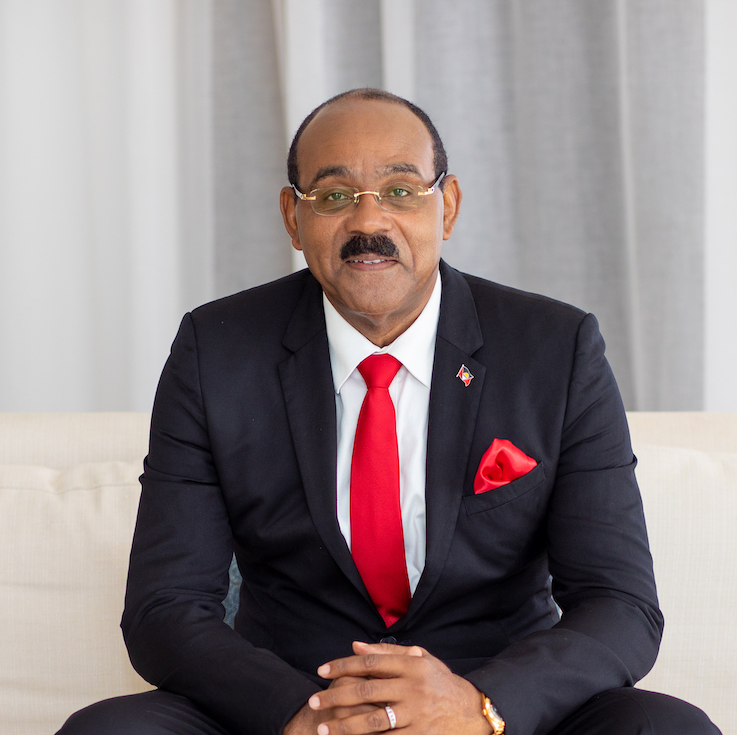
Prime Minister Gaston Browne has spoken about the government’s policy on dividend distribution, clarifying that it only applies to profitable government-owned trading entities that conduct business transactions with private individuals and entities.
The Cabinet made a decision on December 13, 2023, according to which statutory corporations and government-owned companies must remit at least 50% of their dividends on profit or surplus to the Consolidated Fund, effective January 1, 2024.
The United Progressive Party, the opposition, criticized this decision, urging the government not to interfere with the people’s money.
The prime minister, however, explained that this policy does not affect essential public services such as Social Security, Medical Benefits, and Education Levy, which require uninterrupted funding for their stability.
The Antigua Public Utilities Authority (APUA), Antigua and Barbuda Airports Authority (ABAA), Antigua Public Authority (APA), State Insurance Corporation (SIC), Antigua and Barbuda Air and Sea Ports Authority (ADOMS), and the Transport Board are among the government-owned entities covered by this policy.
If these entities provide services to the government, such as utility and insurance services, any dividends owed to the government will be offset against amounts owed by the government.
The prime minister intends to establish a balanced financial relationship between the government and these essential service providers with this policy.

He stated that the 50% dividend owed to the government would be calculated based on these entities’ profits or surplus cash flow after they meet their debt servicing and other financial obligations.
This approach ensures that the government gets a fair share of the profits while allowing the trading entities to sustain their operations and contribute to economic growth. The remaining profits or surplus will be retained by the entity, which will strengthen its financial position and promote long-term stability.
Finally, the government believes that this strategy acknowledges the need for these trading entities to reinvest in their operations, infrastructure, and future growth initiatives.
Nonetheless, the UPP asks why profits must be diverted if the country is in such a financially stable state and is considered an economic powerhouse by the Browne Administration.



I really hate that fcking prime minister. Chupzzz
This prime minister is a big-time crook. He can never change, once a crook always a crook.