











Eiffel Tower made of matchsticks enters Guinness World Records after U-turn
A French council worker who painstakingly built a giant model of the Eiffel Tower out of matchsticks has received news that his work DOES qualify him for a place in the Guinness World Records (GWR), just 24 hours after the global authority on record-breaking told him it was not valid because he had used… the wrong type of matches.
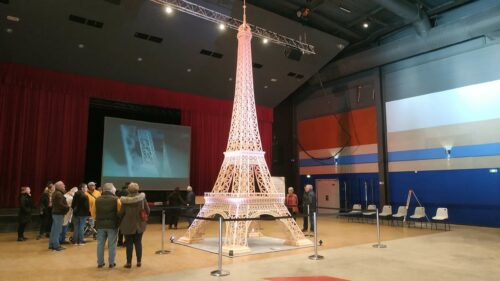
Richard Plaud had spent eight years patiently creating a replica of the famous Paris landmark, aiming to claim the world record for “tallest matchstick building”.
The 47-year-old was over the moon when the project was completed on the 27 December 2023, exactly 100 years to the day since the death of the spectacular structure’s engineer, Gustav Eiffel.
The tower measures 7.19m (23ft) and consists of 706,900 matches and 23kg of glue, but Mr Plaud was heartbroken when officials from GWR initially disqualified his work on the grounds that he had used non-commercially available matches.
However, on reflection the organisation accepted that they had been too harsh and sent their congratulations and confirmation that his model had indeed broken the record.
Mr Plaud, who described the 48 hours as an “emotional roller-coaster” now hopes to put his magnificent creation on display in Paris for when the Olympic Games come to the city in July 2024.
The previous world record was held by Toufic Daher from Lebanon, who built a 6.53m (21ft) Eiffel Tower back in 2009.
Deal struck with manufacturer
Mr Plaud, who is from Montpellier-de-Médillan in western France, works in the artworks and bridges division of the Charent-Maritime council department, and has always had a love for model building, long harbouring a dream of owning a world record.
He began his marathon build back in 2015, with the intention of overhauling the previous record and initially bought his matches at the local supermarket and simply cut off the sulfur heads of each one.
He quickly realised that was going to be an incredibly frustrating and tedious process, so contacted the match manufacturer, and reached a deal with them to supply him with kilos of headless matches.
Technically not matches
These were perfect for building, but technically not real matches and that was where the dispute arose when presenting his masterpiece to the adjudicators.
As the sticks could not be bought by regular customers, and therefore not commercially available, they could not be recognized as matchsticks. The ruling from the organisation stressed that the matches cannot be cut, disassembled, or distorted beyond recognition and as a consequence, his attempt would not be considered.

Shattered by the disqualification
The married Frenchman was distraught, as eight years of perseverance was seemingly all for nothing. He posted on his own Facebook page: “Big disillusion, disappointment and incomprehension.”
Continuing, he begged the question: “Are they too cut to the point of being unrecognizable? Tell me that the 706,900 rods stuck one by one are not matches!??
He called the decision “astonishing” and “unfair”. What hurt him the most, the talented craftsman said, was the fact that GWR didn’t even acknowledge the work and mental energy he had put into the task.
Officials make U-turn and accept record
Fast forward 24 hours and everything changed. Mark McKinley, director of Guinness’ central records services, having been made aware of the controversy, observed that the judges may have been too quick to dismiss Mr Plaud’s work.
Explaining the decision Mr McKinley said: “It’s the job of our records management team to be thorough and fastidious in reviewing evidence to make sure the playing field is level for everyone attempting a Guinness World Records title; however it does appear we might have been a little heavy-handed with this application.”
He went on then to affirm that the rules had been reviewed and then confirmed that GWR were now “really excited to be able to approve it”. He added: “We are happy to be able to admit that we were a little bit too harsh on the type of matches needed in this attempt, and Richard’s attempt truly is officially amazing.”
Dream come true
Mr Plaud was naturally thrilled, if a little drained, by the U-turn. He said the 48 hours had been something of a roller-coaster ride, but his dream, which he thought had vanished, had now come true.





0 Comments