















by Mick the Ram
A British man has been seriously injured after being attacked by a shark on the Caribbean island of Tobago.
Tourist, Peter Smith, a 64-year-old from Berkhamstead in Hertfordshire, England, is fighting for his life with arm, leg and stomach injuries and is receiving critical care at Scarborough General Hospital.
The incident occurred near to the Starfish Hotel in Courland Bay, on the island’s north coast at around 9am on Friday 26 April.
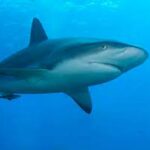
The holidaymaker was swimming in waist-deep water, just 10 metres from the shore on Turtle Beach when witnesses say a bull shark, measuring 10 feet long and two feet wide, attacked from behind.
Authorities have temporarily closed off the beach along with six other beaches in the area, and are prohibiting reef tours and scuba diving as a precaution.
Stable condition
In a statement posted to social media, Chief Secretary Farley Augustine, who is equivalent to the Prime Minister of Tobago, reported that Mr Smith was in a stable condition, but remained in an ICU and was being kept sedated.
He said the man had had some fingers reattached but still had “significant wounds” to one of his legs and would require “extensive work” but the immediate priority was to ensure life was saved.
Mr Augustine told how the victim had been in Tobago with his wife and friends, and that the group had been due to fly home that day. He said the victim’s family were being supported by the local government and the British High Commission.
Beaches closed
Then from a safety viewpoint he announced: “Out of an abundance of caution we are forced to temporarily close beaches: Plymouth, Courland Bay, Black Rock, Mt. Irvine, Buccoo, Pigeon Point, Store Bay and all coastal areas in between.”
The stretch is on the western tip of the island measuring around seven miles (11.3km) in distance. It includes a marine park surrounding the Bucco Reef, one of the island’s largest coral reefs and a popular tourist attraction.
Continuing, Mr Augustine wrote that drone reconnaissance/surveillance was being carried out and the Department of Fisheries were combing the area to ensure safety.

Witnesses tell of shock attack
Witness Stephanie Wright, from West Sussex in the UK said: “We saw some people on the beach, and I originally thought the gentleman had had a cardiac arrest, and I thought they were helping him, but then I saw someone running down with a towel, and then I saw a dorsal fin come out of the water”.
Another eyewitness, Orion Jakerov, water sports manager at the nearby Starfish Hotel, said other people in the water were “physically trying to fight off the shark”. He remarked that he didn’t think anyone saw the shark until it struck.
“They were about waist height in the water so they weren’t out of their depth. I think their backs were turned and they were just kind of lounging around. Nobody saw the shark coming.”
Incredibly rare
The International Shark Attack File database records that the vast majority of shark attacks in the region occur further north, in the central Caribbean and off the eastern and southern coasts of the US.
In the last 20 years, there have been only two recorded shark attacks as far south as Tobago, and neither was within 200 miles of the island itself.
Bull sharks, which can be found in both fresh and salt water, are known to be one of the more aggressive types of shark and are responsible for the majority of incidents recorded close to shorelines. They are one of three shark species, alongside tiger and great white that are the most likely to attack humans.



0 Comments