
World No Tobacco Day: Protecting Children From Tobacco Industry Interference


Tobacco continues to pose a significant global health challenge, contributing to millions of deaths annually despite widespread efforts to curb its usage. In the Caribbean region, tobacco use remains a major public health concern.
“The use of tobacco products in any form – whether it is smoked, smokeless, or electronic – harms nearly every organ of the body. Tobacco use is one of the main risk factors for noncommunicable diseases, associated with lung cancer, and coronary heart disease in adults; and acute respiratory conditions and severe asthma in children,” stated Dr. Joy St. John, Executive Director of the Caribbean Public Health Agency (CARPHA).
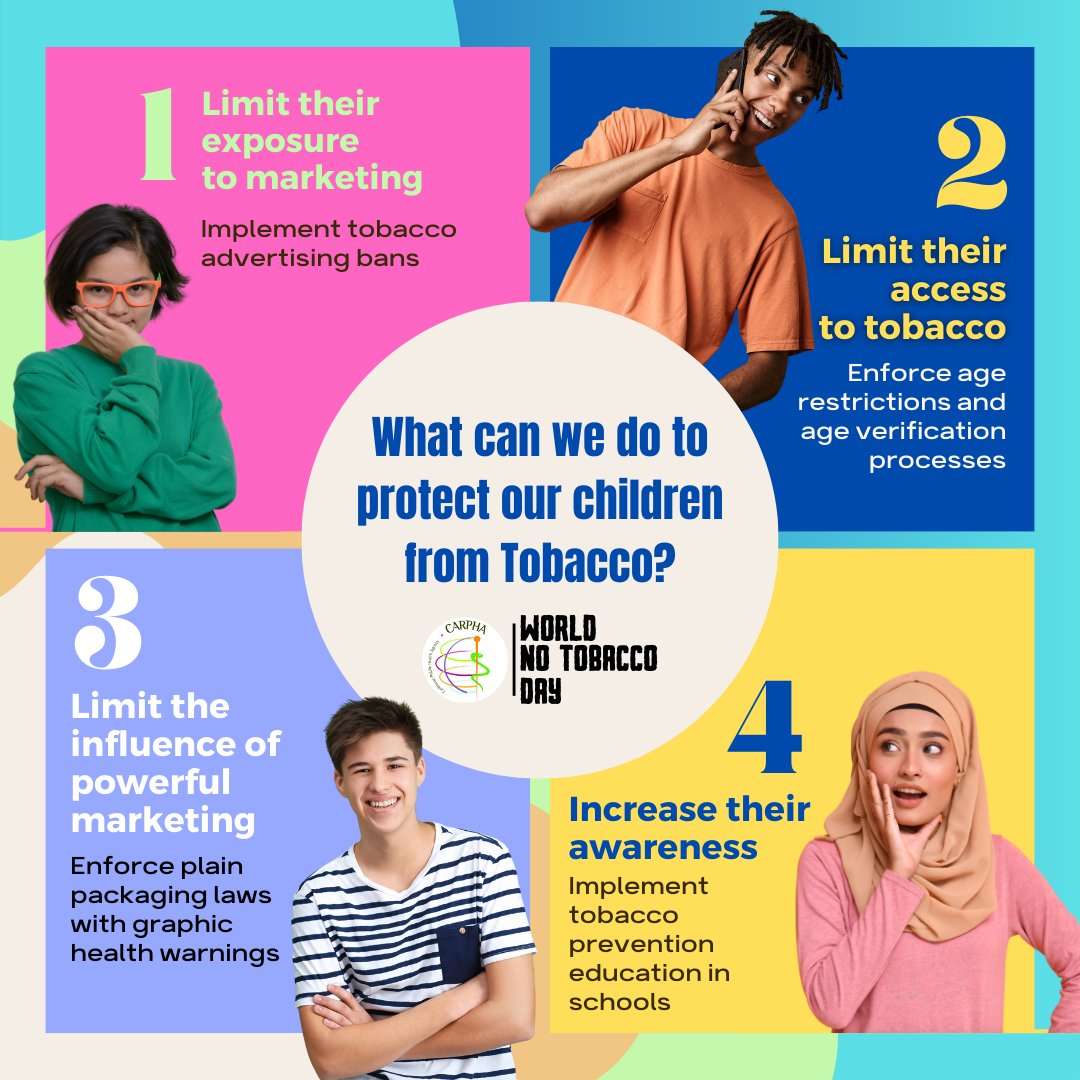
Observed annually on 31 May, World No Tobacco Day 2024 focuses on protecting children from tobacco industry interference. This campaign raises awareness about the harmful influences of the tobacco industry on young people and underscores the need to shield them from the manipulative tactics employed by the tobacco industry to promote their products.
Currently, 11.3% of adolescents between 13 and 15 years of age in the Region use tobacco, compared to the world average of 10.3%.[1]
The tobacco industry has a long-standing history of targeting young demographics through aggressive marketing strategies, including advertising, promotions, and sponsorships. These tactics, designed to glamorize tobacco products and downplay associated health risks, contribute to increased youth tobacco use. E-cigarettes are often promoted as “reduced risk”, “smoke-free”, “socially acceptable” consumer products.[2] However there have been increasing reports of harmful effects of e cigarettes such as various forms[3]
In the Caribbean region, as globally, there has been progress in reducing the use of tobacco, including among adolescents and youth. However, this progress is being put at risk by an increase in the use of electronic nicotine and non-nicotine delivery systems (ENDS/ENNDS), also called electronic cigarettes (e-cigarettes) or vapes, particularly among young people. Nicotine in e-cigarettes is a highly addictive drug and can damage children’s developing brains. Young persons who use e-cigarettes likely double their chance of smoking cigarettes later in life.

Tobacco use among Caribbean youths persists due to entrenched cultural norms. Celebrations and rituals often revolve around smoking, complicating prevention efforts, while accessibility remains high despite regulatory measures. While modest reductions in adolescent smoking prevalence have been observed over five years, significant disparities between Caribbean countries persist. Limited implementation of the WHO- Framework Convention on Tobacco Control (FCTC) measures underscore the need for tailored interventions and data collection improvements to address tobacco use among youths. Further implementation of tobacco control measures is essential to sustain and accelerate reductions in adolescent smoking rates regionally.[4]
CARPHA plays a vital role in combating tobacco use in the Caribbean. Dr Heather Armstrong, Head, Chronic Disease and Injury: “At CARPHA, our approach involves thorough research and surveillance to understand youth tobacco trends and develop targeted interventions. This includes advocating for strong tobacco control policies and implementing public awareness campaigns through various media channels. Member States are encouraged to work together to prevent and reduce the use of all forms of tobacco products, and scale-up efforts to implement their commitments under the WHO Framework Convention on Tobacco Control. By doing so, the negative impact of smoking and its consequences on the health of our people, especially the younger generation, and the tremendous burden on the economies of the countries in our Region, will greatly be reduced.”
CARPHA collaborates closely with organisations like the WHO and PAHO, as well as NGOs and civil society groups, to maximize the impact of their efforts and engage stakeholders in addressing this public health issue collaboratively[5].
On Friday, 31 May 2024, Dr. Heather Armstrong, Head of Chronic Diseases and Injury at CARPHA joined other panellists, including CARICOM Youth Ambassadors (CYAs), and regional youth leaders in a Webinar on ‘Dangers and current trends in the use of tobacco products and e-cigarettes among Youths’. The Webinar was hosted by the Caribbean Community (CARICOM) Secretariat.
This story was first published by Antigua News on : antigua.news/2024/06/01/world-no-tobacco-day-protecting-children-from-tobacco-industry-interference. © 2024 Antigua News. Republication without permission is not allowed.

About the author
The Editorial Staff refers to all reporters employed by Antigua.news. When an article is not an original creation of Antigua.news—such as when it is based on a press release, other media articles, letters to the editor, or court decisions—one of our staff members is responsible for overseeing its publication.
Read our editorial standards and corrections policy. Spotted an error? Contact the newsroom.
More from World
View section
Paraguay President Santiago Peña Impeached and Arrested Amid Massive Banking Scandal
Lawmakers unanimously remove Peña from office following the collapse of Ueno Bank, which has left millions struggling to access their money, as Vice President Pedro Alliana assumes the presidency.
By Cory Wayland

New Evidence Emerges in Florida Plane Crash That Killed Nine, Including Two Young Children
Investigators have recovered pieces of a Learjet 60's tail section miles from the crash site as they examine the aircraft's final moments and the possible role of severe weather.
By Cory Wayland

Democrats Win Congress in Major Setback for Donald Trump
Victories in Republican strongholds hand Democrats control of the House and Senate.
By Shermain Bique-Charles

Nine Killed as Learjet 60 Crashes Into Florida Neighbourhood
The Learjet 60 crashed near Cresthaven in Palm Beach County while travelling from Texas to the Bahamas, prompting mass evacuations and an investigation by US aviation authorities.
By Cory Wayland
Comments
Be the first to comment.