
Hundreds of UK women diagnosed with cancer plan legal action against talc giant Johnson & Johnson

by Mick the Ram
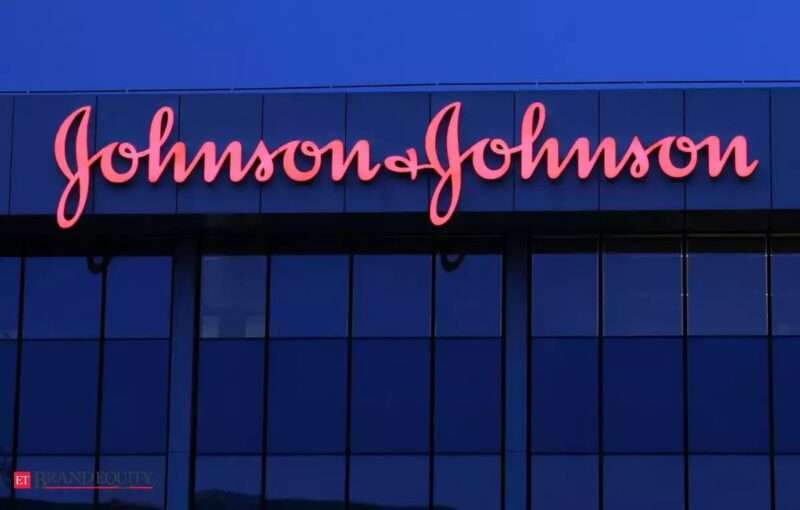
One of the world’s biggest pharmaceutical companies – Johnson & Johnson (J&J) – look set to be on the receiving end of nearly 2,000 claims against them by UK women in relation to their talcum powder product.
Links between talc and cancer have grown in recent years and now lawyers are backing action to sue the company, alleging that for decades, talcum powder was contaminated with cancer-causing asbestos – something they claim J&J was aware of but sought to suppress.
Talc is a mineral that is used in talcum powders and other cosmetic products, but according to Cancer Research UK, many documents were hidden from public view until Americans with cancer began suing the firm.
In the US, the firm has been sued by more than 62,000 people and at least $13bn has been paid out or set aside in response to the action.
Cases there have seen the company found liable for mesothelioma – an asbestos-specific cancer – and gynaecological cancers women suffered after using talc.
The company discontinued mineral-based talc in North America in 2020 replacing it with cornstarch, something they have now replicated in the UK.
They say it was done due to financial pressures and a because of a “misinformation campaign” surrounding the product.
Convinced of talc’s role in development of cancers
Women are convinced that their gynaecological cancers has developed through repeated application of J&J talcum powder.
Talc can be mined in places where there is asbestos, which can cause the talc to become contaminated, and asbestos is known to cause mesothelioma and cancers of the lung, larynx and ovary.
Asbestos is the key player
The sale of any products containing asbestos is banned in the UK and cosmetic products need to be safety-tested before they can be sold in the country.
J&J has been accused of knowing for decades that its baby powder could contain contaminants of asbestos, but the firm have stood behind the line: “any suggestion that Johnson & Johnson knew or hid information about the safety of talc is false”.
Talc likely to be carcinogenic
However, in July this year the World Health Organization (WHO) concluded that mineral talc itself was indeed very likely to be carcinogenic for humans.
A carcinogen is a substance, organism or agent capable of causing cancer. They may occur naturally in the environment or may be generated by humans (such as exhaust fumes and cigarette smoke).
Asbestos is one of many that had been identified as definitive, probable, or possible carcinogens for humans and now it seems talc can be added.
Proceedings should begin next year
KP Law, representing the claimants, has begun the process of litigation, which is expected to start at the beginning of 2025.
Tom Longstaff, a partner at the firm said: “Women in the UK deserve an answer, and compensation.”
He confirmed that they had sent a pre-action letter to J&J in September, which he clarified was a necessary step before starting proceedings.
J&J fight their corner
Responding, Erik Haas, the worldwide vice-president of litigation for Johnson & Johnson, said the allegations against the company “defy logic, rewrite history and ignore the facts”.
He was adamant that J&J takes the issue of talc safety incredibly seriously and pointed out that they had documentary evidence to prove that the company has relied upon the most state-of-the-art testing protocols for decades and have been entirely transparent with government institutions and academic researchers regarding their findings.
He was also keen to stress that the idea they hid the contaminated contents of its products from the public, government and other groups was “inconceivable and false”.
Blame denied
Whilst seeming to be confident of their innocence, J&J were keen to deflect towards Kenvue, its former consumer-health division, that it separated out in 2023.
They said it was they who are responsible for “any alleged talc liability that arises outside the US or Canada.”
In turn, Kenvue stated that “decades of testing by experts demonstrates that the product is safe, does not contain asbestos, and does not cause cancer.”
Fear that some may not see conclusion
Despite the company consistently denying any wrong-doing, earlier this year they agreed to pay $700 million to settle allegations it misled customers about the safety of its talcum-based powder products in North America.
Then in September, its offer to settle talc claims relating to ovarian cancer in the United States was upped to around $8 billion to be paid over 25 years.
Litigation of this magnitude can take as long as five years and sadly some of the women fear they will not be around to see its conclusion.


About the author
The Editorial Staff refers to all reporters employed by Antigua.news. When an article is not an original creation of Antigua.news—such as when it is based on a press release, other media articles, letters to the editor, or court decisions—one of our staff members is responsible for overseeing its publication.
Read our editorial standards and corrections policy. Spotted an error? Contact the newsroom.
More from World
View section
Antigua and Barbuda, Octopus Energy to Explore Cheaper, Cleaner Power
By Shermain Bique-Charles
Afreximbank issues a $29 million guarantee to scale EAC Customs Bond, easing movement of goods across East Africa
By Editorial Staff

Browne Pushes Small-State Priorities at UN General Assembly
By Shermain Bique-Charles

Afreximbank and ATDC sign US$500 million facility to expand African trade and distribution
By Editorial Staff
Comments
Be the first to comment.
Comments are temporarily unavailable.