
Three Decades of Powering Africa’s Resilience and Transformation: Lessons from the Afreximbank Experiment

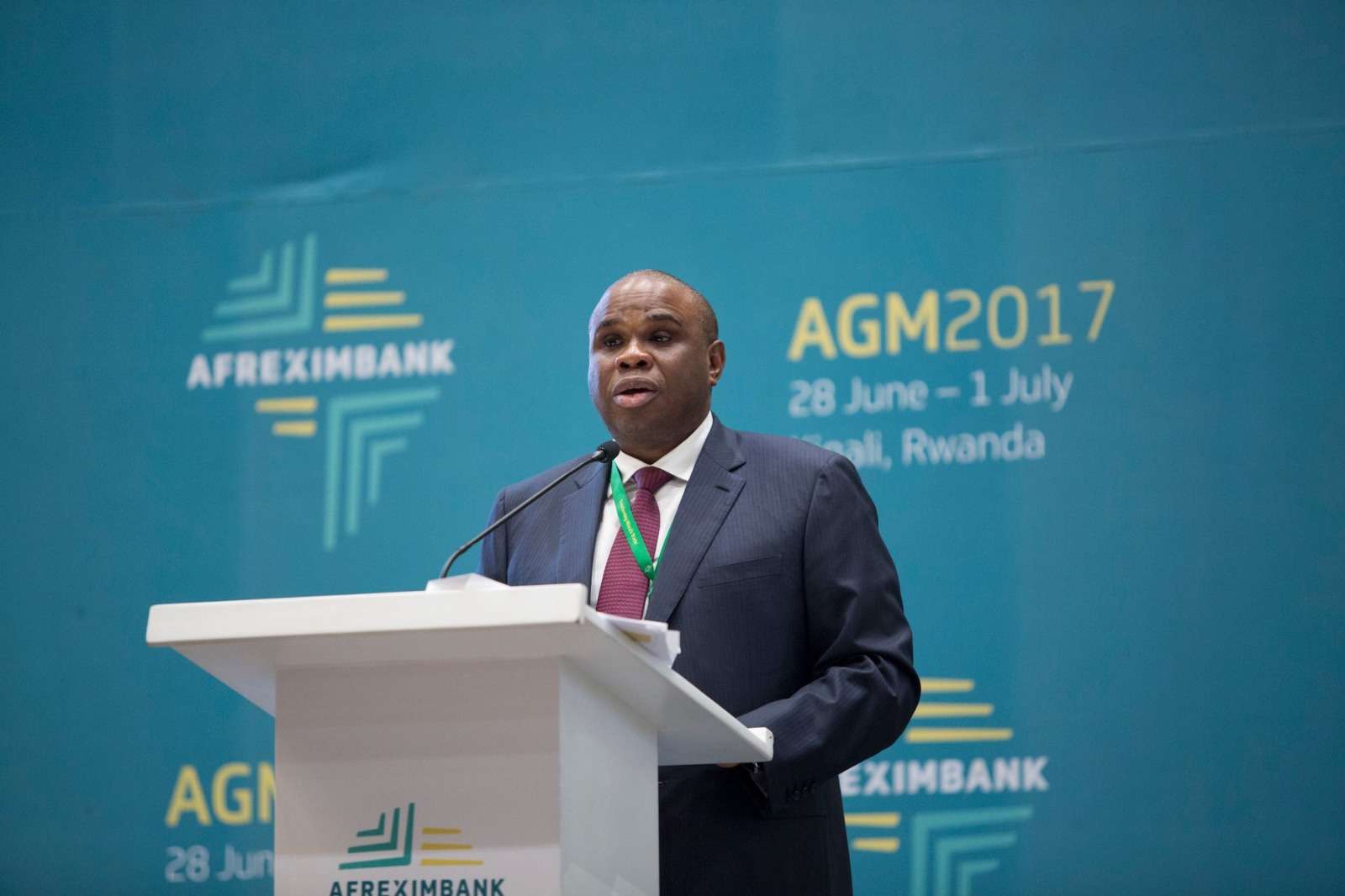
At this year’s 32nd Afreximbank Annual Meetings, one panel took a thoughtful look back, asking not just what had been built over the last three decades, but what could be learned from it.
Titled “Three Decades of Powering Africa’s Resilience and Transformation: What Does the Afreximbank Experiment Teach Us?”, the panel session brought together voices from across the continent’s economic landscape.
Speakers included Kee Chong Li, Director at Value Partners Asia Hedge Funds and Board Member of Afreximbank, Professor Bart Nnaji, CEO of Geometric Power, Aliyu Ahmed, former Permanent Secretary of Nigeria’s Federal Ministry of Finance, Rosa Whitaker, President and CEO of The Whitaker Group; and Hon. Patrick Chinamasa, former Minister of Finance and Economic Development for Zimbabwe. Each offered grounded reflections on how Afreximbank has evolved from a trade finance institution into a critical driver of Africa’s economic resilience and transformation.
From its inception, Afreximbank has distinguished itself not only through its activities, but through its foundational approach. As one panellist observed, Afreximbank is “an institution of Africans, by Africans, and fit for purpose for African development.” This sense of ownership and strategic alignment has shaped its institutional character and sustained impact.
Resilience Through Conviction
Central to the discussion was a principle that exceeds traditional finance: unwavering conviction in African potential. This manifested as confidence in African economies, leadership, and indigenous solutions. Former Zimbabwean Finance Minister Hon. Patrick Chinamasa provided a striking example of this approach. He recalled how, during Zimbabwe’s period under international sanctions, Afreximbank provided essential support when other institutions withdrew. “No one gave us a chance except Afreximbank,” he noted, crediting the Bank’s intervention with helping Zimbabwe achieve food self-sufficiency and restart its industrialisation process.
This pattern repeated across the continent. From Nigeria to Mauritius, panellists shared accounts of the Bank’s rapid crisis response when others retreated —establishing its reputation as Africa’s financial “first responder.”
Financial Independence as Core Strategy
A defining characteristic of Afreximbank’s trajectory has been its deliberate pursuit of financial sovereignty. Rather than relying on conventional capital mobilisation channels, the Bank has consistently developed African-led alternatives. Board member and senior finance expert Kee Chong Li illustrated this philosophy through a specific transaction. When raising capital through depository receipts, the Bank bypassed global investment banks like JP Morgan or Goldman Sachs. Instead, it mobilised African institutions and private investors, listed on the Mauritius Stock Exchange and employed local custodial services. “All the institutions that enabled the capital raise were purely African,” he emphasised. “That exemplifies what sovereignty means in practice.”
This approach extended to risk management. Faced with global insurers’ reluctance to underwrite African projects, Afreximbank established its own credit insurance division, staffed by African professionals, backed by African reinsurers, and specifically designed to unlock capital for continental infrastructure and trade development.

Leadership Converting Vision to Reality
Many of the speakers highlighted the transformational leadership of Afreximbank President Prof. Benedict Oramah as instrumental in the Bank’s evolution. Rosa Whitaker, President of The Whitaker Group, emphasised this dynamic, referencing management expert Jim Collins, “The ‘who’ matters more than the ‘what’.” Under Prof. Oramah’s direction, she argued, the Bank has “catalysed a movement” that integrates trade finance, technology, diaspora engagement, and African capital markets into a coherent growth engine. She termed this the “Africatalyst” effect: a catalytic force converting aspiration into measurable economic progress.
From Trade Finance to Comprehensive Transformation
This evolution was exemplified in Professor Bart Nnaji’s account. As CEO of Geometric Power, he described a previously stalled integrated energy project in Nigeria that other financiers had abandoned. Following rigorous due diligence, Afreximbank committed to reviving the project. Today, it delivers reliable electricity to over four million people and anchors a thriving industrial zone, demonstrating the potential when trade finance, infrastructure development, and energy provision align strategically.
A Framework for Continental Development
As the panel concluded, one principle emerged clearly – Africa must develop its own financial capacity. As Mr. Aliyu Ahmed, former permanent secretary at Nigeria’s Ministry of Finance, observed, “The evidence demonstrates consistently that when other banks withdraw, Afreximbank advances.” From crisis intervention to long-term industrial strategy, the Bank has repeatedly shown what becomes possible when African capital and leadership direct their own development agenda.
After three decades, the Afreximbank ‘experiment’ provides a substantive response to a fundamental question – what elements are required to build institutions that both endure and transform? The answer appears to lie not solely in organisational structure or policy frameworks, but in institutional courage, strategic innovation, and the alignment of purpose with practice.
As the continent confronts emerging challenges and opportunities, Afreximbank’s journey offers not just an historical analysis. It provides an operational framework for African institutional development.
This story was first published by Antigua News on : antigua.news/2025/07/24/three-decades-of-powering-africas-resilience-and-transformation-lessons-from-the-afreximbank-experiment. © 2025 Antigua News. Republication without permission is not allowed.

About the author
The Editorial Staff refers to all reporters employed by Antigua.news. When an article is not an original creation of Antigua.news—such as when it is based on a press release, other media articles, letters to the editor, or court decisions—one of our staff members is responsible for overseeing its publication.
Read our editorial standards and corrections policy. Spotted an error? Contact the newsroom.
More from Business and Finance
View section
Liechtenstein register hack exposes the privacy risks of financial transparency
Data concerning 31,000 legal entities were stolen from the principality’s beneficial ownership register. As access moves to an identity-checked service in Vaduz, the unresolved question is whether stronger entry controls can protect the people behind the records.
By Dario Item

How much is Hormuz really adding to Caribbean fuel prices?
The disruption is raising the cost of gasoline and diesel far beyond the Gulf. But refinery shortages, shipping costs and changes to subsidies must be separated to establish what motorists are paying for.
By Dario Item

From Potters to Dallas: Antiguan and Barbudan Ryancia Henry Rises to Top Luxury Hotel Management Role
By Shermain Bique-Charles

Twenty-Three Days to Close a EUR2bn Case Built on Hundreds of Pages: The Novo Banco Judgment That Should Shock Europe’s Bond Market
By Dario Item
Comments
Be the first to comment.