

















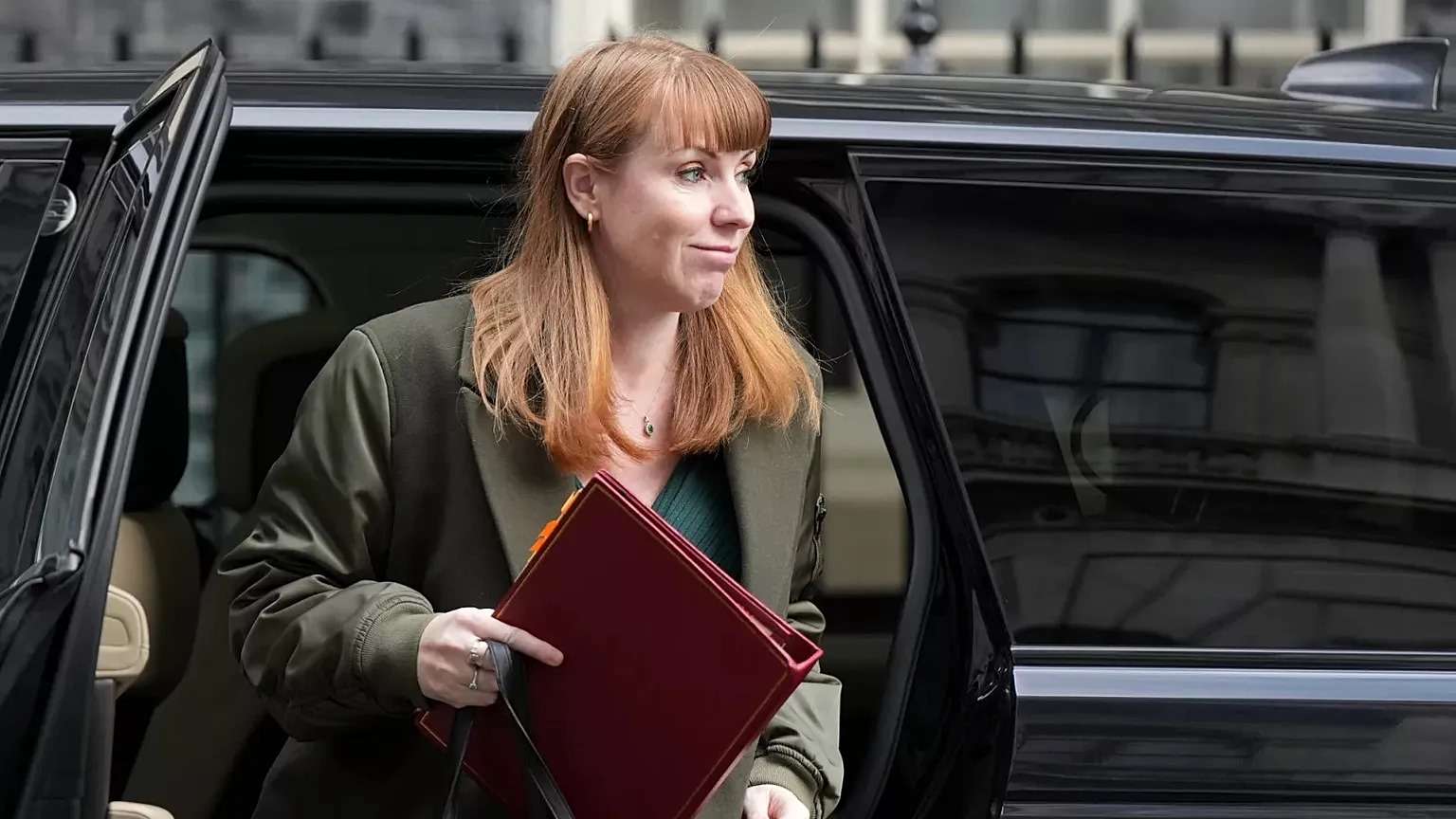
Angela Rayner has resigned her post of deputy PM following a tax situation she allowed to occur in connection with a second home which has been seen as in breach of the “ministerial code” (Euronews)
Angela Rayner has been compelled to hand in her resignation from her positions as deputy prime minister and housing secretary after it emerged that she had failed to pay the correct amount of tax on one of her properties.
The situation developed quickly after the “error” came to light earlier in the week and the PM’s ethics adviser, Sir Laurie Magnus, was asked to examine the case.
Although he concluded that Ms Rayner had “acted with integrity” he felt that unfortunately she had indeed “breached the ministerial code” by failing to seek expert tax advice on the flat she purchased, despite a recommendation to do so.
Writing to Sir Keir Starmer, the deputy PM accepted she had not met the highest standard demanded by someone in her position upon purchasing her property and took “full responsibility for the error.”
Replying immediately on a handwritten note, the PM said he was “very sad” to be losing her from his government, calling her a trusted colleague and a “true friend”, before maintaining that she would remain a “a major figure” in the Labour Party going forward.
He acted swiftly to replace her as deputy PM with David Lammy, whose job in the cabinet as foreign secretary has been handed to Yvette Cooper.
Situation escalated rapidly
It was just two days ago – on Wednesday 3 September – that Ms Rayner acknowledged that she had not paid enough tax when buying her flat in Hove, East Sussex, calling it a “mistake” that had occurred because she believed it was the only property she owned.
As strange as that sounded, she was able to explain that it was her genuine belief due to complex arrangements surrounding a trust that had been set up for her disabled son at the family home, but the new flat should in actual fact have been considered to be her second home – meaning she should have paid an additional £40,000 in stamp duty.
She declared that she had sought legal advice when making the purchase, but that it had failed to “properly take account” of her circumstances. She said she had contacted HMRC to work out the additional tax she needed to pay and referred herself for investigation by the PM’s standards adviser.
What is stamp duty?
Stamp Duty Land Tax (SDLT) is a tax due if somebody buys a property or piece of land that is over as certain threshold in England and Northern Ireland. The actual amount due depends on the cost of the property, whether it will be used for residential purposes, and whether that individual owns any other properties.
In Angela Rayner’s case she spent £800,000 on the flat in Hove and paid £30,000 in stamp duty, having listed it as her primary residence, but as she co-owned another property she should have paid the “second home” rate of £70,000, meaning that she was £40,000 light.

What is the ministerial code?
The ministerial code sets out the expected standards of conduct for ministers in their specific roles. Essentially, ministers are expected to follow seven principles: selflessness, integrity, objectivity, accountability, openness, honesty and leadership.
Within the list of ministers’ interests, published by the adviser on ministerial standards, it clearly states: “Ministers are asked to confirm that their tax affairs are up to date and that the arrangement of their affairs is consistent with their overarching duty to comply with the law.”
Sir Keir Starmer was keen to stress upon taking up office that a failure to meet those high standards would always “weaken the bond of respect between a government and the people it must serve.”
Rayner’s explanation
In essence, it appears that Ms Rayner did not receive, and more crucially, did not seek proper tax advice from a properly qualified tax specialist or accountant, but instead took the word of a conveyancing solicitor.
The former deputy PM comes from a humble background, being brought up on a council estate and leaving her local comprehensive at sixteen-years-old without any qualifications and a baby on the way. She has done remarkably well, through sheer hard work, to reach the position of deputy PM.
She explained in a 850 word statement prior to her decision to resign, how she wanted to be totally transparent and pointed out some of the complexities in her home life surrounding her son who has special needs.
She said the family home had been transferred to a trust set up for that child, making him the sole beneficiary and subsequently purchased the new home in Hove with an understanding that because of her circumstances, she was liable only for the standard rate of stamp duty.
However, having become aware that was not in fact the case, she is now working with expert lawyers alongside the HMRC to resolve the matter and pay what is due.
Resignation letter
In a long letter drafted to the PM, Ms Rayner thanked him for his support and friendship and accepted that she had not met the high standards that her position demanded. She said she deeply regretted her decision to not seek additional specialist tax advice and took full responsibility for the error, but made the point that her priority had to be for her children and the strain of the recent situation had become unbearable.
She listed the many achievements that she was proud of during her service and committed to continue with her support for not just Mr Starmer, but the country and the labour party in the weeks, months and years ahead.
Handwritten PM response
Sir Keir took the personal route in response, handwriting a reply which expressed sadness at how her term in office had ended. He told her she had been a central part of the Labour party’s plan to make Britain fairer for working families and added that he had nothing but admiration for her, before offering his best wishes, which he again said were given with real sadness.




Imagine that. Who would have thought