
















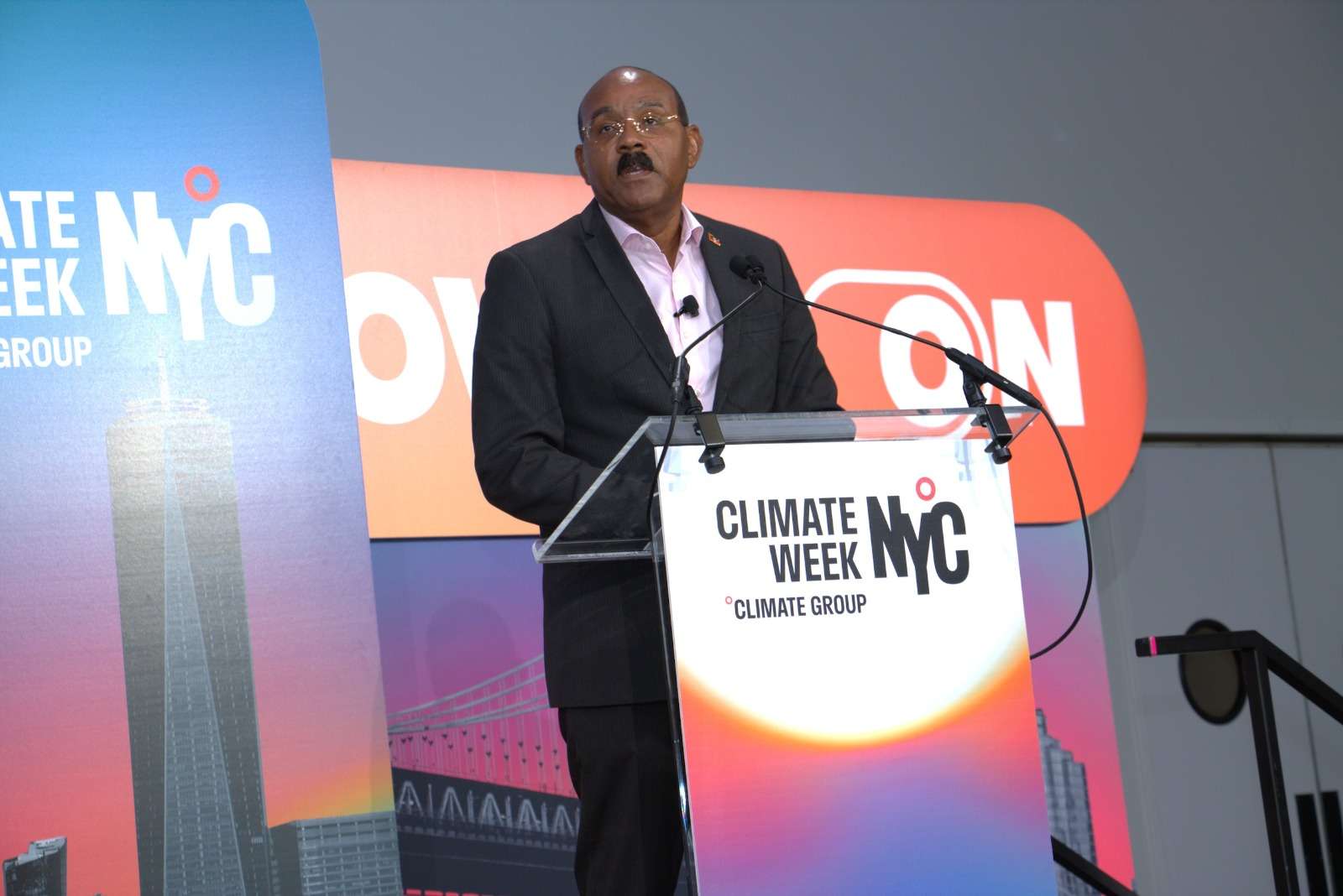
Prime Minister Gaston Browne
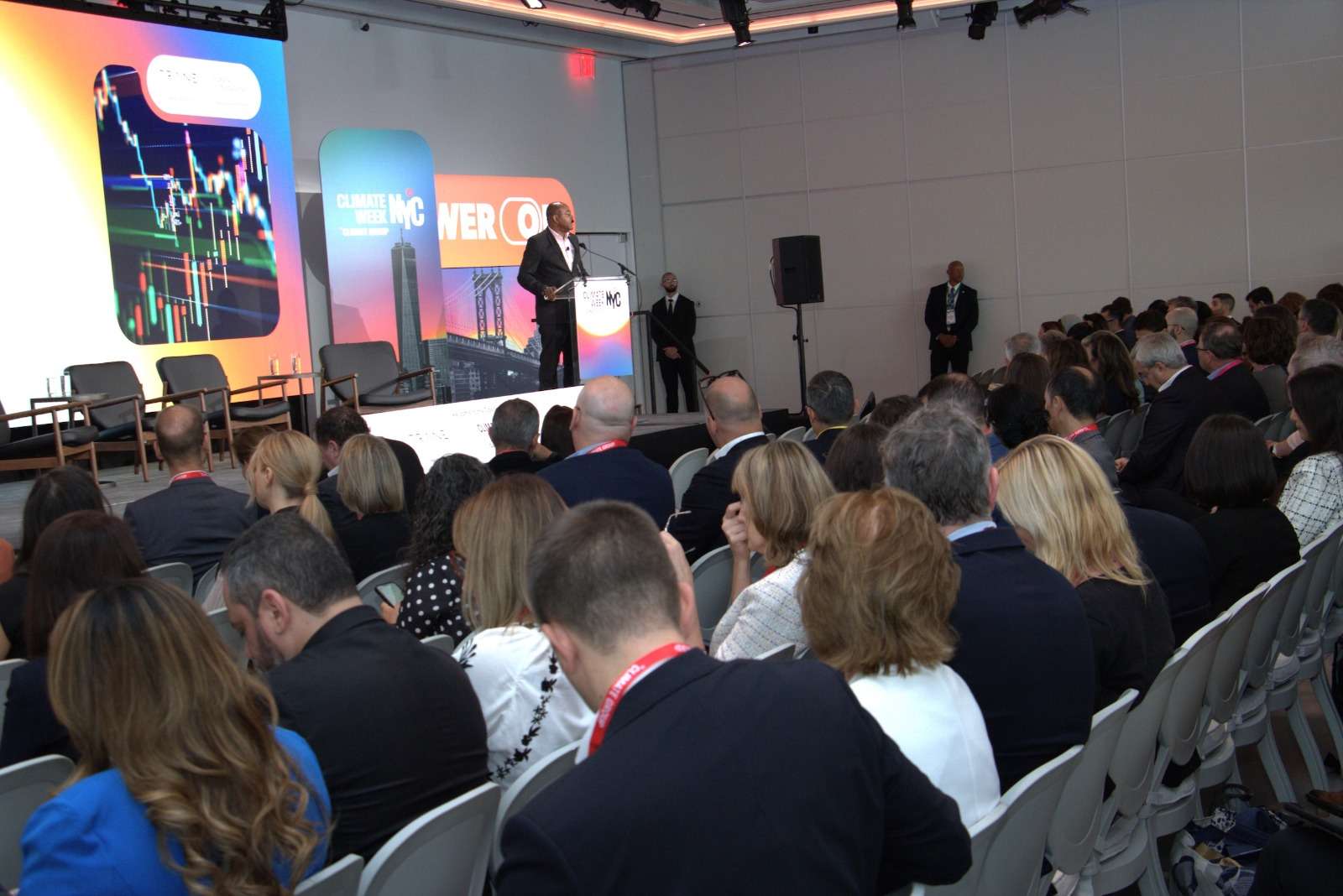
Antigua and Barbuda’s Prime Minister, Gaston Browne, delivered a forceful keynote at the opening of Climate Week NYC, warning that the world’s most vulnerable nations are being handed a bill they cannot pay.
“Every degree of warming is an invoice sent to small islands,” Browne declared, underscoring that nations like his contribute almost nothing to global emissions but face the highest costs—from shattered homes and wrecked economies to the erosion of entire communities.
He recalled the devastation of Hurricane Irma in 2017, which destroyed 95% of Barbuda’s homes and left a US$200 million recovery bill. For Antigua and Barbuda—responsible for less than 0.01% of global greenhouse gases—this was not just a natural disaster, but what Browne called a “climate debt, created by others, collected from us.”
From Moral Plea to Legal Claim
Advances in attribution science, Browne noted, prove that extreme weather is not fate but fallout from human emissions. This transforms Loss and Damage from a charitable gesture into a matter of legal and financial obligation. “Loss and Damage is not theory—it is lived reality,” he said.
While applauding progress on the Loss and Damage Fund, Browne warned against half measures. “Pledges trickle in by the millions while needs run to the hundreds of billions. We cannot allow another empty shell. The Fund must be capitalised, predictable, and fair,” he urged.
Rethinking Finance and Vulnerability
The Prime Minister also challenged the metrics that keep vulnerable states locked out of concessional finance. GDP per capita, he argued, paints a false picture of resilience. Instead, he pressed for adoption of the Multidimensional Vulnerability Index (MVI) and highlighted the Antigua and Barbuda Agenda for SIDS (ABAS), which demands accessible finance, recognition of the oceans’ role in planetary balance, and full integration of SIDS’ unique circumstances into global negotiations.

National Action, Global Responsibility
Browne outlined Antigua and Barbuda’s investments in stronger building codes, rainwater harvesting, desalination, and climate-smart agriculture, but stressed that domestic efforts cannot offset systemic injustice. “Climate finance is not optional—it is central to development,” he said.
A Call for Justice
Throughout his speech, Browne framed climate action as a matter of justice, dignity, and survival. “Climate finance is not charity—it is reparation for harms we can now trace to the emitters. Resilience must not be the ceiling of our ambition, but the bridge to justice and shared prosperity,” he concluded.
As Climate Week and the UN General Assembly’s High-Level Week unfold, Browne’s words set a clear standard for credibility: deliver scaled finance, fix access rules, and stop forcing the world’s most vulnerable to pay the world’s highest price.



Finally, a leader who calls it as it is! Browne is right our islands didn’t cause this crisis, yet we are the ones drowning and rebuilding over and over..Pround to be an ANtiguan
Comment * The call for predictable, fair financing is critical. Small islands can’t plan for resilience if they don’t know when or if help will come
In what other language can we plead with the large emitters so they can get the picture?
Reading this makes me angry. How can nations with almost zero emissions pay the highest price while the biggest polluters delay action
DP per capita is such a misleading measure for small states. Glad Browne is pushing the MVI it’s time the world recognizes vulnerability properly.
When Irma hit Barbuda in 2017, it was catastrophic. Imagine rebuilding a whole island while rich countries argue over a few million dollars
Always a pleasure to listen to this man speak truth to power
I applaud the Prime Minister’s courage. Too many leaders dance around the issue, but he’s putting the injustice into plain word
This speech highlights the imbalance wealthy nations get the profit, while smaller nations get the pain. It’s time to turn words into commitments.