


















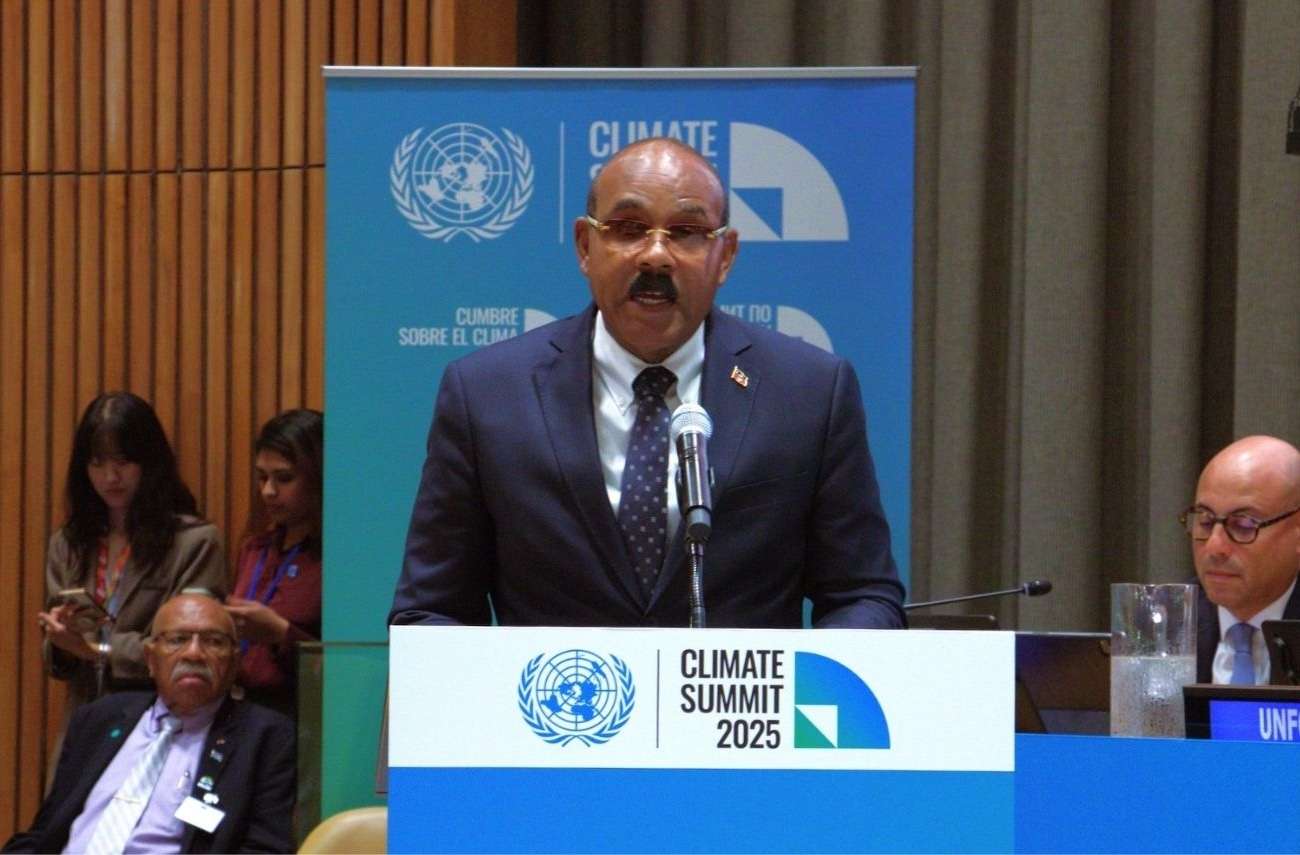
Prime Minister Gaston Browne has issued a forceful appeal for climate justice, urging world leaders to deliver an enforceable and equitable transition away from fossil fuels during Wednesday’s Special Event on Climate for Heads of State and Government at the United Nations.
In his keynote address, Prime Minister Browne stressed that global decarbonization is “not optional but a matter of justice,” especially for Small Island Developing States (SIDS) that contribute the least to climate change yet endure its harshest impacts. He called for those who have profited from fossil economies to bear responsibility for financing and enabling the global shift.
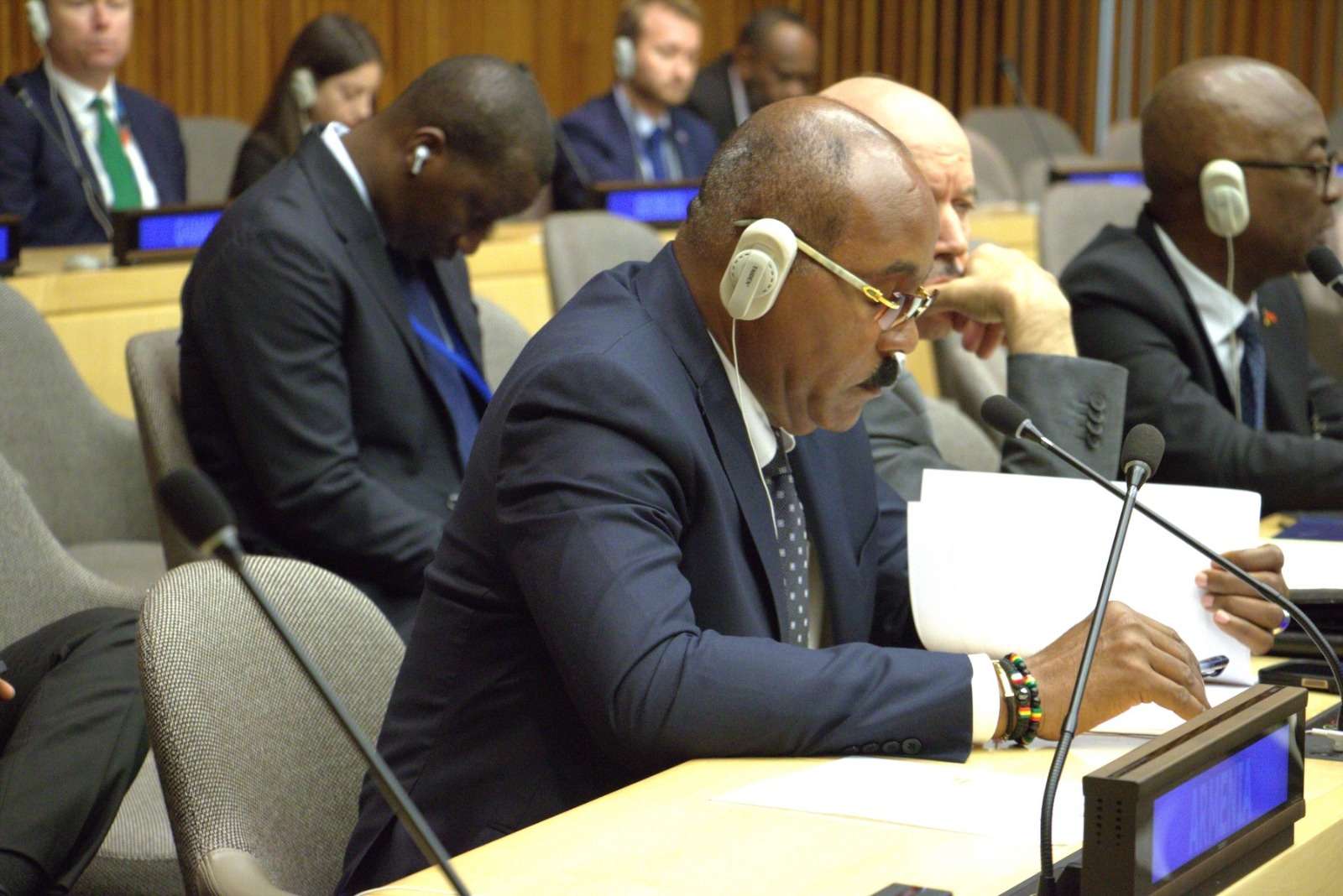
The Antiguan leader reaffirmed his country’s support for the Fossil Fuel Treaty initiative, pressing for a rules-based phase-out of coal, oil, and gas, alongside guaranteed channels for finance and technology transfer. He warned that climate change is acting as a “threat multiplier,” intensifying vulnerabilities in agriculture, fisheries, infrastructure, and livelihoods, with loss and damage already a daily reality for small states.
Browne underscored that keeping global warming within 1.5 °C is non-negotiable, describing it as a binding scientific, moral, and legal threshold rather than a bargaining chip.
He further criticized the global financial system, insisting that the world’s largest polluters must pay—not through charity, but through polluter-pays mechanisms designed to correct entrenched inequities that leave vulnerable nations to shoulder the burden.

Highlighting the financial shortfall, he noted that adaptation costs are projected to reach US$387 billion annually by 2030, while current flows for adaptation, resilience, and loss and damage remain grossly inadequate. He emphasized that multilateral and international financial institutions have not kept pace with the urgency of the crisis.
Turning to national efforts, Prime Minister Browne highlighted Antigua and Barbuda’s National Adaptation Plan (NAP), which outlines a roadmap for resilience across critical sectors through data-driven risk mapping and institutional strengthening. He pledged that the country’s updated Nationally Determined Contribution (NDC) will accelerate its transition toward a green and climate-resilient economy.
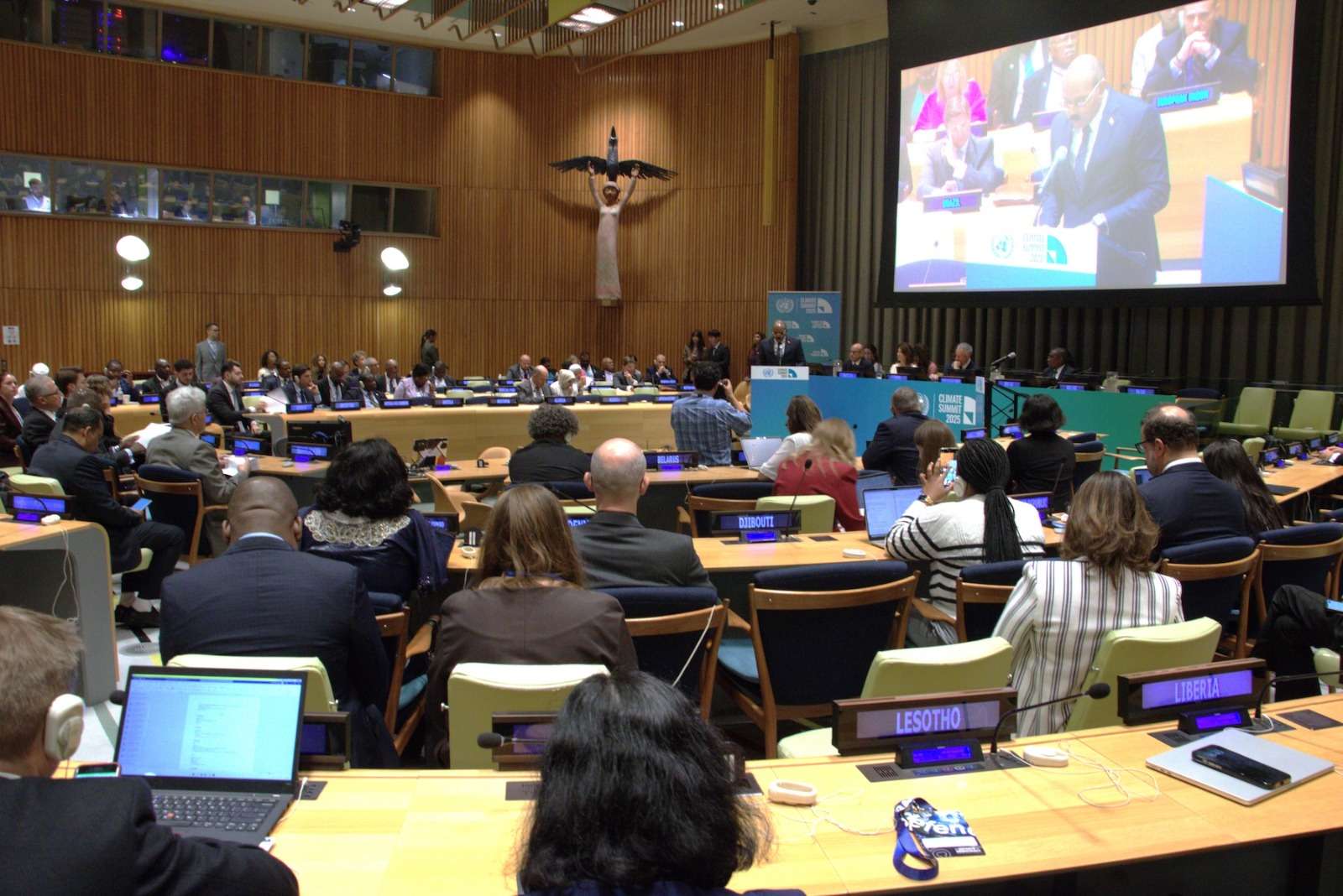
Closing his appeal, Browne urged leaders, financial institutions, development partners, and the private sector to act decisively: “Let us treat the 1.5 °C limit as a lifeline—not a line in the sand. Let us make the polluter-pays principle the foundation of a fair transition. And let us act—not tomorrow, but today—so the smallest and most vulnerable nations among us are not left to face the greatest storms alone.”




Keep fighting. One day your voice will be heard
Amen to that
Impressed that PM Browne is highlighting the disproportionate burden on SIDS (Small Island Developing States).