
















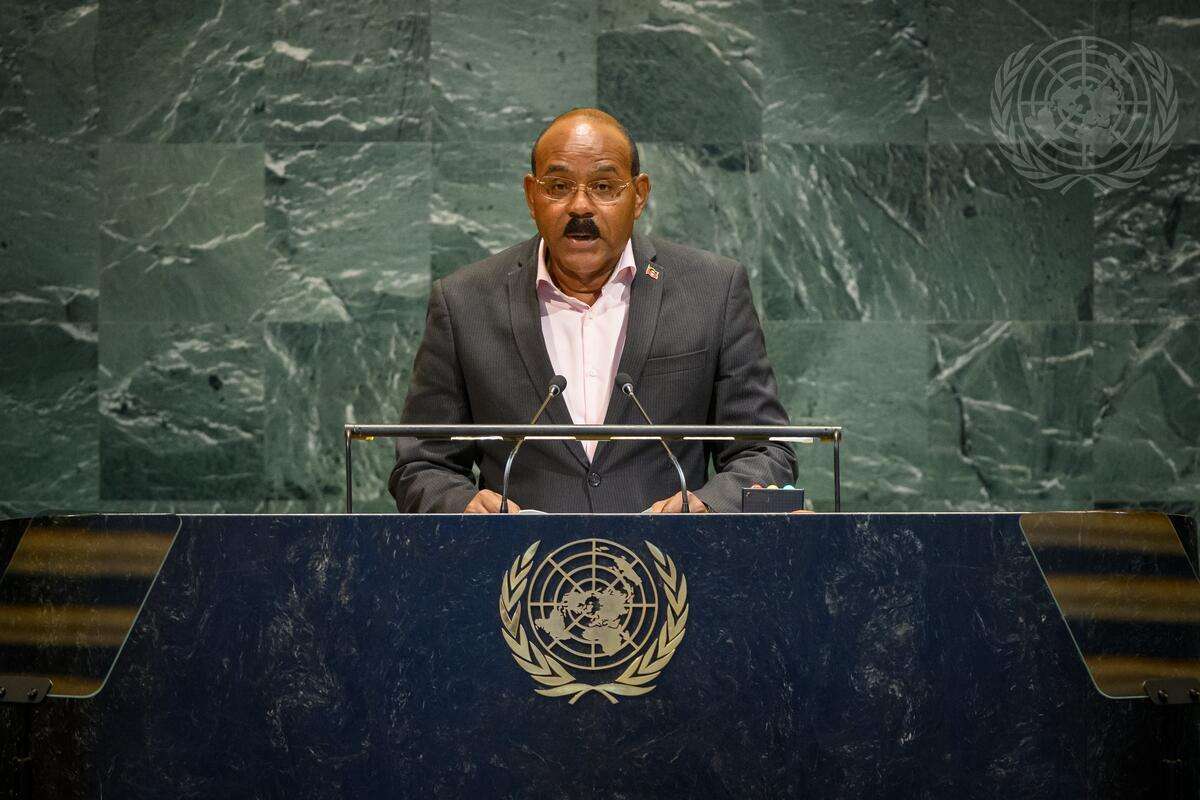
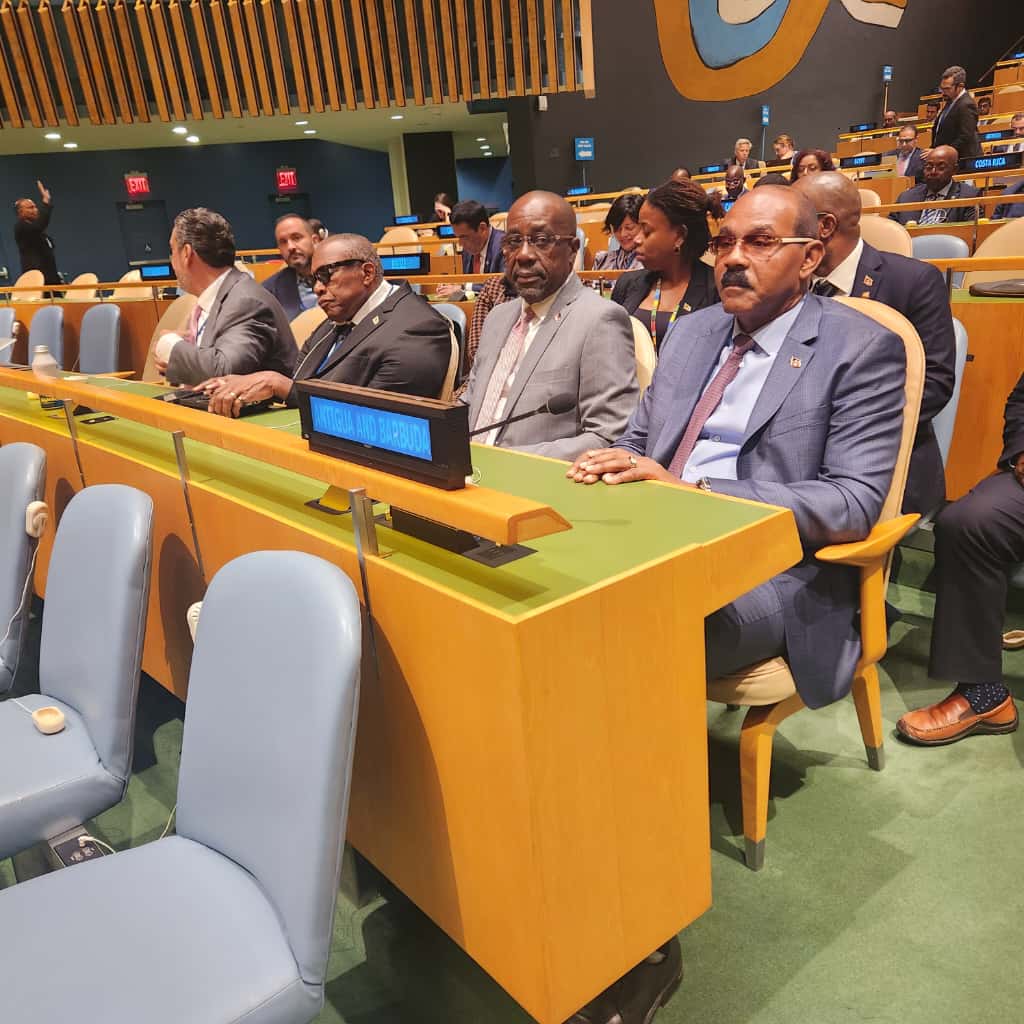
Prime Minister Gaston Browne Addresses UN
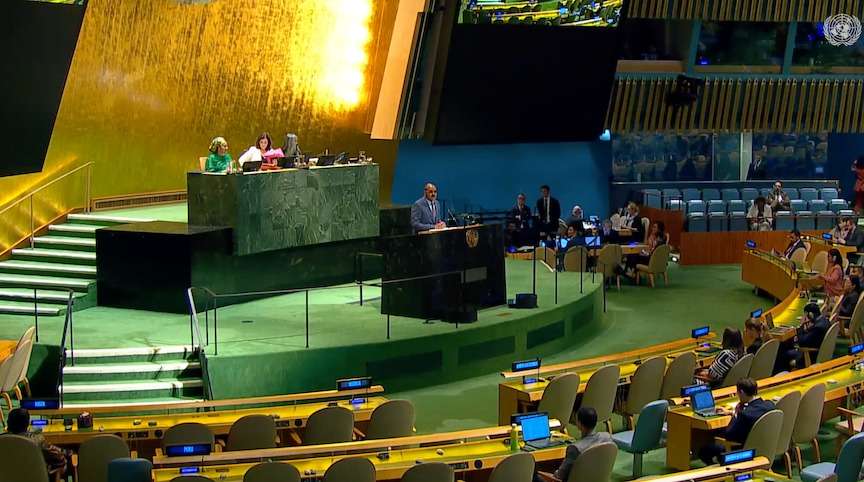
When Gaston Browne, Prime Minister of Antigua and Barbuda, stepped to the podium at the United Nations General Assembly, he carried with him more than a speech. He carried the weight of a nation perched precariously between triumph and catastrophe — a small island that has tasted progress, but lives in fear of its fragility.
He reminded the Assembly that Antigua and Barbuda has seen strong growth and human development, but that success “owes little to the global financial system, and even less to the global effort to curb climate change.” One brutal storm, he warned, could erase decades of effort.
“Each year we fear we may live it again,” he said, recalling the devastation of past hurricanes.
For Browne, climate change is not a theoretical debate. It is the retreat of his country’s shores, the bleaching of its reefs, and the anxiety that hangs over every hurricane season.
He called for nothing less than a restructuring of how the world responds — from fairer financing before disasters strike, to front-loaded funding when they do, to a carbon levy on the heaviest polluters.
“This is not fate,” he told delegates. “Science has proven it is the product of sustained high emissions.”
The ocean loomed large in Browne’s address. He described it not as postcard scenery, but as the backbone of island economies — food, jobs, and new opportunities for growth. Yet it is also threatened. Illegal fishing, plastics, and pollution, he argued, rob small states of their inheritance.

And until independent science says otherwise, he added firmly, seabed mining should remain off-limits: “No one should mortgage the ocean floor to pay short-term bills.”
But Browne’s speech was also about justice beyond climate. He invoked the Caribbean’s painful past, demanding reparatory justice for slavery and colonialism. The transatlantic slave trade, he said, was “the most heinous crime committed against humanity” and its scars remain etched in trade systems, underdevelopment, and inequality.
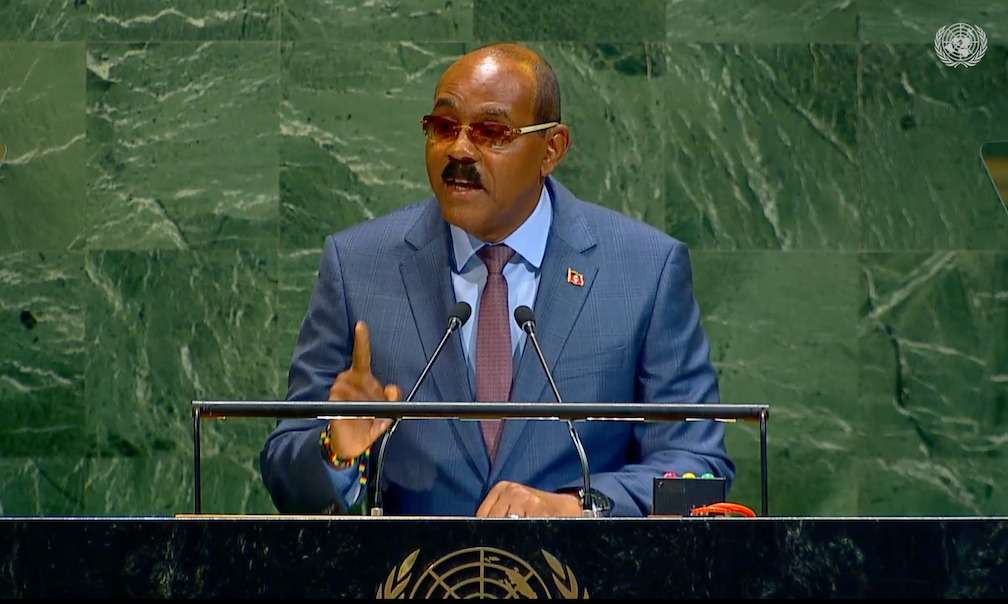
Prime Minister Gaston Browne
“Reparatory justice is not charity,” Browne insisted. “It is principled restitution.”
Though representing one of the world’s smallest nations, Browne addressed some of its largest conflicts. He condemned “genocide and forced removals” in Gaza while insisting hostages held by Hamas must be freed. He urged peace in Ukraine through diplomacy, not exhaustion. And he called for a single, Haitian-led recovery plan backed by transparent funding, warning against piecemeal efforts that prolong suffering.
Closer to home, he expressed unease at military buildups in the Caribbean Sea, including nuclear submarines. “Our hemisphere should be respected as a zone of peace, not a theatre of military conflict,” he said.
Perhaps unexpectedly, Browne gave equal weight to mental health — an issue too often ignored on the global stage. With more than a billion people affected worldwide, he pushed for recognition of mental health as a development priority, not a stigma.
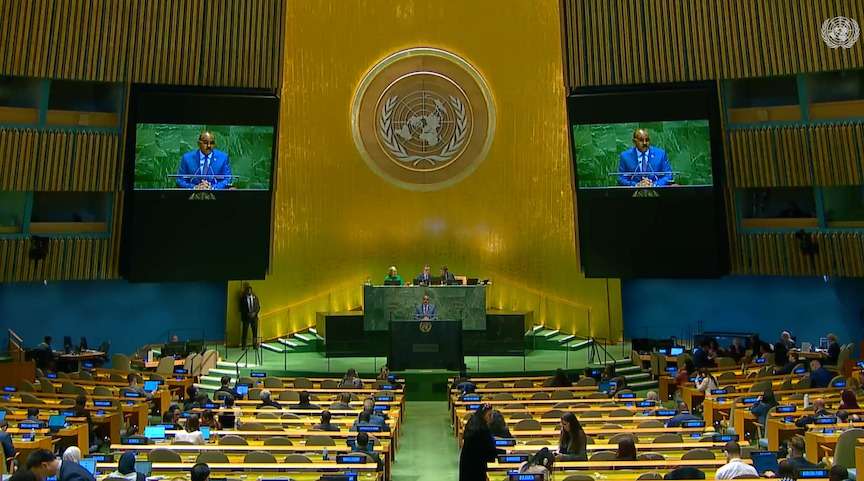
“Mental health is a human right; sanity is the people’s right,” he declared, adding that untreated illness is draining productivity and taking lives, especially among the young.
Browne closed not with statistics, but with a challenge: to live up to the UN Charter’s promise eighty years on. “Better together,” he said, must become more than a slogan.
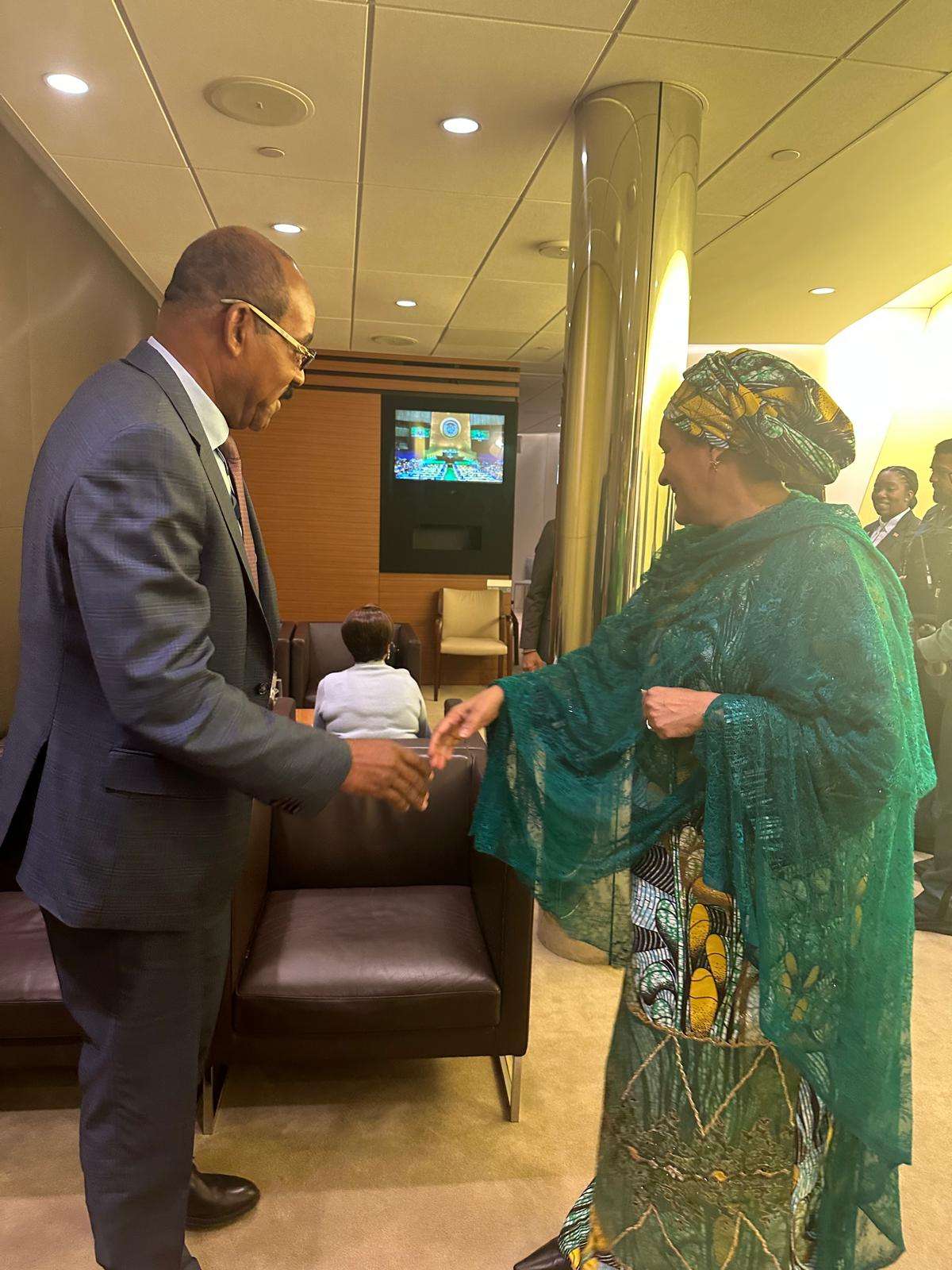
“If this world is truly better together, let us be accountable together,” he told the hall, “to all nations, to future generations, and to those against whom power is wielded.”



The thing is he is not doing this for just Antigua and Barbuda and Sids. Hes advocating for EVERYONE who has been and will be impacted by climate change while trump thinks that’s a con. Time will tell