









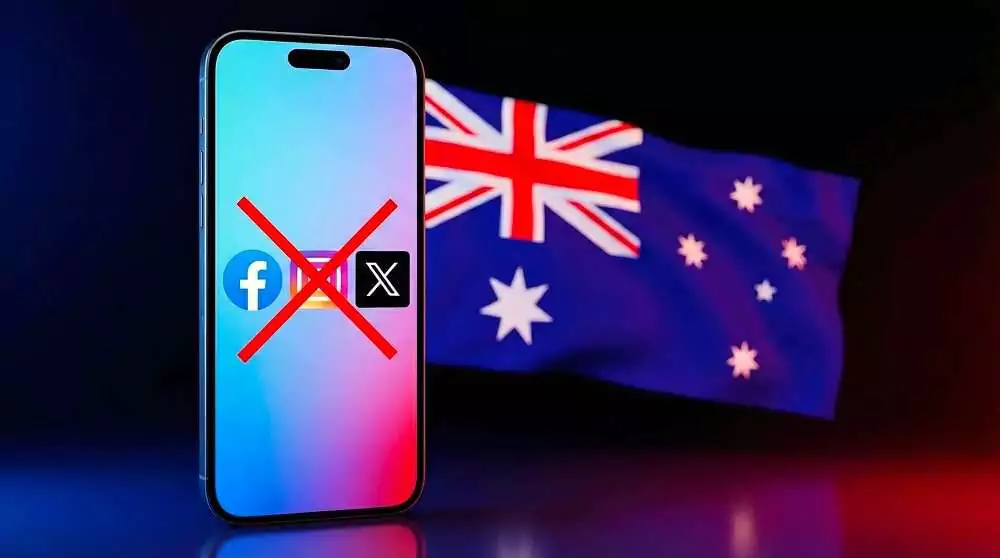
Australia have introduced a social media ban for all under 16’s (Atomic Mail)
Australia has introduced a world-first ban on social media for children under 16, effective from 10 December 2025. Major platforms like TikTok, Instagram, Facebook, Snapchat, YouTube, Threads and X must now deactivate accounts belonging to underage users, or face fines of up to AU$49.5m.
This landmark law – the first of its kind – passed under the Online Safety Amendment (Social Media Minimum Age) Bill 2024, reflects growing global concern about the impact of social media on young people’s mental health, safety and development with its harmful content, predatory algorithms, and addictive design features.
While praised by some as a necessary safeguard, the ban has also sparked debate about privacy, enforcement, and unintended consequences and is being watched with great interest by other countries around the world, with the likes of Denmark, Norway, New Zealand and Malaysia signalling interest in adopting similar rules.
Largely backed around the country
A country-wide study commissioned earlier in 2025 found that 96% of children aged 10-15 used social media, and that seven out of 10 of them had been exposed to harmful content.
Additionally, one in seven reported experiencing grooming-type behaviour from adults or older children, with more than 50% saying they had been the victim of cyberbullying. Other negative consequences include: poor body image, anxiety, depression, and exposure to misinformation.
Responsibility at platform’s doors
The platforms are to be encouraged to take “reasonable steps” to prevent under-16s from holding accounts and importantly, the law does not actually penalise children or parents directly, but instead places the responsibility at the tech companies door, should they fail to comply.
These could include government IDs, face or voice recognition, or so-called “age inference”, which analyses online behaviour and interactions to estimate a person’s age.
Warnings given
Social media companies were shocked when the ban was announced in November 2024 and immediately argued that it would be difficult to implement, easy to circumvent and time consuming for users with the added worry of posing serious risk to their privacy.
They also warned that it could have a massive effect on young people’s social interactivity and could even force some into the darker areas of the internet.
Analysts predict a surge in the use of VPN’s to hide a user’s location, prompting the Communications Minister Annika Wells to concede that the ban may not be “perfect” and that it will inevitably look “a bit untidy on the way through,” but added that “big reforms always do.”

Royals receive advice
The Duke and Duchess of Sussex firmly backed the ban, releasing a statement that in part said “this bold, decisive action to protect children at a critical moment in their development sends a strong signal that a child’s mind is not a commodity to be exploited. It buys young people valuable time back in their childhoods, but it doesn’t fix the fundamental issue we all still face with social media platforms.”
However, they faced severe criticism with many suggesting that royals should not comment publicly on politics. There was also some words of advice from by Chris Snowden, head of lifestyle economics at the respected Institute of Economic Affairs in London, who recommended that the couple “wait and see” how the ban goes before heaping praise on it.
Celebrations… for now
Groups such as Amnesty International and Save the Children, have been highly critical, suggesting it is an example of “ lazy government” when it would be much better if there was “heavy investment in programmes to help children be safe on social media”.
Nevertheless, for now many Australians are embracing the ban with the iconic Sydney Harbour Bridge being lit up in the country’s national colours, green and gold, to celebrate the historic achievement.



they will find a way to beat the system
The idea sounds protective, but enforcement will be the real test. Kids are often more tech-savvy than the systems meant to restrict them.
Them kids will rebel
They should ban that in Antigua and other caribbean islands too
Too many little boys and girls on social media.
Good move Australlia