
















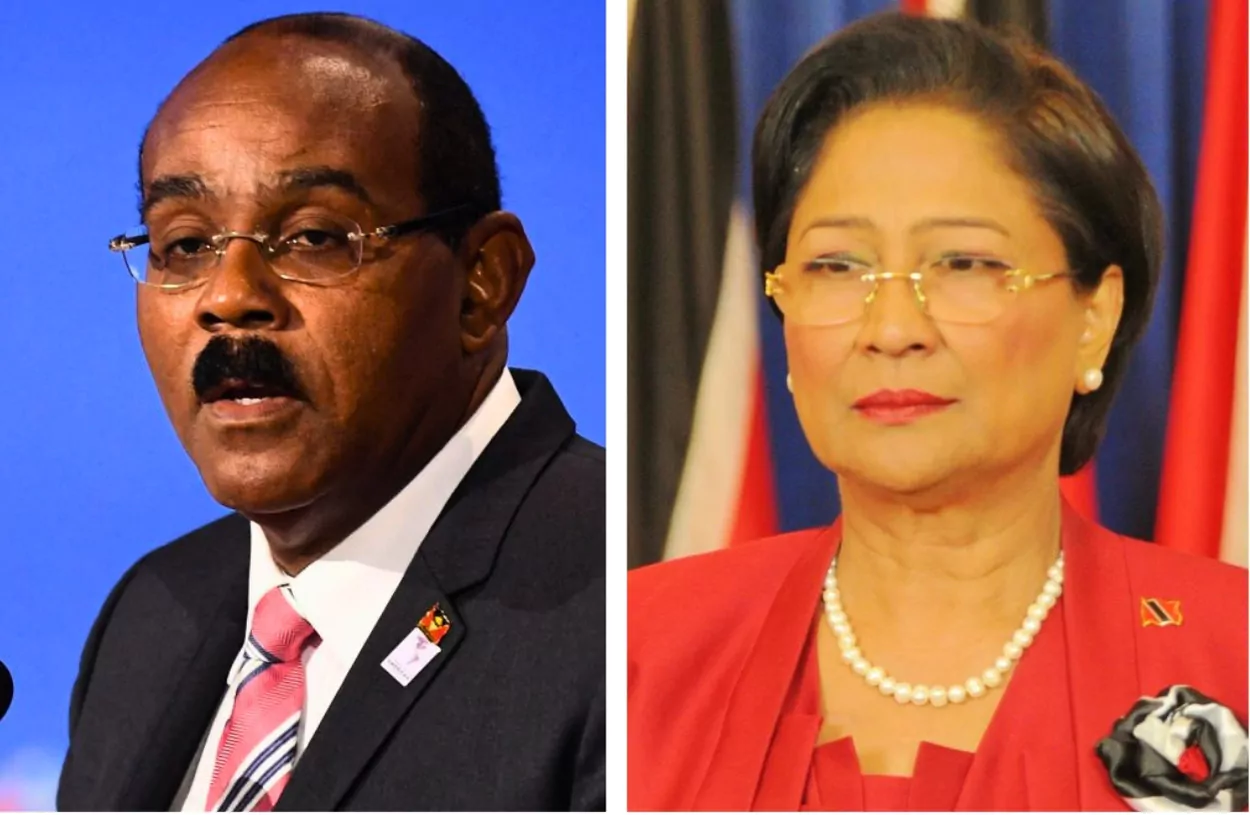
Antigua & Barbuda Prime Minster Gaston Browne and Trinidad & Tobago Prime Minister Kamla Persad-Bissessar
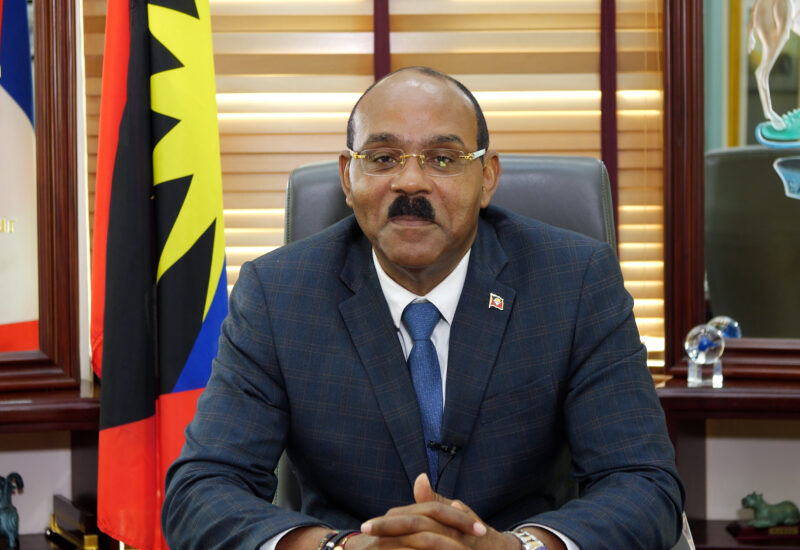
Prime Minister Gaston Browne has issued a firm but measured response to recent remarks by Trinidad and Tobago Prime Minister Kamla Persad-Bissessar, rejecting suggestions that the Caribbean Community is an unreliable partner and defending Antigua and Barbuda’s engagement with international allies, including the United States.
In a statement released Sunday, Browne stressed that Antigua and Barbuda fully respects the sovereign right of every CARICOM member state to pursue its own bilateral relationships. At the same time, he said no country should question another member’s right to engage “responsibly, transparently, and respectfully” with global partners on issues that directly affect its citizens.
Addressing claims that CARICOM has been an unreliable partner to Trinidad and Tobago, Browne pointed to what he described as a clear and compelling economic record. He noted that in 2024 alone, Trinidad and Tobago earned more than US$1.1 billion in foreign exchange from trade with CARICOM states, making the regional bloc its second-largest export market after the United States.
The Prime Minister further highlighted that this trade relationship has been heavily skewed in Trinidad and Tobago’s favour.
He said the country has consistently recorded the largest merchandise trade surplus within CARICOM and remains the only member state to have maintained a net positive trade balance with the Community since CARICOM’s founding in 1973.
Browne added that this advantage has been supported by the Common External Tariff (CET), under which CARICOM states, including Antigua and Barbuda, apply protective tariffs on extra-regional imports to bolster Trinidad and Tobago’s manufacturing sector. In 2024, he said, CARICOM countries collectively forwent an estimated US$142.7 million in customs revenue by sourcing goods from Trinidad and Tobago under CET protection — a cost ultimately borne by Caribbean consumers in the interest of regional solidarity.
Beyond trade, Browne underscored CARICOM’s role in regional security, noting that Trinidad and Tobago faces some of the highest levels of organised crime in the Caribbean. He said cooperation through CARICOM security mechanisms, intelligence sharing, and coordinated law-enforcement initiatives has been critical in addressing those challenges, with Antigua and Barbuda consistently supporting collective security efforts.
“The Caribbean Community is a partnership rooted in shared history, shared bloodlines, and a shared struggle for independence,” Browne said, adding that small states are strongest when they act together.

The Prime Minister also rejected what he described as unsubstantiated claims that Antigua and Barbuda’s leaders have “bad-mouthed” the United States. He said no evidence has been provided because none exists, pointing instead to Antigua and Barbuda’s longstanding collaboration with Washington on security, immigration, and multilateral diplomacy, including cooperation at the United Nations and the Organization of American States.
Browne concluded that respectful dialogue with international partners should not be mistaken for subservience, nor should regional consultation be viewed as disloyalty. He reaffirmed Antigua and Barbuda’s commitment to CARICOM while maintaining responsible and transparent engagement with the United States.
“That balanced approach has served our region well for decades,” he said, warning that rhetoric which divides undermines the proven value of Caribbean interdependence.



I was wondering when he would reply to that shriveled grape
PM Browne backed up his position with facts and figures. That’s how regional discussions should be handled.
Statistics aside, CARICOM still needs serious reform to feel relevant to ordinary people.
Not a personal attack, just a reminder: unity matters more than ego
This situation just ain’t getting better. Is one island against the other and now is not the time for division
Good points raised, but leadership on both sides should focus on unity going forward.
Hear hear. Well said Mr. Prime Minister.
Intelligent and Respectful Sentiments, with absolutely no hint at Subservience.
Thank you I remain a proud Antiguan.