

















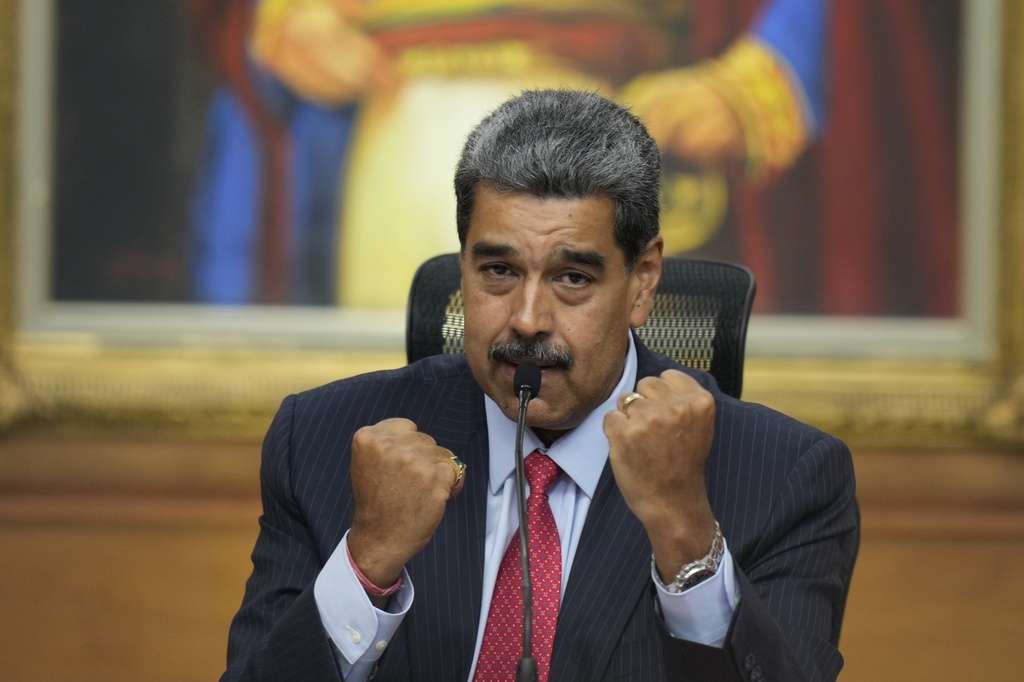
Nicolás Maduro (photo by WLRN)
Venezuelan strongman Nicolás Maduro used his first appearance in a New York federal courtroom to mount a dramatic challenge to U.S. authority, declaring that he was unlawfully seized from Venezuela and insisting that, despite his detention, he remains the legitimate president of his country.
Appearing before U.S. District Judge Alvin Hellerstein, Maduro pleaded not guilty to an array of serious federal charges, including narco-terrorism conspiracy, cocaine trafficking, and weapons-related offenses. The allegations underpin the Trump administration’s justification for his removal from power and transfer to U.S. custody.
Speaking through a court interpreter, Maduro attempted to address the court directly, stating that he had been “captured” during a military operation. When formally asked to enter a plea, he responded emphatically that he was innocent, describing himself as “a decent man” and asserting that his presidency had not ended.
Maduro appeared alongside his wife, Cilia Flores, who also entered a not-guilty plea and identified herself as Venezuela’s first lady. Both are being held at the Metropolitan Detention Center, Brooklyn.
Defense attorney Barry Pollack told the court that the case raises issues far broader than the charges themselves. He argued that Maduro’s removal from Venezuela amounts to an illegal military abduction, signaling that the defense is likely to challenge U.S. jurisdiction and invoke head-of-state immunity.

Maduro intensified that argument by referring to himself as a “prisoner of war,” a claim that, if pursued, could further complicate the legal and diplomatic dimensions of the case.
Judge Hellerstein acknowledged that questions surrounding the legality of Maduro’s detention could be addressed later in the proceedings before outlining his constitutional rights. Maduro responded by noting that he was only learning of those rights in court.
The courtroom confrontation comes as U.S. President Donald Trump continues to project an uncompromising stance toward Venezuela. Trump has publicly stated that the United States now effectively controls the situation in the country and has warned Venezuelan authorities that failure to cooperate would carry severe consequences.
He has also spoken openly about Venezuela’s oil reserves, prompting criticism from regional leaders and analysts who argue that strategic and economic interests are deeply entwined with the legal case.


And indeed he is right. He is still the president of Venezuela until he’s not
he Caribbean and Latin America will be watching closely today it’s Venezuela, tomorrow it could be someone else
Real criminal that
Maduro’s claims may sound dramatic, but jurisdiction and immunity are legitimate legal issues that will have to be addressed.
Calling himself a “prisoner of war” may seem extreme, but it underscores how political this case really is
Whether people support Maduro or not, forcibly removing a sitting president sets a dangerous global precedent