



















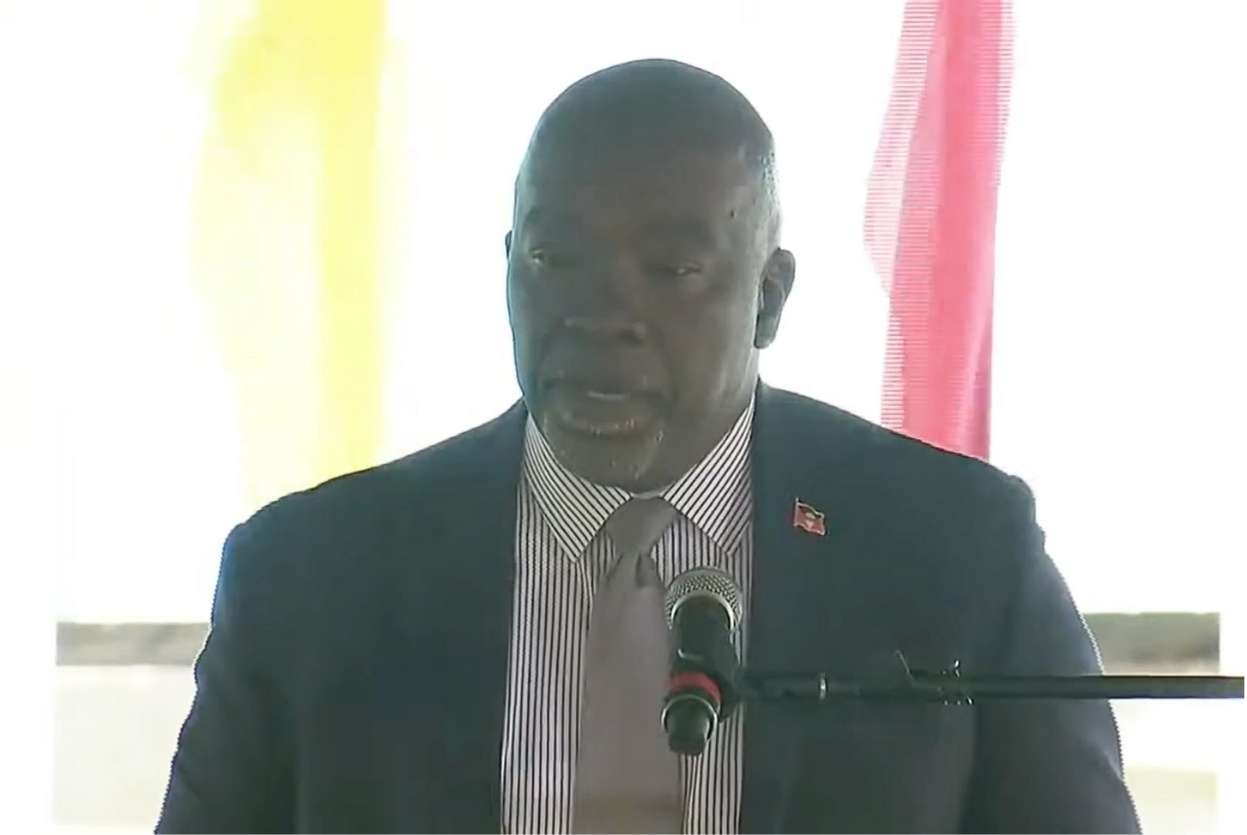
Utilities Minister Melford Nicholas speaking at opening ceremony of Barnacle Point reverse osmosis plant (screenshot of state media)
In a move aimed at finally breaking one of Antigua and Barbuda’s most frustrating infrastructure cycles, Minister of Information, Communication Technologies, Utilities and Energy Melford Nicholas has announced that the Antigua Public Utilities Authority (APUA) will establish its own internal public works department by June 2026.
The announcement was made during the commissioning ceremony for APUA’s new two-million-gallon-per-day reverse osmosis plant at Barnacle Point, a milestone project in the country’s water security drive. According to the minister, the new department is intended to eliminate the long-standing pattern of newly paved roads being cut open shortly afterward to facilitate water main and pipeline repairs.
Addressing an audience that included Governor General Sir Rodney Williams, Cabinet ministers and senior officials, Nicholas made a public commitment to the timeline, declaring that the matter would no longer be deferred.
“I commit to you today, I commit to the public of Antigua, and all who can hear me — it is on the record now,” Nicholas said. “APUA will, before June of this year, have its own internal public works teams.”
Nicholas placed the issue in historical context, noting that the conflict between road construction and utility works has persisted since at least the 1980s. He recalled discussions with the late Charlesworth Samuel, who entered public life with the specific aim of resolving the recurring disruption caused when utility works followed major road rehabilitation.
According to Nicholas, Samuel identified the issue as one of the most persistent infrastructure failures affecting the country, but despite nearly a decade in government, was unable to bring about a permanent solution. The minister acknowledged that he himself had publicly criticised the problem more than a decade ago, long before assuming responsibility for the utilities portfolio.
Now, with APUA under his direct oversight, Nicholas said the responsibility to act is unavoidable.
The announcement comes at a time when the government is investing hundreds of millions of dollars in road rehabilitation across Antigua, heightening public sensitivity to any damage or disruption caused by utility work.
Nicholas said allowing roads to be repeatedly cut after major upgrades undermines public confidence and wastes scarce resources.

“We are doing the country a disservice if, at the same time the government has undertaken hundreds of millions of dollars in increased expenditure on the roads, it would appear to the public that APUA willy-nilly… goes and digs them up,” he said.
He also acknowledged ongoing pressure from Minister of Public Works Maria Browne, who he said frequently raises concerns about the disruption caused when APUA interventions follow closely behind roadworks.
The issue has recently resurfaced in public discourse following the cutting of Michael’s Avenue near a plumbing and hardware business shortly after road repairs were completed. Images and commentary circulated widely on social media, reigniting public frustration and reinforcing calls for better coordination between agencies.
Nicholas said the creation of an internal public works department will allow APUA to better plan, coordinate, and execute pipeline works in tandem with national road development projects, rather than reacting after the fact.
The new unit will be especially critical as APUA prepares to roll out a US$60-million re-piping programme, funded by the Chinese government. The project will involve replacing aging water mains along approximately 18 miles of All Saints Road, the Burning Flames Highway, and several other key corridors across the island.
APUA Chief Executive Officer John Bradshaw said many of the existing pipelines are far beyond their intended lifespan.
“Some of the pipes that we have are nearly 100 years old. We must change those,” Bradshaw said.
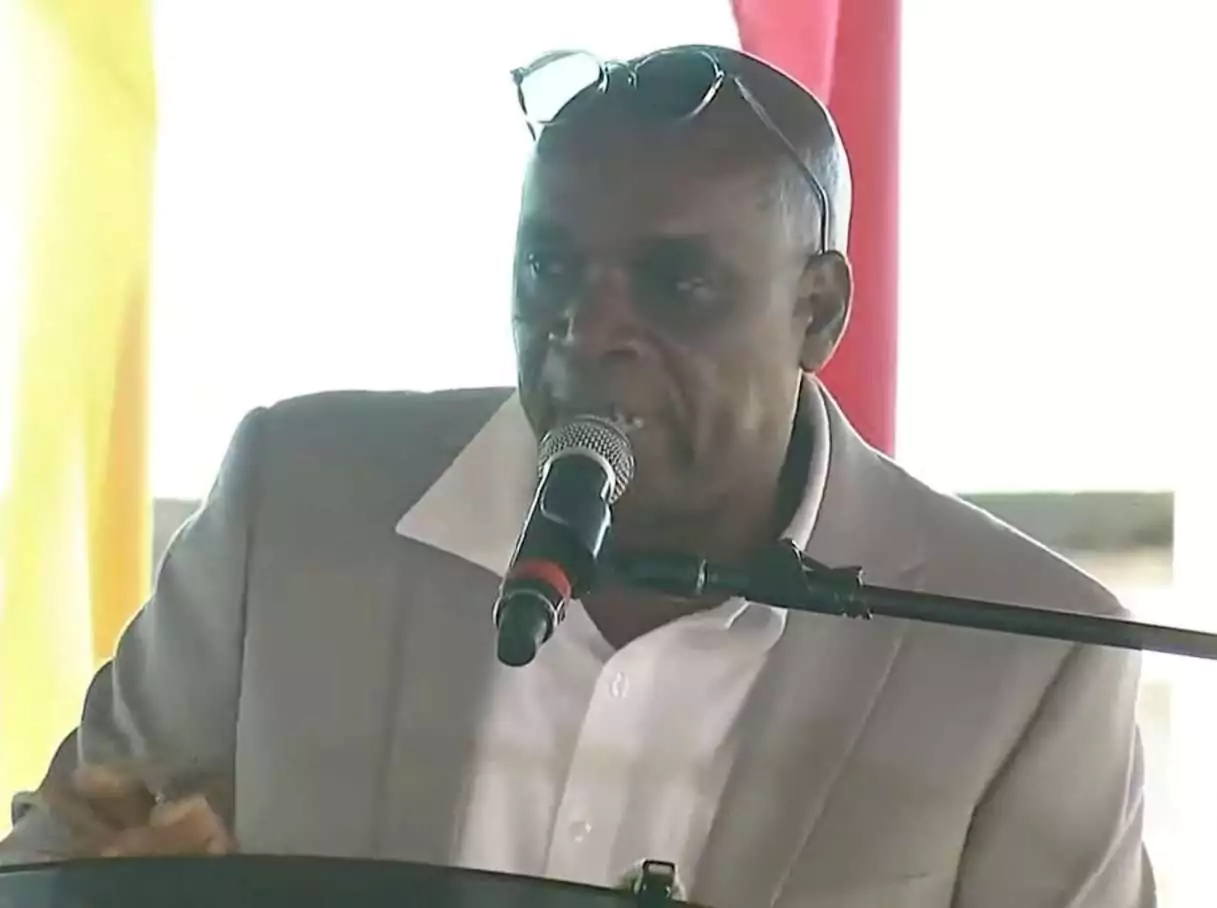
John Bradshaw, CEO of APUA speaking at Barnacle Point plant opening ceremony (screenshot of state media)
Nicholas acknowledged that establishing the department will require significant capital investment, including equipment, training and staffing, but insisted the long-term benefits outweigh the costs.
With the June 2026 deadline publicly stated, the minister conceded that the pledge will be closely scrutinised, particularly given his reputation for demanding high performance from state agencies.
“I will remain, for the time being, the unreasonable minister that pushes the utility in the direction of its highest ideals,” Nicholas said. “We are going to achieve higher and higher standards.”




What does that mean. In house public works unit. Yall just leave me alone
Oh lord. I’m. Ot even sure how to feel about that since they always the ones digging up after public works done fix
APUA having its own public works team is logical. Utilities should never be reacting after the roads are finished.
Decades of road disruptions have damaged vehicles, slowed businesses, and tested public patience. Creating an internal public works unit could be a long-overdue structural fix rather than another temporary patch.
Who else fed up with APUA
Social media pressure working again. Michael’s Avenue really opened people’s eyes.