



















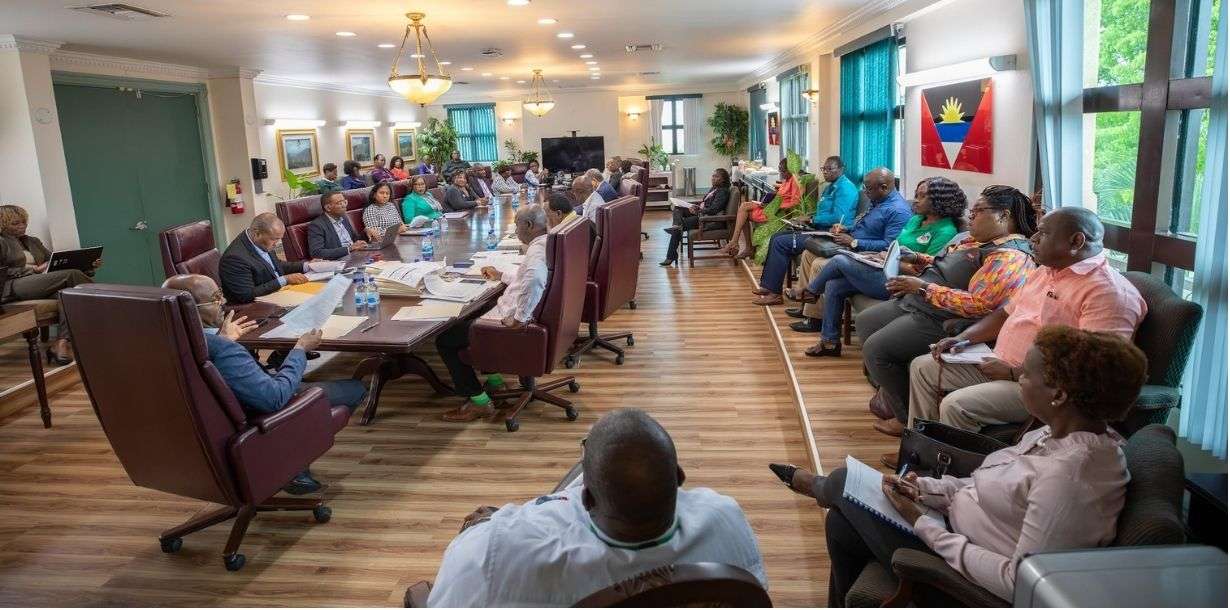
Cabinet meeting in Antigua and Barbuda (Photo by Office of the Prime Minister)
The Cabinet of Antigua and Barbuda is reviewing a proposal aimed at reducing selected food imports by 15 percent as part of the regional CARICOM 25 by 2025 + 5 Initiative, according to information disclosed by Maurice Merchant, Director of Communications in the Office of the Prime Minister.
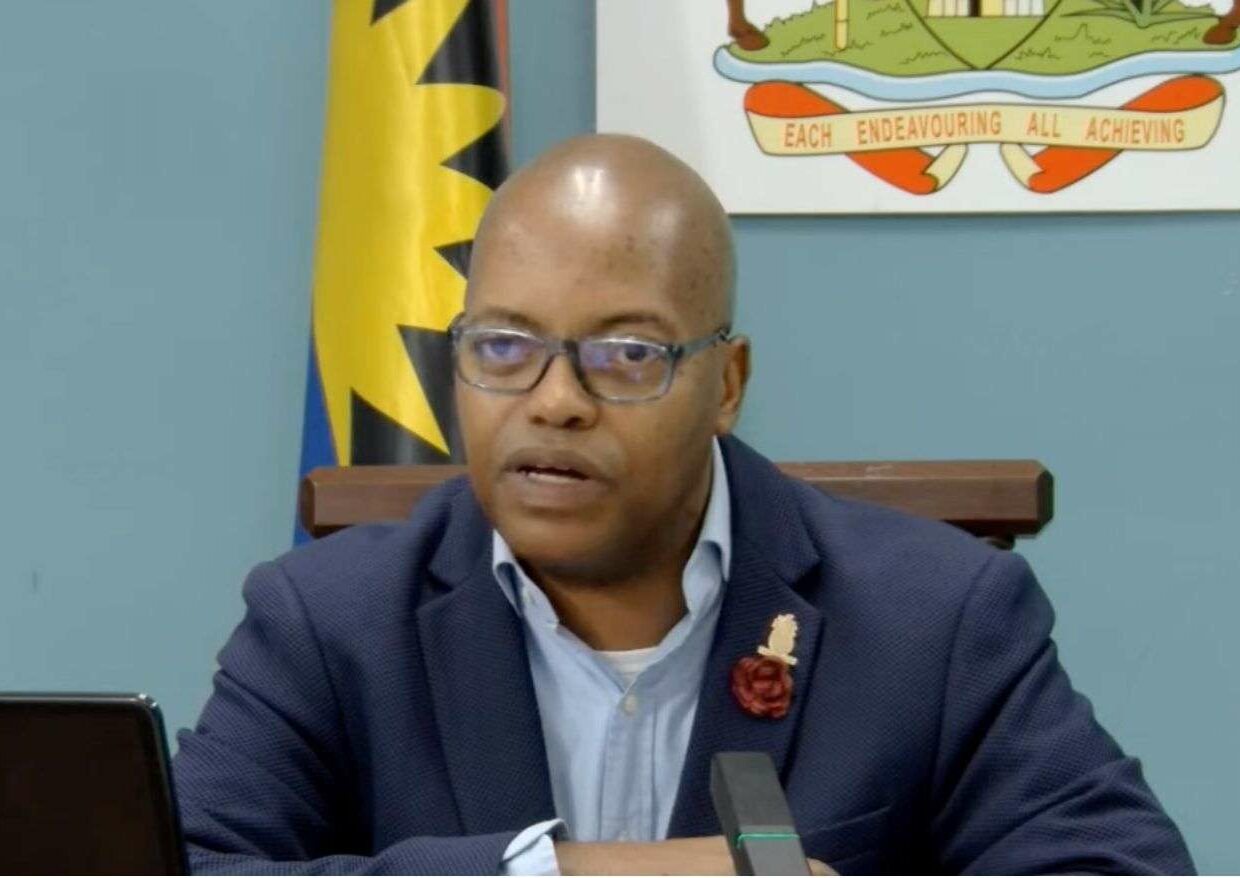
Director General of Communications in the Prime Minister’s Office, Maurice Merchant (screenshot of state media)
The proposal, presented by the Director of Agriculture, outlines a national approach focused on strengthening food security, improving farmer resilience, and supporting rural employment.
Cabinet was advised that the 15 per cent reduction target has been adopted as a realistic and achievable milestone for Antigua and Barbuda.
The strategy centres on replacing a portion of imported root crops, vegetables, and livestock products with increased domestic production. Targeted import substitution would require an estimated 78 additional acres of crop production and just over 1,200 head of livestock, representing approximately EC$1.67 million in import value.
Priority commodities identified under the plan include onions, tomatoes, sweet peppers, cassava, sweet potato, sheep, and swine.

Gregory Bailey, Director of Agriculture
According to the presentation, the proposed approach is built on several key pillars, including expanded production, enhanced farmer support and incentives, improved access to financing and risk-management tools, youth engagement and innovation, and stronger market and value-chain development. Emphasis is also being placed on climate-smart and resource-efficient farming practices.

The implementation framework outlines a phased rollout from 2025 to 2030. The initial phase focuses on scaling up production of key vegetables and livestock, followed by expansion into additional crops and a consolidation phase aimed at ensuring long-term sustainability of the import reduction target.
Monitoring and evaluation mechanisms were also presented, including quarterly progress tracking and annual stakeholder reviews.
Cabinet noted the proposal and will continue its consideration of the measures outlined by the Director of Agriculture, including the institutional arrangements and resources required to advance the initiative.




I will certainly be one helping to reduce the bill by planting some of the crops they mentioned. I really think if we all play start a little backyard garden that can help reduce that multi-million dollar food bill
Where the guaranteed market? Farmers plant and can’t sell
Local farmers ready. The system just making it hard.
Success will depend on strong support for farmers, including access to land, financing, and water
15% sounds small but even that will take real wor