
OPINION: Bishop George Alexander McGuire and the Global Reconfiguration of Black Christianity

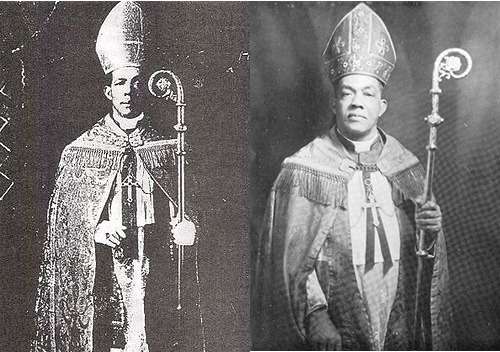
Introduction
The life and work of George Alexander McGuire occupy a singular place in the religious and intellectual history of the African diaspora. A theologian, physician, ecclesiastical architect, and Pan-African leader, McGuire combined scholarship and institution-building in a manner rare for his era.
His founding of the African Orthodox Church (AOC) in 1921 was not an isolated ecclesiastical act, but part of a broader global reorientation of Black religious and political self-determination.
This expanded study situates his theological and medical training alongside his pivotal role within the Universal Negro Improvement Association (UNIA), demonstrating how intellectual discipline, professional achievement, and spiritual leadership converged to shape his international influence.
⸻
I. Intellectual and Professional Formation: Theology and Medicine
Born in 1866 in Sweets, Antigua, McGuire received early education within the Anglican tradition and was ordained in the Church of England. His intellectual ambition, however, extended beyond parish ministry. Determined to ground his authority in formal scholarship, he pursued advanced theological studies after migrating to the United States, earning a Doctor of Divinity (D.D.). His theological training included rigorous engagement with:
• Patristic theology
• Ecclesiology and apostolic succession
• Canon law
• Liturgical history
This academic formation equipped him to engage ecclesiastical debates at the highest level and later to defend the legitimacy of an independent apostolic church.
In addition to theology, McGuire obtained a degree in medicine. His medical training, though less frequently emphasized in historical summaries, reflected a broader philosophy of service. In an era when access to healthcare for Black communities was severely limited, the combination of clerical and medical competence reinforced his stature as a community leader.
Medicine strengthened three dimensions of his public role:
1. Practical Service – Addressing physical suffering alongside spiritual needs.
2. Professional Credibility – Demonstrating Black intellectual achievement in fields often denied to African-descended people.
3. Holistic Liberation – Embodying the principle that dignity required both bodily and spiritual restoration.
Thus, McGuire’s authority was not confined to the pulpit; it extended into the realms of scholarship, public health, and community empowerment.
⸻
II. Migration, Segregation, and Institutional Reassessment
After settling in the United States in the 1890s, McGuire served within the Protestant Episcopal Church. Despite his theological education and professional standing, racial barriers curtailed advancement.
His academic and medical credentials sharpened his awareness of structural injustice. Christianity professed universality; yet its institutions practiced exclusion. McGuire concluded that equality could not flourish within systems structurally resistant to Black leadership.
His departure from the Episcopal Church in 1918 marked a decisive turn toward institutional autonomy grounded in theological reasoning rather than emotional protest.
III. Leadership within the UNIA
McGuire’s theological and professional stature made him a natural ally of Marcus Garvey, founder of the UNIA.
Within the UNIA, McGuire served as Chaplain-General, a position of significant influence. His responsibilities extended beyond ceremonial prayer. He:
• Authored portions of the UNIA’s liturgical and ceremonial framework.
• Developed religious rituals that reinforced racial pride and collective dignity.
• Provided theological grounding for Garvey’s political vision.
• Served as a moral and spiritual adviser within the organization’s leadership.
The UNIA was one of the largest mass movements of African-descended people in history, with chapters across the Caribbean, North America, Central America, and Africa. Through this platform, McGuire’s ideas reached a transnational audience.
Importantly, McGuire understood that political liberation required spiritual reorientation. Centuries of colonial Christianity had conditioned many to associate holiness with whiteness. As Chaplain-General, he sought to dismantle that psychological inheritance by integrating liturgy with racial affirmation.
Garvey provided economic and political mobilization; McGuire constructed the spiritual infrastructure that sustained it.
⸻
IV. Founding the African Orthodox Church
In 1921, McGuire established the African Orthodox Church in New York. Consecrated as Patriarch Alexander I, he secured apostolic succession through connections with the Syrian Orthodox tradition. His theological training enabled him to structure the AOC with:
• Historic episcopal governance
• Orthodox sacramental theology
• Doctrinal continuity with early Christianity
The church affirmed African dignity through sacred imagery and leadership while maintaining orthodox theological substance. It avoided doctrinal radicalism; its innovation lay in racial autonomy, not theological deviation.
His combined identities—as theologian, physician, and Pan-African leader—enhanced the church’s credibility across diaspora communities.
⸻
V. Global Reach: Caribbean and Africa
The African Orthodox Church spread to the Caribbean and East Africa. In Kenya and Uganda, where African clergy increasingly resisted European missionary paternalism, the AOC provided a viable alternative rooted in apostolic Christianity yet free from colonial dominance.
McGuire’s scholarly authority reassured African leaders that independence need not entail theological rupture. His movement thus contributed to the broader rise of African independent churches and intersected indirectly with emerging anti-colonial movements.
Through the UNIA’s networks and the AOC’s ecclesiastical structure, McGuire linked Antigua, Harlem, Kingston, Nairobi, and Kampala in a shared religious transformation.
⸻
VI. The Convergence of Faith, Profession, and Liberation
McGuire’s life demonstrates an integrated model of leadership:
• Theologian – Grounded in orthodoxy and ecclesial tradition.
• Physician – Attentive to bodily well-being and social conditions.
• Pan-African Cleric – Advocate for racial self-determination.
• Institution Builder – Founder of a transnational church.
This convergence made him distinctive. He embodied the argument that liberation must be intellectual, spiritual, institutional, and material.
⸻
VII. Enduring Legacy
McGuire died in 1934, but his influence persisted through:
• The continuing presence of the African Orthodox Church.
• The normalization of Black episcopal authority.
• The intellectual groundwork for later Black and African liberation theologies.
In Antigua, he stands as a figure of national and diasporic significance—an early Caribbean architect of global Black religious sovereignty.
⸻
Conclusion
Bishop George Alexander McGuire’s global influence rested on more than charismatic leadership. It was fortified by theological scholarship, medical education, and disciplined institutional vision. His role within the UNIA connected spiritual affirmation to mass political mobilization, while his founding of the African Orthodox Church provided structural expression to Pan-African aspiration.
By uniting intellect, profession, and faith, McGuire advanced a transformative claim: that a people’s dignity requires control not only of political and economic institutions, but of the sacred narratives that define their humanity.
His legacy remains a testament to the power of educated conviction joined to global vision.
Note:Document emanated from ChatGpt search conducted by Gassy Dread.
This story was first published by Antigua News on : antigua.news/2026/02/28/opinion-bishop-george-alexander-mcguire-and-the-global-reconfiguration-of-black-christianity. © 2026 Antigua News. Republication without permission is not allowed.

About the author
The Editorial Staff refers to all reporters employed by Antigua.news. When an article is not an original creation of Antigua.news—such as when it is based on a press release, other media articles, letters to the editor, or court decisions—one of our staff members is responsible for overseeing its publication.
Read our editorial standards and corrections policy. Spotted an error? Contact the newsroom.
More from Antigua and Barbuda
View section
Chinese Partners Join Social Protection Board in Successful Food Distribution
Donated meals and hands-on support bring assistance to members of the public, with Operations Manager Emily Baltimore praising the partnership.
By Shermain Bique-Charles

Residents Inside CHOGM Security Zone Warned About Temporary Re-entry Restrictions
Police say people may leave their homes during the opening ceremony restrictions but could face difficulty returning before controls are lifted.
By Shermain Bique-Charles

No Nationwide Lockdown for CHOGM, Officials Assure Public
Temporary security restrictions and convoy stops will affect selected areas while businesses and essential services continue operating.
By Shermain Bique-Charles

Police Say Previous Grays Farm Investigation Led To Washington Bramble’s Arrest at Town Hall Meeting
Police say several attempts to locate Bramble for questioning had been unsuccessful before officers arrested him during Wednesday’s town hall meeting.
By Cory Wayland
Comments
Be the first to comment.