
OPINION | The Shield and the Silence: What the Doral Summit Reveals About the Caribbean’s Position in a Changing Hemisphere

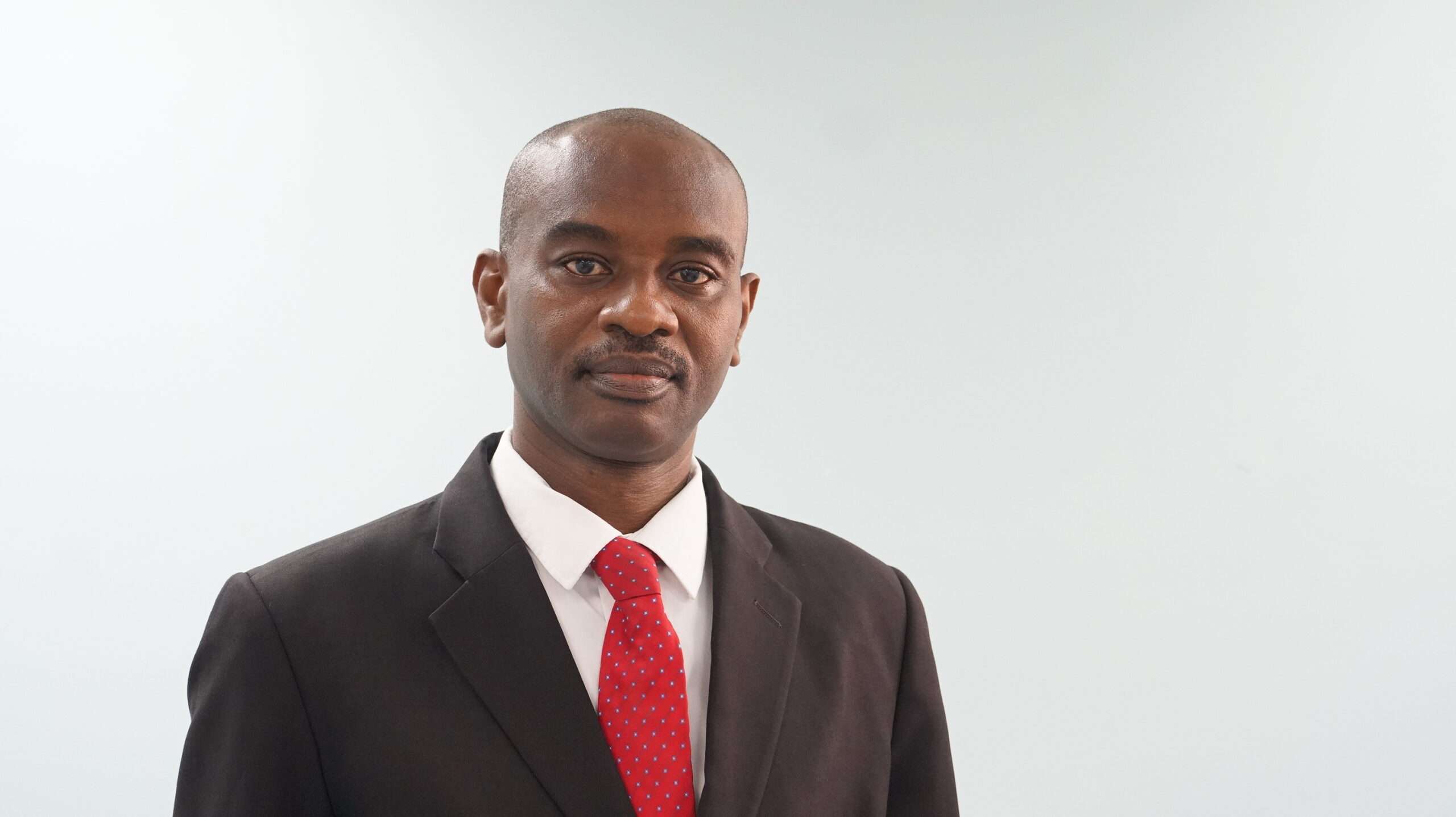
By Professor C. Justin Robinson
Pro Vice-Chancellor and Principal, The UWI Five Islands Campus
“Who vex loss.” With those three words, delivered to a room full of Caribbean heads of government in St. Kitts and Nevis last week, Trinidad and Tobago’s Prime Minister Kamla Persad-Bissessar distilled a geopolitical moment into a Trinidadian proverb. If you are upset by my choices, that is your problem! I have made my calculation and I am moving on.
It is a phrase worth sitting with. On Saturday, twelve heads of state will gather at a golf resort in Doral, Florida, for what the White House has named the Shield of the Americas Summit. The guest list reads like a roll call of the compliant: Argentina, El Salvador, Ecuador, Honduras, the Dominican Republic, Paraguay, Panama, Costa Rica, Bolivia, and Chile’s incoming president. From the Caribbean, two leaders have been invited, Guyana’s President Irfaan Ali and Prime Minister Persad-Bissessar. The rest of CARICOM was not asked.
The summit is framed around security, counter-narcotics, and countering Chinese influence. The US Defense Secretary has invoked the Monroe Doctrine approvingly. The conference preceding the summit described the gathered nations as ‘offsprings of Western civilization’ facing a test of whether they would remain ‘Christian nations under God.’ Set aside the breathtaking presumption of that framing, its erasure of indigenous peoples, its amnesia about enslavement. Focus on the guest list. Mexico, Brazil, and Colombia, the three largest Latin American economies, were not invited. This is a summit of the compliant, not a summit of the Americas.
Days earlier, all fifteen CARICOM member states gathered in Basseterre for their 50th Heads of Government Meeting. The agenda covered the concerns that define Caribbean survival, climate finance, the CSME, food security, reparatory justice, and the Guyana-Venezuela border controversy before the ICJ. US Secretary of State Marco Rubio attended, held bilateral meetings with Ali and Persad-Bissessar, and the Doral invitations followed directly. Two CARICOM leaders were, in effect, extracted from a regional forum and offered seats at a different table, one where the agenda, the terms, and the host were all American.
Persad-Bissessar’s opening speech had already signalled where she stood, defending Trinidad’s partnership with the Trump administration, crediting US military operations with a 42 per cent reduction in murders, calling Maduro a ‘narco-dictator,’ and challenging CARICOM’s record on Venezuela and Cuba. Who vex loss. Is Jamaica non-compliant, or just oil-poor?
Chairman Drew insisted the bloc was not fractured. This is legally correct and beside the point. The question is what happens to the collective voice of fifteen small states when two of the most resource-rich are offered preferential access to the hemisphere’s dominant power on terms that have nothing to do with the issues the collective has identified as existential.
Climate finance is not on the Doral agenda. The Bridgetown Initiative is not on the Doral agenda. Reparatory justice is not on the Doral agenda. The CSME is not on the Doral agenda. What is on the agenda is what Washington wants to discuss, counter-narcotics, migration, and the containment of Chinese economic influence. The conflation of American strategic priorities with Caribbean development needs is precisely the kind of asymmetry that small states must be clear-eyed about. It is precisely the reason we have built such vulnerable economies that fail to serve the majority of our people.
It is tempting to ask why our leaders would trade this agenda for Washington’s, but that question assumes the luxury of patience. For Trinidad, the agenda is written nightly in body bags. For Guyana, it is etched into the border posts creeping westward. The tragedy, and it is a profound one, is that by chasing the urgent, they abandon the leverage that might secure the future. They accept a seat at a table where their deepest anxieties are acknowledged, not knowing that the price of admission is silence on the very issues that will determine whether their grandchildren survive.
I have written previously about the Caribbean’s existential moment and the argument that no one is coming to save us. Doral tests that argument in real time. The old Cold War was dangerous for small states, but it came with courtship as both superpowers invested in winning allies. The new competition offers all the danger of great power rivalry with none of the reciprocity. The proposition is stark, align with us, accept our priorities, and expect little in return beyond the absence of punishment.
Consider the cautionary tales. María Corina Machado is a Nobel Peace Prize laureate and the face of Venezuelan democratic resistance for over a decade. She gave Trump her Nobel medal, she called him a visionary. Washington’s reward was to sideline her entirely, installing Maduro’s own vice president as interim leader while Trump declared Machado unfit to govern. When Washington speaks of freedom at Doral, Caribbean leaders should remember who carried that banner in Caracas and how quickly she was discarded once the oil was secured.
Or consider what unfolded on the very eve of the summit. On Thursday, Trump fired Kristi Noem as Homeland Security Secretary. Noem had been the most visible face of his immigration agenda, she oversaw mass deportations, starred in a $220 million ad campaign, and defended every controversial operation her president ordered. Her reward was a social media dismissal. Her consolation title? Special Envoy for the Shield of the Americas, the very summit to which our leaders have been summoned. The hemisphere, it turns out, is where Washington sends its discarded loyalists. If this is how the administration treats its most faithful domestic servant, Caribbean leaders might reasonably ask what the shelf life of their own compliance will be.
None of this is to say that Guyana and Trinidad should not engage with the United States. The security and energy dimensions are real. But there is a difference between engaging a great power and being absorbed into its strategic framework. There is a difference between a negotiation and an audience. And there is a difference between a partnership, in which both parties shape the agenda, and a summons, in which one party sets the terms and the other shows up.
The Caribbean’s strength has always been collective. It was CARICOM’s unified voice that shaped the climate finance debate through the Bridgetown Initiative. Washington does not benefit from a unified CARICOM with a coherent position on climate, trade, and sovereignty. It benefits from individual states that can be engaged and pressured one at a time.
Somewhere in Basseterre during those four days, a young foreign service officer from one of the smaller Eastern Caribbean states sat in a delegation room, drafting talking points she knew would never make the news. She holds two degrees, she is paid less than a mid-level hotel manager, she could be in Toronto by next month if she chose. She stays because she believes that her country’s voice, delivered through a regional mechanism, can still shape outcomes in rooms where her island would otherwise not merit a seat. She is the person for whom the CARICOM project exists and she is the person most betrayed when the logic of the project is undermined, not by enemies, but by members who conclude that bilateral patronage offers a faster return than collective action.
Who vex loss, the Prime Minister said. But the question the rest of the Caribbean must answer is different, and harder. Who loss when we stop insisting that the region’s agenda belongs to the region? Who loss when we accept that the price of a seat at someone else’s table is silence about the things that matter most at our own? Who loss when usefulness to the US expires!
The shield on offer in Doral protects American interests and for now Guyana’s and Trinidad’s immediate economic and security interests. The question for the rest of the Caribbean is whether we are building our own.

About the author
The Editorial Staff refers to all reporters employed by Antigua.news. When an article is not an original creation of Antigua.news—such as when it is based on a press release, other media articles, letters to the editor, or court decisions—one of our staff members is responsible for overseeing its publication.
Read our editorial standards and corrections policy. Spotted an error? Contact the newsroom.
More from Antigua and Barbuda
View section
LETTER | Enough Is Enough: Zero Tolerance, Zero Excuses - It Is Time to Take Back Our Nation”
By Editorial Staff

Tevin Willock Jailed for Nearly 11 Months Over Ammunition Possession
Tevin Willock Receives 10-Month, 20-Day Prison Sentence for 9mm Ammunition Possession
By Cory Wayland

More Than 2,500 Students Screened as School Vision Programme Identifies Children Needing Follow-Up
School Vision Screenings Flag Eye Concerns in More Than 280 Students
By Cory Wayland

Antigua and Barbuda Signs Visa Waiver Agreement with Azerbaijan at UN General Assembly
Antigua and Barbuda, Azerbaijan Sign Visa Waiver Agreement During UN Meetings
By Cory Wayland
Comments (5)
DOT March 7, 2026, 5:12 PM
Evelyn Houston March 7, 2026, 8:22 AM
Informed citizen March 6, 2026, 11:47 PM
Lolita March 6, 2026, 4:37 PM
Juju Bee March 6, 2026, 4:36 PM