
Prime Minister Says Government Absorbing Costs to Keep Fuel Prices Stable for Now

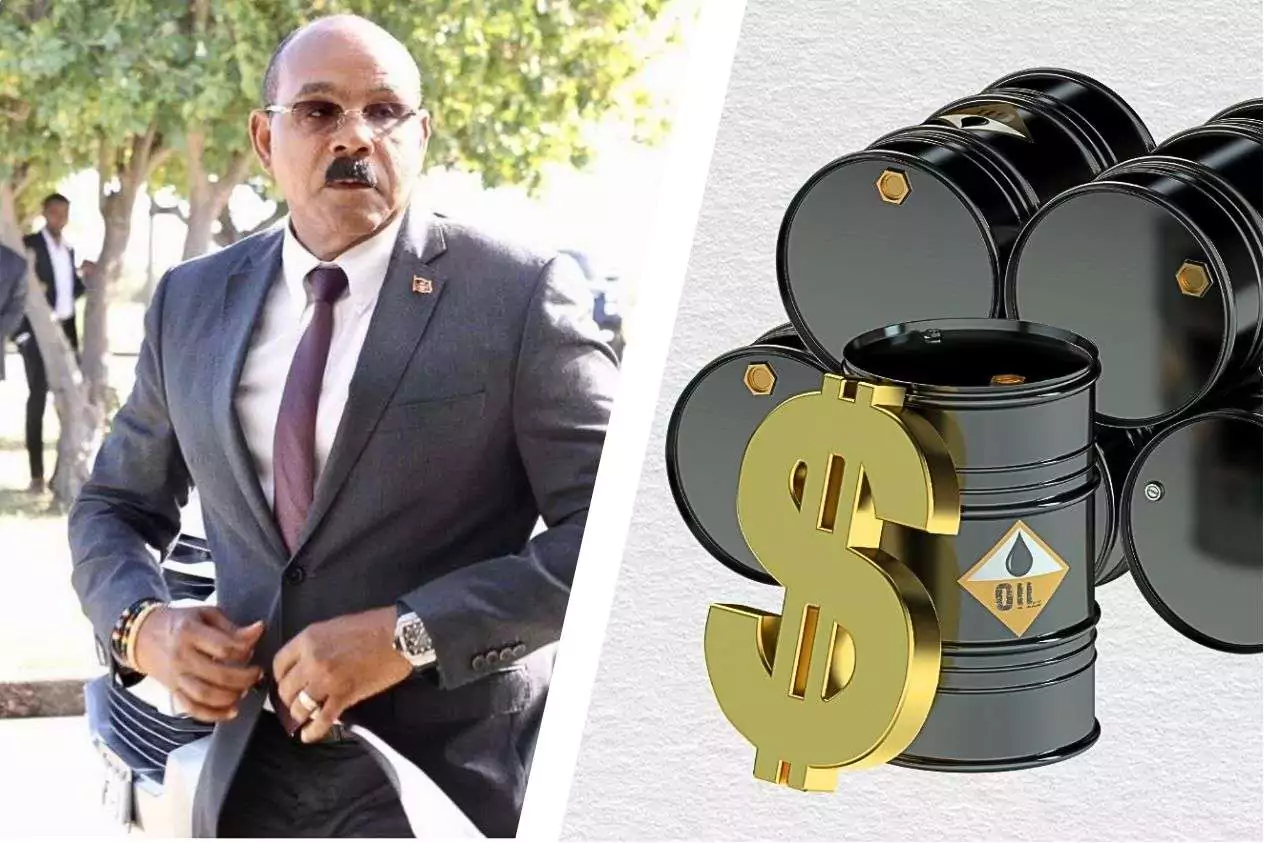

Prime Minister Gaston Browne says the government has been deliberately absorbing some of the impact of rising global fuel prices in order to shield consumers in Antigua and Barbuda from further increases in the cost of living.
Chief Executive Officer of the West Indies Oil Company (WIOC), Gregory Georges, says Antigua and Barbuda is already feeling the effects of rising global oil prices, confirming to Antigua.news that a recent fuel shipment arrived at significantly higher costs.
According to Georges, the sharpest increases have been recorded in diesel and jet fuel, reflecting the impact of the latest surge in the international energy market.
Speaking during his radio programme over the weekend, Browne explained that fuel price increases have a ripple effect across the economy, raising the cost of transportation, groceries, hardware supplies and other everyday goods in a country that relies heavily on imports.
The Prime Minister pointed out that fuel prices in Antigua and Barbuda remain competitive compared with other members of the Eastern Caribbean Currency Union (ECCU), noting that the government has maintained gasoline at $14.25 per imperial gallon despite fluctuations in global markets.
He said that while some critics have accused the government of overcharging consumers, regional comparisons show that several other territories have higher fuel and liquefied petroleum gas (LPG) prices.
According to the figures cited, some islands such as Anguilla and Saint Lucia record significantly higher LPG prices for both 20-pound and 100-pound cylinders, while Antigua and Barbuda remains among the lower-priced jurisdictions within the subregion.
Browne said the government has achieved this by reducing the amount it collects in consumption tax on fuel in order to maintain price stability.
“We have decided to take less taxes to maintain stability in the pricing,” he said. “You know exactly what you would have paid for fuel over the last three years. We haven’t changed the prices even though global prices have been fluctuating.”
He added that during periods when international fuel prices spiked — particularly during the war in Ukraine, the government absorbed losses rather than passing the full increase on to consumers.
Browne cautioned, however, that if global conflicts or supply disruptions continue to push prices upward, the government may eventually have to adjust fuel prices.
“I hope it doesn’t get to that stage, but up to this point the government is committed to continue subsidizing the prices by reducing the amount we collect in consumption tax,” he said.
The Prime Minister stressed that the approach is intended to provide predictability and stability for consumers and businesses in Antigua and Barbuda while the country navigates ongoing global economic pressures.

About the author
Shermain Bique-Charles is an accomplished journalist with over 24 years of dynamic experience in the industry. Renowned for her exceptional storytelling and investigative skills, she has garnered numerous awards that highlight her commitment to journalistic integrity and excellence. Her work not only informs but also inspires, making her a respected voice in the field.
Read our editorial standards and corrections policy. Spotted an error? Contact the newsroom.
More from Antigua and Barbuda
View section
Uroy Joseph Murder Trial: Jury Shown Bloodstained Pipe Linked to Arthur James Case
Uroy Joseph Trial Deepens as Jury Examines Burnt Car and Alleged Murder Weapon
By Cory Wayland

LETTER | Enough Is Enough: Zero Tolerance, Zero Excuses - It Is Time to Take Back Our Nation”
By Editorial Staff

Tevin Willock Jailed for Nearly 11 Months Over Ammunition Possession
Tevin Willock Receives 10-Month, 20-Day Prison Sentence for 9mm Ammunition Possession
By Cory Wayland

More Than 2,500 Students Screened as School Vision Programme Identifies Children Needing Follow-Up
School Vision Screenings Flag Eye Concerns in More Than 280 Students
By Cory Wayland
Comments (4)
Apex Jones March 16, 2026, 7:58 AM
Informed citizen March 15, 2026, 11:40 PM
ANU Economist March 15, 2026, 12:24 PM
Antiguan March 15, 2026, 12:02 PM