
Nasa’s Artemis II moon mission successfully blasts off

By Mick the Ram
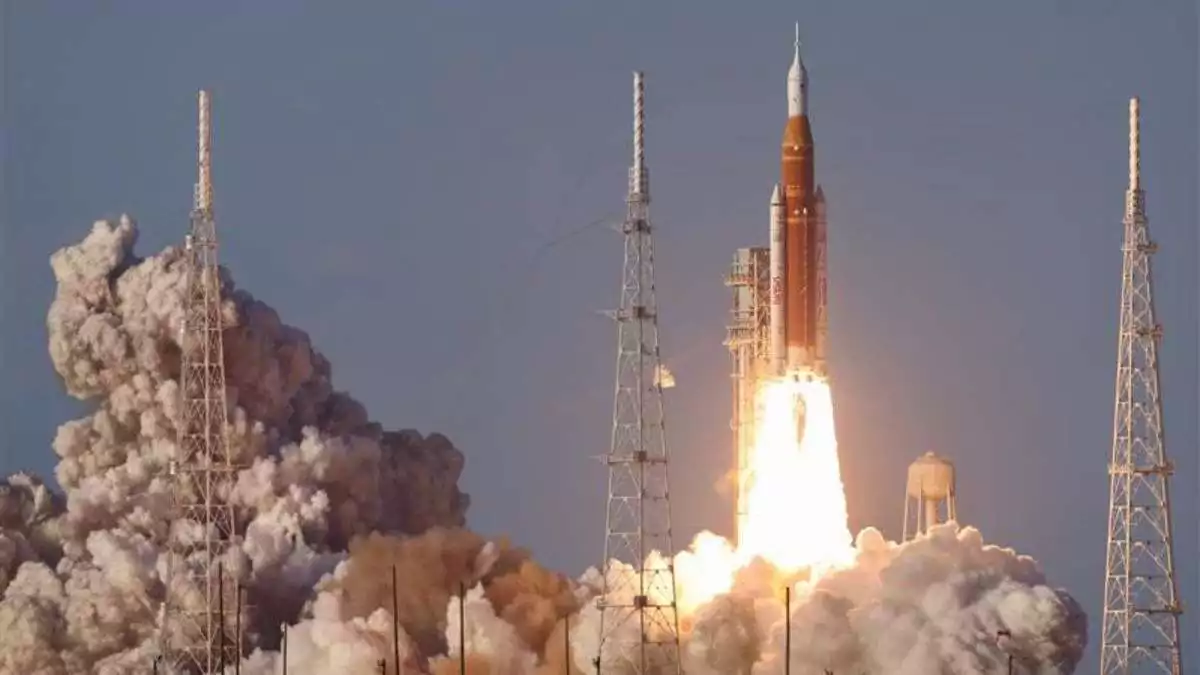
There were cheers from the Kennedy Space Center technicians when Nasa’s mission to circle the moon in the enormous space rocket Artemis II, blasted away from the Florida coast at 18:35 CDT, on 1 April.
The earth literally shook when a sheet of brilliant white flame suddenly erupted, temporarily engulfing the whole launch pad, as the giant craft rose into the sky. It then received a second combined cheer when passing the moment of maximum danger – one minute and 10 seconds into the launch.
That was the point at which the pressure hits the rocket the fiercest, and therefore when engineers know that even a small structural weakness can be catastrophic.
There had been several issues in the hour or so before hand, which genuinely threatened the launch as concern was raised regarding the abort system, which enables the Nasa scientists to eject the astronauts and blow up the rocket if there is a malfunction.
Also, according to flight controllers, sensors in the waste-management system (in other words the rocket’s toilet) was throwing up some unexpected readings, but these were rectified and the crew of four were able to share their pre-launch messages during the 10-minute countdown to lift off.
The four astronauts who make up the team are: Retired Navy captain, Commander Reid Wiseman, Pilot Victor Glover, Mission specialist Christina Koch and Fighter Pilot Jeremy Hansen.
- Commander Wiseman, who is leading the crew, has previously spent more than five months at the International Space Station in 2014.
- Glover is one of NASA’s few Black astronauts, and has said previously he sees the mission as a chance to inspire others to get into space. In 2018, he spent more than 6 months on the International Space Station.
- The 47-year-old Koch is an electrical engineer from North Carolina, and holds the record for the longest single spaceflight by a woman at 328 days during which time she studied the physical, biological and mental effects of long-term space travel on women.
- Canadian Hansen, is also a physicist, and is making his space debut as well as becoming the first Canadian to ever go to the Moon.
Observers ticked off various milestones as they were achieved, such as seeing the twin boosters separate after helping the rocket reach a speed of more than 10,000mph.
The astronauts officially entered orbit when they crossed what is known as the Kármán line – the boundary between Earth’s atmosphere and space. They are now heading out to a point some 6,400 miles (10,299km) beyond the far side of the Moon, which always faces away from the Earth – marking the first time this has taken place.
This will surpass the record for the farthest distance humans have travelled from this planet, set by Apollo 13. The actual lunar flyby is expected on April 6 and the crew will return to Earth with a splashdown in the Pacific Ocean at approximately 0006 UTC on April 11.
Nasa then has its sights firmly set on Mars and wants to send people there by the 2030s, although many feel that allowing for the many technological hurdles needed to be overcome, that represents an ambitious timeline.
This story was first published by Antigua News on : antigua.news/2026/04/02/nasas-artemis-ii-moon-mission-successfully-blasts-off. © 2026 Antigua News. Republication without permission is not allowed.

About the author
Mick Burrows is an independent freelance author based in the UK, boasting over 20 years of experience in the online writing landscape. His extensive background has enabled him to develop a diverse range of material, marked by a unique and distinct style. Recognized as a platinum-level expert author by leading e-zine publications, Mick excels in optimizing content for Search Engine Optimization (SEO) through effective keyword density and distribution. He has served as the lead reviewer for a travel enterprise and the senior previewer at a sports prediction company, melding his passions for sport—particularly football and cricket—with his love for travel, having explored more than 50 countries worldwide.
Read our editorial standards and corrections policy. Spotted an error? Contact the newsroom.
More from World
View section
Kenyan Preacher Paul Mackenzie Convicted of Murdering 191 People in Shakahola Massacre
Former church leader found guilty alongside 28 others in a case involving the deaths of 190 children and one adult who were allegedly subjected to deadly religious fasting.
By Cory Wayland

Priest Speaks About Life and Death in Final Sermon Before Falling Crucifix Kills Him During Mass
Father Patricio Sánchez urged worshippers to cherish their time with God and loved ones before a large wooden crucifix fell and fatally struck him during a church service in Ecuador.
By Cory Wayland

Florida Attorney General James Uthmeier Announces Arrest Warrant for Former Cuban Leader Raúl Castro Over 1996 Aircraft Shootdown
James Uthmeier confirms murder conspiracy charge against the 95-year-old former president over the 1996 shootdown of two civilian aircraft that killed four men.
By Cory Wayland

France and Italy Count the Cost as Protests Turn Violent Across Europe
Burned public buildings and looted shops have overshadowed demands for better schools and relief from living costs, as unrest takes different forms across Europe.
By Editorial Staff
Comments
Be the first to comment.