




















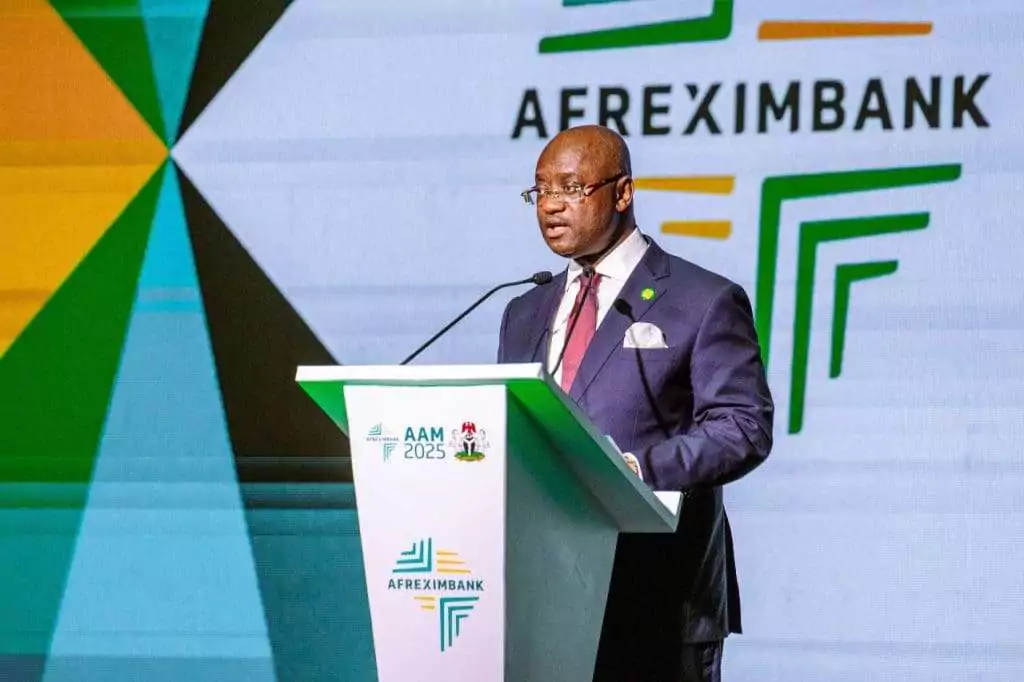
Afreximbank President Dr. George Elombi
African Export-Import Bank (Afreximbank) has approved a US$10 billion facility aimed at protecting Caribbean and African economies from the fallout of the escalating Middle East conflict.
The bank’s Board of Directors has signed off on the Gulf Crisis Response Programme (GCRP), a major intervention designed to cushion economies, financial institutions, and businesses from the ongoing global disruption triggered by the crisis, which intensified on February 28, 2026.
The conflict has sent shockwaves through the global economy, with African and CARICOM countries among the hardest hit. The Gulf region remains a key supplier of oil, liquefied natural gas (LNG), and fertilisers, while the Strait of Hormuz is a critical global shipping route. Disruptions in these areas have led to far-reaching consequences, particularly for import-dependent nations.
Countries that rely heavily on fuel, fertiliser, and food imports—as well as those dependent on Gulf shipping corridors—are facing mounting pressure. The crisis has also impacted investment flows, tourism activity, and remittances, further straining vulnerable economies.
The GCRP is expected to provide immediate relief by supporting essential imports such as fuel, LNG, food, fertilisers, and pharmaceuticals. It will do so by offering short-term foreign exchange liquidity to affected member states.
In addition, the programme is structured to help African energy and mineral exporters take advantage of rising global prices and shifting trade routes. This includes financing tools such as pre-export funding, working capital, and inventory support to boost production in key sectors.
Tourism and aviation—two sectors critical to many Caribbean economies—will also receive targeted support under the initiative, as both have been adversely affected by the ongoing crisis.
Beyond short-term assistance, the programme aims to strengthen long-term resilience by expanding production capacity in energy and mineral sectors, while accelerating stalled infrastructure projects across ports, logistics, and energy systems.

Speaking on the initiative, Afreximbank President and Chairman of the Board, Dr. George Elombi, said the programme reflects the bank’s deep understanding of the economic challenges facing its member states.
“This crisis response programme is in tune with our DNA. We understand how our economies work and the pain points associated with these transitory crises. The programme will support African countries in adjusting smoothly to the crisis while strengthening their resilience to future shocks through interventions that transform the structure of their economies,” he said.
The GCRP, launched on March 31, 2026, builds on previous emergency interventions by the bank, including support during the 2015/16 commodity shock, the COVID-19 pandemic, and the 2023/24 Ukraine crisis.
During the Ukraine crisis, Afreximbank introduced a US$4 billion trade financing programme for Africa, ultimately disbursing US$39 billion to help countries bridge gaps in liquidity and maintain access to essential goods.
The bank said these past interventions demonstrate its ability to deploy effective risk-mitigation strategies in times of global uncertainty.
Under the new programme, Afreximbank has already begun working with banks and corporate partners to secure critical supplies, including fuel, energy products, fertilisers, and food, which have been disrupted due to the prolonged conflict.
It will also coordinate a broader regional response in collaboration with key institutions such as the UN Economic Commission for Africa (UNECA), the African Union Commission (AUC), the African Continental Free Trade Area (AfCFTA) Secretariat, and the Caribbean Community (CARICOM) Secretariat.
These partnerships are expected to strengthen regional cooperation on energy security, trade resilience, and supply chain diversification as countries navigate the ongoing crisis.




0 Comments