
PM Browne Says Antigua Airways Migrant Fallout Influenced Air Peace Decision

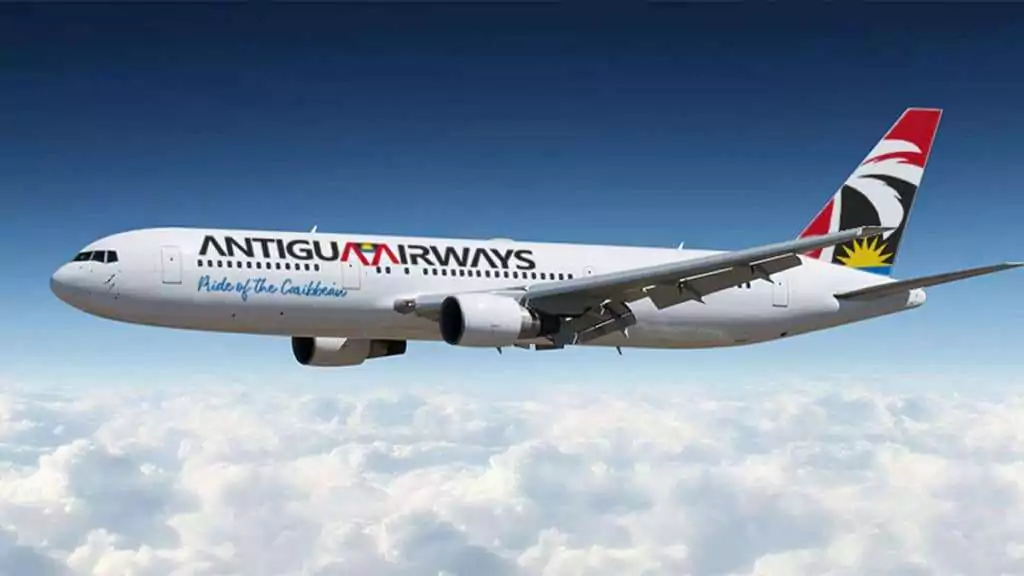
Prime Minister Gaston Browne says the government’s cautious approach to the inaugural Air Peace flight from Lagos, Nigeria is heavily influenced by the lingering fallout from the controversial Antigua Airways migrant crisis that unfolded between late 2022 and early 2023.
Speaking on his weekend radio programme, Browne acknowledged that the earlier Africa-Caribbean air bridge initiative left deep political and social scars after hundreds of African nationals arrived in Antigua and Barbuda under circumstances that later triggered regional concern and tragedy.
“We got burned three years ago,” Browne said bluntly, as he reflected on the Antigua Airways arrangement that once formed part of his administration’s ambitious effort to strengthen direct links between Africa and the Caribbean.
The Antigua Airways venture was initially promoted as a breakthrough in regional aviation and diaspora connectivity. Charter flights began arriving from West Africa carrying passengers largely from Cameroon and other African nations.
Government officials at the time described the initiative as an opportunity to boost tourism, business and cultural exchange between Africa and the Caribbean.
However, the situation quickly spiraled into controversy.
More than 900 African nationals reportedly arrived in Antigua and Barbuda through the programme, with authorities estimating that as many as 637 remained in the country at one stage.
Concerns soon emerged that many passengers were not tourists, but migrants attempting to use Antigua as a transit point to eventually reach the United States.
“Whereas we thought that they were tourists, [they] ended up being conflict migrants who were trying to get into the United States,” Browne admitted.
The developments triggered intense scrutiny of the government’s immigration oversight, vetting procedures and the due diligence surrounding the Antigua Airways operation. Opposition figures and sections of the public questioned how such a large number of arrivals had been allowed into the country under the programme.
The controversy deepened further in March 2023 when a vessel carrying African migrants who had departed Antigua capsized near St. Kitts.
At least three people died and 13 others were reported missing after the boat overturned roughly 12 miles south of St. Kitts with 32 passengers onboard. The tragedy drew international attention and intensified criticism of the broader migration situation unfolding in Antigua and Barbuda at the time.
Browne said the government had even offered opportunities for the migrants to remain legally in Antigua and Barbuda.
“We gave them an opportunity to live and to work here,” he said. “We said, ‘Look, we’ll assimilate the 600 of you into the society.’ And they all said point-blank, ‘We’re not staying.’”
Against that backdrop, Browne said the administration is taking a far more measured approach to the launch of Air Peace service between Nigeria and the Caribbean.
The first scheduled Air Peace flight, originally expected to land in Antigua on May 25 before continuing to Barbados, will now reportedly bypass Antigua amid heightened public health concerns surrounding Ebola outbreaks in parts of Africa.
Browne stressed that Air Peace differs significantly from Antigua Airways, arguing that the Nigerian carrier is a far more established and experienced airline.
“I think though that with the system that Air Peace has in place, the risk is not as great as in the case of Antigua Airways,” Browne said. “Antigua Airways was a newly incorporated entity and didn’t have the experience.”
Still, the Prime Minister acknowledged that the memory of the Antigua Airways controversy continues to shape public perception and government decision-making whenever new Africa-Caribbean air connections are proposed.
What was once envisioned as a historic bridge between two regions has now become tied to difficult conversations surrounding migration control, border security, public health preparedness and the political consequences of moving too quickly on major international initiatives.
This story was first published by Antigua News on May 24, 2026: antigua.news/2026/05/24/pm-browne-says-antigua-airways-migrant-fallout-influenced-air-peace-decision. © 2026 Antigua News. Republication without permission is not allowed.

About the author
Shermain Bique-Charles is an accomplished journalist with over 24 years of dynamic experience in the industry. Renowned for her exceptional storytelling and investigative skills, she has garnered numerous awards that highlight her commitment to journalistic integrity and excellence. Her work not only informs but also inspires, making her a respected voice in the field.
Read our editorial standards and corrections policy. Spotted an error? Contact the newsroom.
More from Antigua and Barbuda
View section
‘They Can’t Dictate That’: Freeland Rejects Player Pressure Over National Coach
Freeland defends the coaching staff and says players should demonstrate their value through training and performance.
By Shermain Bique-Charles

Search Ends as All Four Juveniles Who Escaped Bolans Police Station Return to Police Custody
Police apprehended three of the juveniles during a search operation in Liberta on Thursday morning, less than a day after the fourth surrendered to authorities.
By Cory Wayland

Farmers Given 90 Days to Plant as Government Launches 102-Acre Land-Clearing Programme
Antigua launches a 102-acre agricultural land-clearing programme requiring beneficiaries to establish viable crops within 90 days of land preparation.
By Cory Wayland

Freeland Blames Poor Player Commitment for Antigua and Barbuda’s Basketball Withdrawal
Basketball president acknowledges unpaid stipends but says repeated low practice attendance drove the decision to withdraw.
By Shermain Bique-Charles
Comments (1)
Juju Bee May 24, 2026, 4:45 PM