





















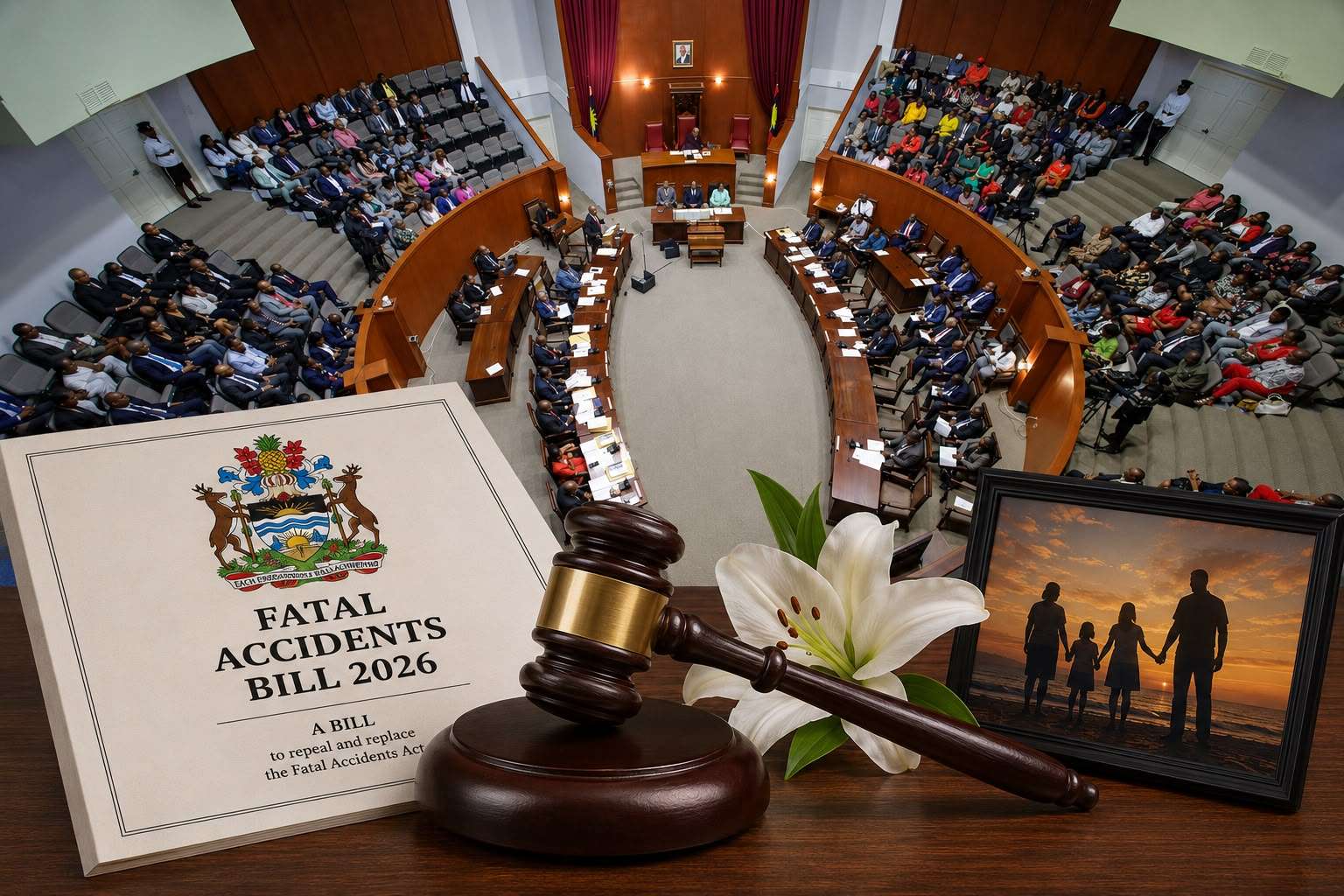
The Senate has passed the Fatal Accidents Bill 2026, approving the government’s plan to offer greater financial security to grieving families who suffer at the hands of a vehicular accident or wrongful death.
The bill, which repeals the previous Fatal Accidents Act, passed the Senate without amendment after roughly four hours of debate Monday.
The bill raises the maximum bereavement award from $5,000 to $20,000, broadens the definition of dependent to include people who cohabited with a deceased person for at least three years, and expands who can claim bereavement damages to include children of the deceased alongside spouses and parents.
Leader of Government Business, Senator Shenella Govia, told the chamber the legislation represented compassionate and necessary reform that places families at the center of the justice system.
“It is one that I do not take lightly at all,” she said, noting the bill addresses far more than road deaths, also covering medical negligence, workplace fatalities, deaths at sea and wrongful death by criminal act.

Opposition Senator Malaka Parker raised concern over Clause 4 of the bill, which governs bereavement damages, arguing it restricted eligible claimants to a wife or husband, parents, or children of the deceased.
She pointed to Clause 2 which widens the definition of dependent to include long-term cohabiting partners and a broader category of relatives.
“That is a contradiction that we should catch in this house,” Parker said, also asking why the bill set the cohabitation threshold at three years when comparable United Kingdom legislation uses two.
When the matter reached the committee stage, the bill’s legal draftsperson clarified that the narrower bereavement provision was a deliberate policy choice rather than an oversight.
Senators also debated whether the $20,000 bereavement cap, more than four times the previous $5,000 limit, would hold its value over time.
Senator Tiffany Strand-Peters told the chamber it took four years for the family of LaShawna Bridgen, struck and killed while crossing the road in 2022, to receive a ruling from the Eastern Caribbean Supreme Court holding the driver liable.
Senator Parker and opposition Senators proposed indexing the award to inflation or empowering the minister to adjust it by regulation rather than requiring a full legislative amendment, though the legal draftsperson noted that bereavement is a one-off grief payment distinct from the inflation-sensitive damages assessed separately under Clause 7.
Independent Senator Jamila Kirwan urged that the bill’s passage be followed by a sustained public education campaign, warning legislation has limited value if the people it protects do not know it exists.
Several opposition senators called for the one-year window allowing a personal representative to bring a claim before other dependents may act to be reduced to six months, though the draftsperson countered that probate proceedings routinely take longer than six months to complete.




Hopefully people will drive with more care and caution