












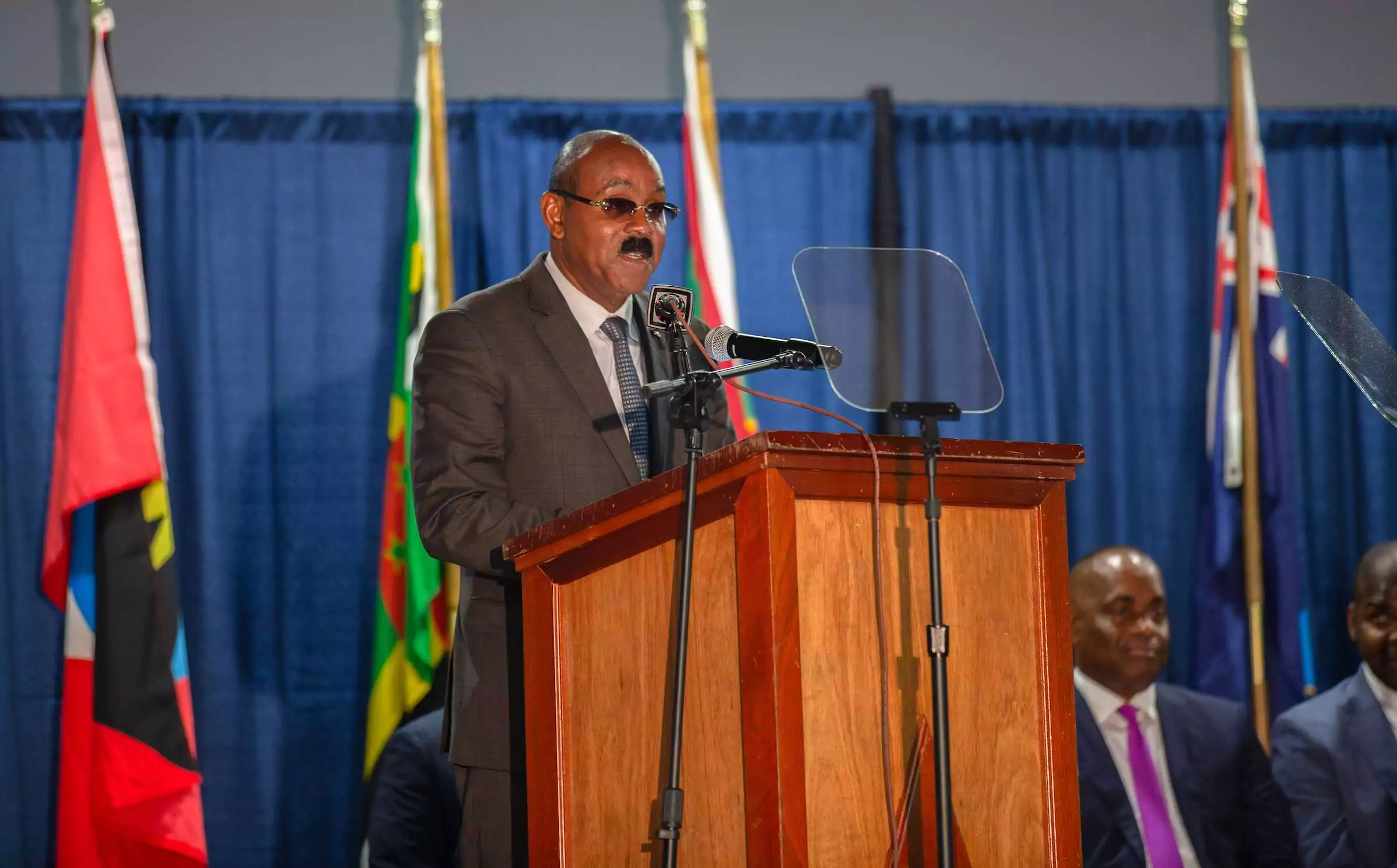
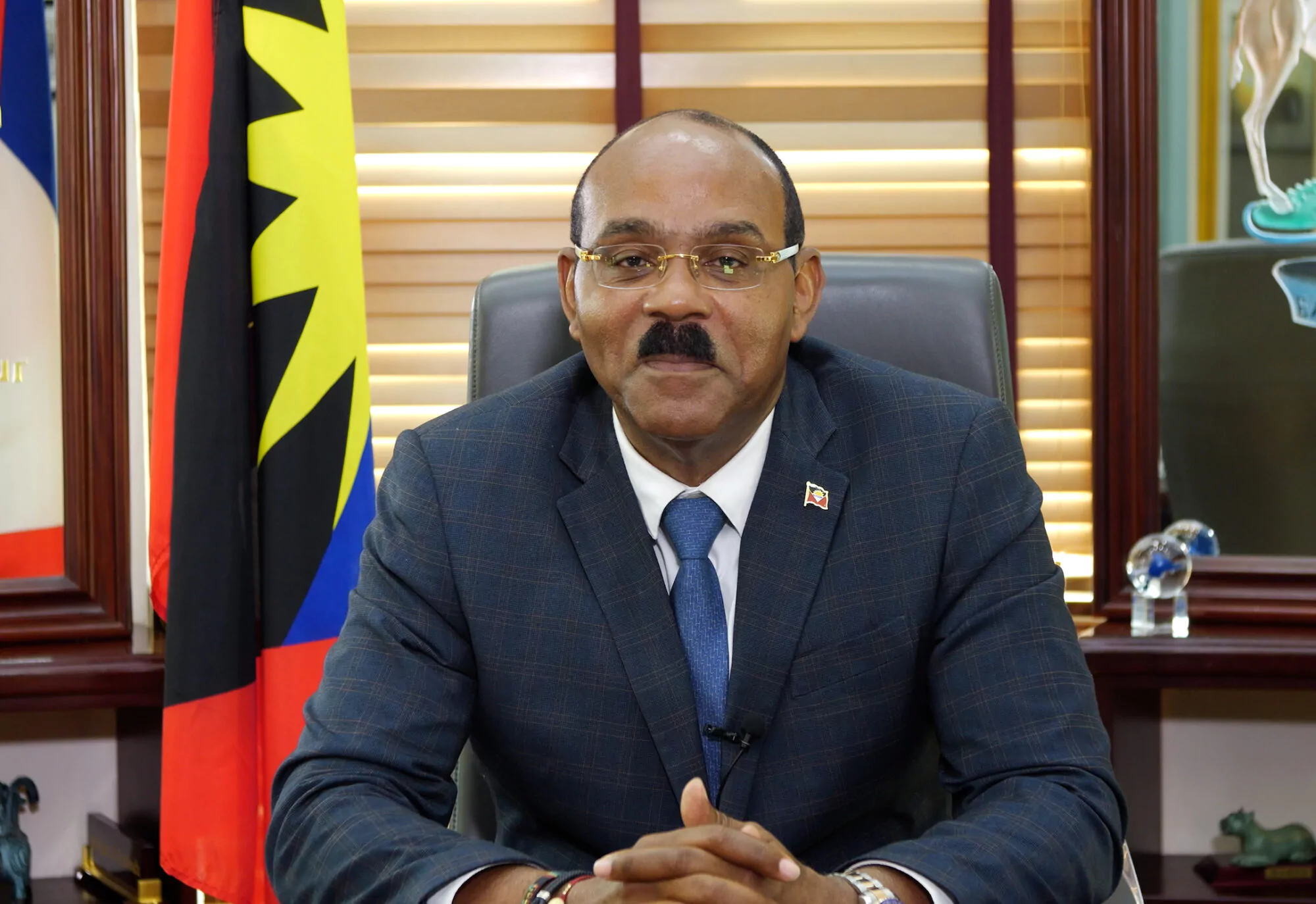
Prime Minister Gaston Browne
Prime Minister Gaston Browne has called on Caribbean leaders to remain steadfast in their pursuit of reparatory justice, insisting that CARICOM’s campaign is not about seeking financial handouts but securing justice for one of history’s greatest crimes.
Speaking during the 51st Regular Meeting of the Conference of Heads of Government of CARICOM, Browne said the region must continue pressing its case for reparations, describing the issue as one of restitution for the enduring legacy of the transatlantic slave trade and chattel slavery.
“We cannot afford to relent,” Browne told fellow leaders. “It is an issue of justice and of restitution… our cause is just, and no one should believe that we are going to Europe, cap in hand, seeking handouts. What we’re actually asking for is restitution.”
His remarks reinforced Antigua and Barbuda’s long-standing support for the regional reparations movement, which seeks acknowledgment and redress from former colonial powers for the economic and social consequences of slavery.
Browne praised Barbados Prime Minister Mia Mottley, who chairs CARICOM’s Prime Ministerial Sub-Committee on Reparations, for keeping the issue at the forefront of the regional agenda and said the Community must continue building on the momentum that has been created in recent years.
He argued that the transatlantic slave trade and chattel slavery have already been recognised internationally, including by the United Nations, as crimes against humanity, and said that recognition strengthens the legal and moral foundation of CARICOM’s case.
While acknowledging that discussions with former enslaving nations require diplomacy, Browne said they must be grounded in honesty and mutual respect.
He noted that the issue must be pursued through “truthful, respectful, and meaningful” dialogue, while stressing that reparations should remain a central priority for CARICOM and not be regarded as “a side issue.”

The Antigua and Barbuda leader also briefed Heads of Government on ongoing negotiations surrounding the communiqué for the 2026 Commonwealth Heads of Government Meeting (CHOGM). He noted that reparations will be addressed in the document and said foreign ministers will continue discussions aimed at advancing dialogue on restitution.
He also pointed to references in the draft communiqué to a recent United Nations General Assembly resolution on the trafficking of enslaved Africans, describing it as another step in strengthening international recognition of the issue.
Browne welcomed the release of the CARICOM Reparations Commission’s new manifesto, calling it an important document that clearly sets out the moral, ethical and legal arguments for reparations.
He encouraged its widespread circulation throughout the Region to improve public understanding of the reparations movement, noting that many people still mistakenly view reparations as a request for aid rather than a legitimate claim for justice.
Looking ahead, Browne reiterated his support for CARICOM seeking an advisory opinion from the International Court of Justice (ICJ) to clarify the legal liability arising from chattel slavery.
He explained that such an opinion would not automatically lead to legal action but would reinforce the region’s position by affirming that reparations are based on legal responsibility rather than charity.
“It is important… that when we speak on the issue of reparations, our former enslavers will understand that this is not an issue of charity,” Browne said.
The Prime Minister concluded by reaffirming Antigua and Barbuda’s commitment to advancing CARICOM’s reparations agenda in regional and international forums while supporting implementation of the bloc’s Ten-Point Plan for Reparatory Justice through sustained dialogue and engagement.


We may never see reparatory justice in our lifetime