












Antigua.news Antigua and Barbuda PM Browne Rejects Judiciary’s Criticism, Proposes Independent Sentencing Review

PM Browne Rejects Judiciary’s Criticism, Proposes Independent Sentencing Review

13 August 2026 - 08:24

PM Browne Rejects Judiciary’s Criticism, Proposes Independent Sentencing Review

13 August 2026 - 08:24
PM to Push CARICOM for More Cost of Living Relief as Regional Leaders Meet

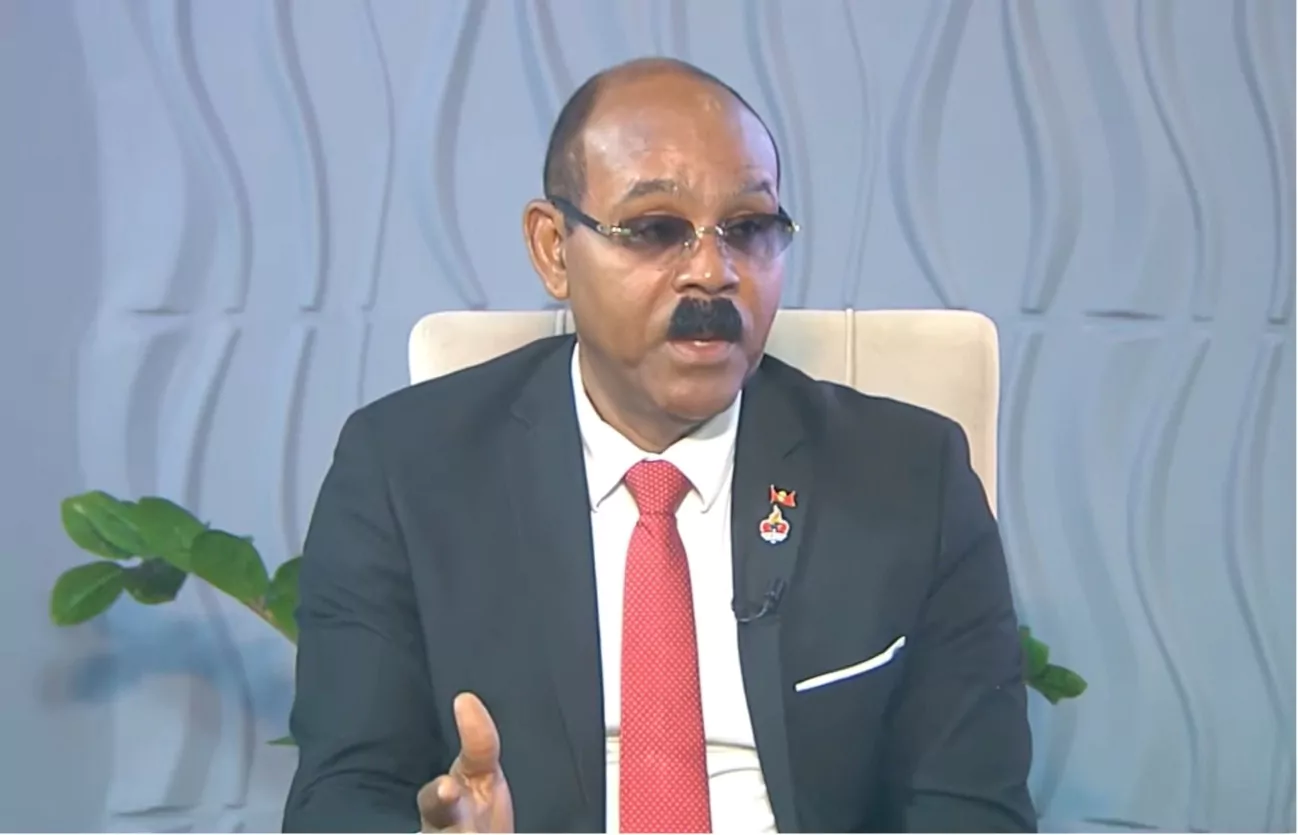
Prime Minister Gaston Browne

 

Prime Minister Gaston Browne has rejected claims that his recent remarks about sentencing amounted to an attack on judicial independence, while proposing the establishment of an independent committee to review sentences imposed for firearm offences and other serious crimes in Antigua and Barbuda.

Browne responded on Thursday to a strongly worded joint statement issued by the Caribbean Heads of Judiciary on August 12, in which they condemned his comments concerning a High Court judge and warned that they threatened the independence of the judiciary and the separation of powers.

The Prime Minister reaffirmed his respect for an independent and impartial judiciary but argued that judicial independence does not place sentencing decisions or the administration of justice beyond public scrutiny.

“Judicial independence is essential to democratic government. However, it does not place judicial decisions or the administration of justice beyond reasoned public criticism,” Browne said.

He maintained that an elected government should not be expected to remain silent when sentencing outcomes raise concerns about public safety, legislative policy and public confidence in the justice system.

Browne said his remarks on August 10 were made against the backdrop of growing public and law-enforcement concern over firearm violence, statutory rape and what many consider unduly lenient sentences in some serious criminal cases.

He insisted that his statements did not seek to direct the outcome of any case, reopen a matter already decided or encourage anyone to disregard a court order.

The Prime Minister said the Heads of Judiciary had interpreted his comments as executive instructions against a judge, but he denied that this was his intention.

“It did not,” Browne declared.

He described his remarks as a warning intended to draw the judicial hierarchy’s attention to what he called the “indiscretion and deliberate disregard” by some judicial officers for legislation governing serious firearm offences, which allows for custodial sentences of up to 15 years.

Browne clarified that his administration has never formally requested or taken steps to remove, reassign or deport any member of the judiciary.

“Questions concerning the tenure, assignment or conduct of a judicial officer are governed by the Constitution and the law, and those arrangements will be respected,” he stated.

However, the Prime Minister made it clear that the clarification did not amount to a withdrawal of his criticism of sentencing outcomes and the wider performance of the justice system.

“I do not accept that forceful criticism of sentencing practice is, by itself, an attack on judicial independence,” he said.

Caribbean Judges Condemn PM’s Remarks

In their joint statement, the Caribbean Heads of Judiciary said they viewed Browne’s earlier comments with “deep and unsettling concern.”

They said the Prime Minister, while expressing dissatisfaction with sentences he regarded as lenient, referred to a “particular judge” whom he believed had “a propensity to give criminals a break.”

According to the statement, Browne also suggested that if the judge could not follow Parliament’s lead by imposing longer sentences, the judicial officer should leave Antigua and Barbuda voluntarily or face deportation and be declared persona non grata.

The Heads of Judiciary strongly condemned those remarks, describing them as an attack on the judge and, by extension, the judiciary of the Eastern Caribbean region.

“Not only are such statements regrettable, but they are a threat to the very independence of the judiciary,” the statement said.

The regional judicial leaders warned that such comments could erode the separation of powers and undermine public confidence in the administration of justice.

They stressed that mutual respect for the constitutional boundaries separating the Judiciary, Executive and Legislature is essential to preserving the rule of law and the integrity of democratic institutions.

The judges also argued that if the Prime Minister believed a sentence was unduly lenient, the prosecution could challenge it through the Court of Appeal and, ultimately, either the Caribbean Court of Justice or the Judicial Committee of the Privy Council.

“This is the only lawful and legitimate manner consistent with the rule of law and the separation of powers for the issue to be resolved,” they said.

While acknowledging that robust public discussion and legitimate criticism are important features of a democratic society, the Heads of Judiciary said such criticism must be respectful and directed towards constructive and collaborative engagement.

Browne Disputes Appeal as Only Remedy

Prime Minister Browne rejected the judges’ position that an appeal is the only lawful and legitimate means of addressing concerns about lenient sentencing.

“That is not accurate,” he said.

Browne acknowledged that an appeal is a proper mechanism for challenging or correcting the sentence imposed in an individual case. However, he said it cannot be the only lawful means by which a democratic society examines possible systemic failures in the administration of justice.

He noted that, since the passage of the Criminal Procedure (Amendment) Act 2004, Antigua and Barbuda has allowed the Director of Public Prosecutions to appeal against sentences. He added that the power has been successfully exercised and that the decision to appeal rests with the constitutionally independent DPP.

According to Browne, an appeal in a single case cannot adequately address broader questions involving sentencing patterns, statutory penalties, sentencing guidelines, repeat offenders, lengthy delays, rehabilitation and coordination among the police, prosecutors, courts and correctional services.

“Parliament may legislate, the Executive may propose policy and provide resources, and the Judiciary may interpret and apply the law,” he said. “Reasoned public criticism and structured engagement among these institutions are also entirely consistent with the separation of powers

Independent Sentencing Review Proposed

Browne disclosed that he wrote to Chief Justice of the Eastern Caribbean Supreme Court, Her Ladyship Margaret Price Findlay, on August 12 proposing the immediate establishment of an independent committee.

The committee would review sentencing for firearm and other serious violent offences, repeat offending and the operation of the wider criminal justice system in Antigua and Barbuda.

It would analyse sentencing data, determine whether there is any significant divergence between Parliament’s legislative policy and sentencing outcomes, identify the causes and recommend practical reforms.

Browne has suggested that former Caribbean Court of Justice President, the Honourable Mr Justice Adrian Saunders, be invited to chair the committee, subject to his willingness.

The Prime Minister said he has also consulted former CCJ President the Right Honourable Sir Dennis Byron and the Honourable Mr Justice Godfrey Smith SC, CARICOM’s High-Level Representative on Law and Criminal Justice. Both men, he said, are prepared to assist the proposed committee.

Browne described the initiative as a constitutional and evidence-based response to an urgent matter of public importance. He invited the Caribbean Heads of Judiciary to support the proposed review and assist in ensuring that it begins without delay.

The Prime Minister said firearm violence threatens citizens’ right to live peacefully, causes suffering for victims and families, burdens law-enforcement agencies and weakens confidence in public institutions. He warned that it could also damage the secure social and economic environment upon which investment, employment and tourism depend.

He acknowledged that sentencing must consider the governing legislation, applicable guidelines, appellate decisions, guilty pleas, aggravating and mitigating circumstances, an offender’s criminal history, time spent on remand and the totality principle.

However, Browne maintained that concerns about sentencing must be examined through evidence and should not be dismissed.

“Judicial independence and institutional accountability are not opposing principles,” the Prime Minister said.

“Our Government seeks no control over the decision of any court. It does seek a criminal justice system that is lawful, proportionate, transparent, consistent and effective in protecting the public.”

He concluded that the people of Antigua and Barbuda are entitled to both an independent judiciary and a justice system that responds credibly to serious violent crime.


Advertise where your customers click first.
Get your brand seen on Antigua’s #1 news platform. Email: [email protected] or call 268-7724369

About The Author

Shermain Bique-Charles

Shermain Bique-Charles is an accomplished journalist with over 24 years of dynamic experience in the industry. Renowned for her exceptional storytelling and investigative skills, she has garnered numerous awards that highlight her commitment to journalistic integrity and excellence. Her work not only informs but also inspires, making her a respected voice in the field. Contact: [email protected]

1 Comment

  1. All judges are lawyers and lawyering is a profession of heartlessness.

    Reply

Submit a Comment

Your email address will not be published. Required fields are marked *

Antigua News - Breaking stories that captivate
Privacy summary

This website uses cookies so that we can provide you with the best possible user experience. Cookie information is stored in your browser and performs functions such as recognising you when you return to our site or helping our team understand which parts of the site you find most interesting and useful. More information in Privacy Policy