












Antigua.news Antigua and Barbuda NODS Hosts Regional Training to Strengthen Emergency Warning Systems

NODS Hosts Regional Training to Strengthen Emergency Warning Systems

26 August 2026 - 16:16

NODS Hosts Regional Training to Strengthen Emergency Warning Systems

26 August 2026 - 16:16

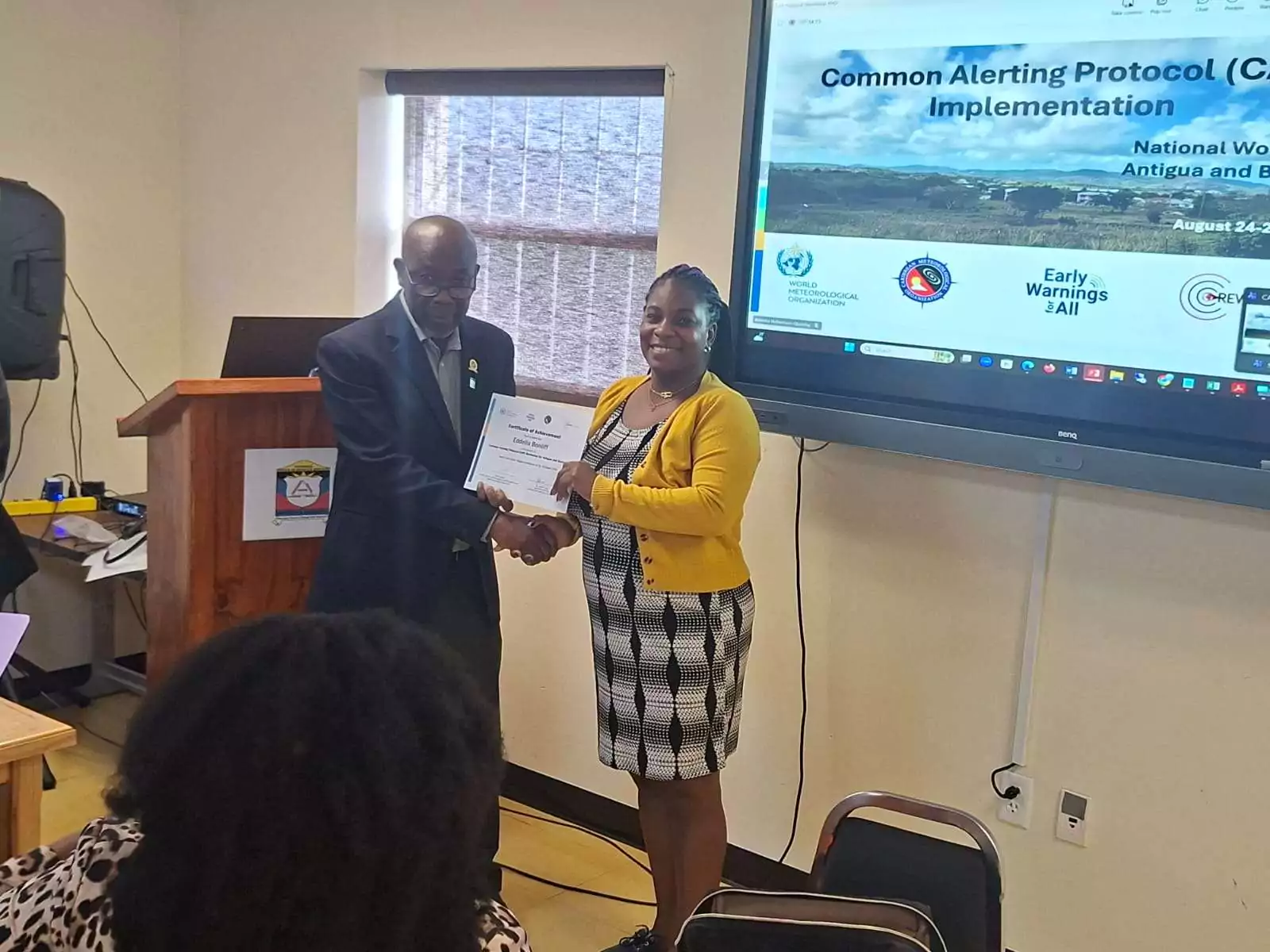
Participant Eddelia Bontiff recieved her certificate at the end of the workshop

By Eddelia Bontiff

The National Office of Disaster Services (NODS) has completed a two-day workshop aimed at strengthening disaster preparedness and improving the delivery of emergency warnings across Antigua and Barbuda and the wider Caribbean.

The training, held at the NODS headquarters on August 24 and 26, focused on the Common Alerting Protocol (CAP), an internationally recognized system used to create and distribute authoritative emergency alerts across multiple communication platforms.

Science and Technology Officers Kenneth Kerr and Adanna Robertson-Quimby of the Caribbean Meteorological Organization facilitated the workshop.

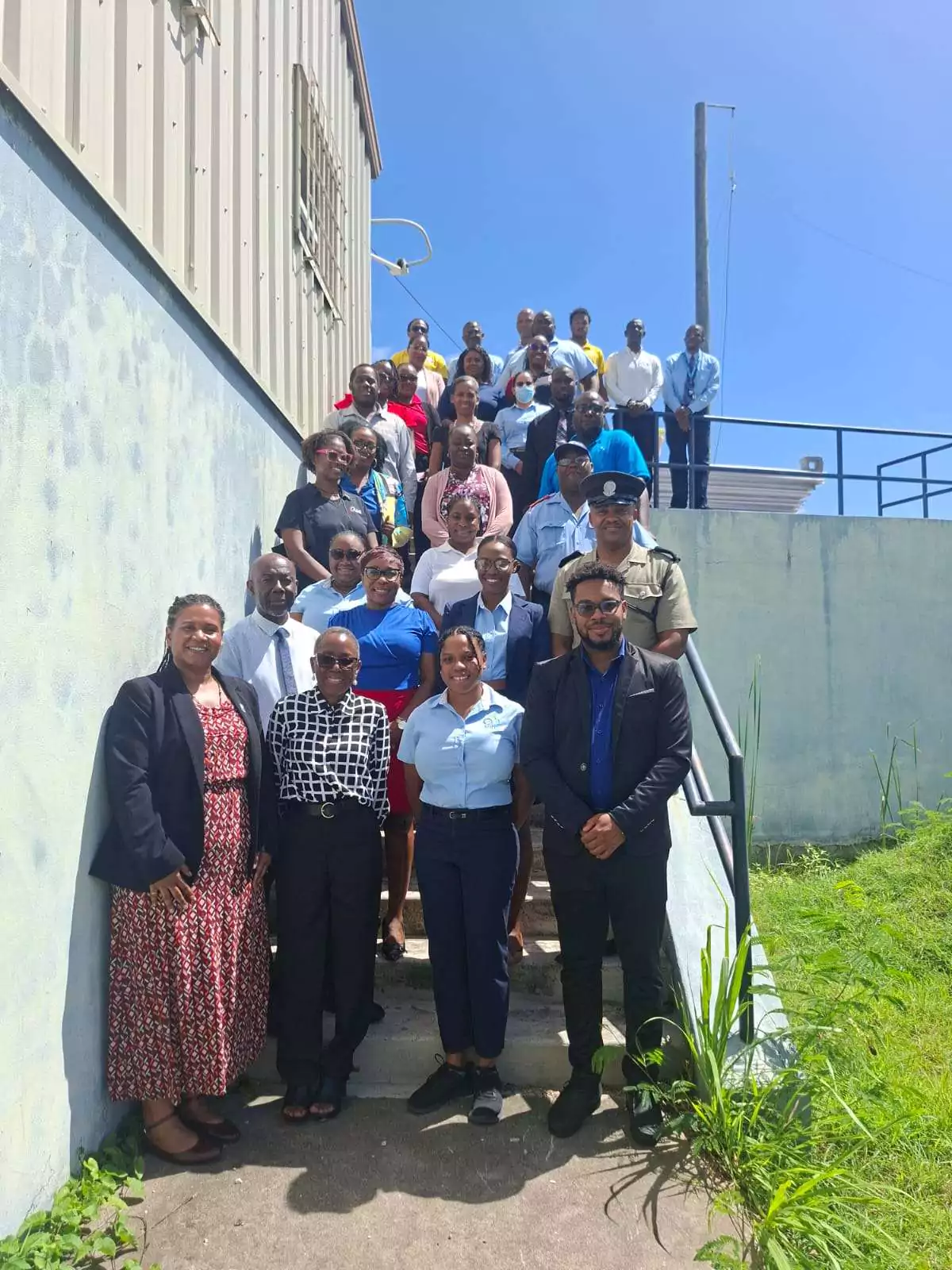
Participants represented NODS, the Royal Police Force of Antigua and Barbuda, the Fire Department, the Meteorological Service, the Antigua and Barbuda Red Cross, telecommunications provider Flow and local media organizations.

Regional meteorological representatives from Jamaica, Montserrat, St Kitts and Nevis and Anguilla also participated.

Arlene Lang, Coordinating Director of the Caribbean Meteorological Organization, opened the workshop by highlighting the importance of strengthening early-warning systems throughout the Caribbean.
She extended greetings on behalf of the CMO headquarters to the Government of Antigua and Barbuda, the National Meteorological Service, the disaster-management community and the other participating organizations.

Lang also thanked the Government, the host Meteorological Service, the World Meteorological Organization and the Climate Risk and Early Warning Systems Caribbean project for supporting the training.

She said that while the region has made significant progress in developing early-warning systems, its approach must continue to evolve in response to changing weather, climate and disaster-risk patterns.

According to Lang, authorities must look beyond their ability to issue warnings and ensure that the right information reaches the right people at the right time and in a form that allows them to make informed decisions.

She described CAP as a standardized mechanism for structuring and distributing official alerts through radio, television, websites, mobile services, social media and other communication channels.

However, Lang emphasized that CAP is not the entire warning system. She said it must work alongside impact-based forecasting, which helps authorities communicate how an expected hazard could affect particular communities and sectors.

Lang encouraged participants to consider the information required by different sectors, the potential impacts that must be communicated, the thresholds that should trigger action and the steps necessary to make warnings more consistent, timely and useful.

She also stressed that strong relationships and effective coordination among agencies are essential to the success of any early-warning system.

“The success of an early-warning system should not be measured by the number of warnings issued, but by whether those warnings enable earlier and better decisions that protect lives, livelihoods and communities,” Lang said.

Andrew Tupper, Chief of Early Warning Services at the World Meteorological Organization, also addressed the participants.

Tupper said effective warning systems remain critical for Caribbean countries, which face hazards including tropical cyclones, heavy rainfall, flooding, storm surges, volcanic activity and landslides.

He cautioned that accurate weather forecasts are only one part of protecting the public.

“Forecasts alone do not save lives,” Tupper said.

He explained that an effective system must cover the entire warning cycle—from understanding disaster risks and detecting hazards to issuing authoritative alerts and ensuring that individuals and institutions are prepared to act.

Tupper described CAP as a bridge connecting the agencies and stakeholders involved in that process. He said the system allows official warnings to be distributed rapidly and consistently across several platforms.

He also linked the protocol to the United Nations’ Early Warnings for All initiative, which seeks to ensure that everyone is protected by effective multi-hazard early-warning systems.

Participants were encouraged to use the training to strengthen their technical skills, clarify the responsibilities of their respective institutions and establish practical arrangements for issuing and distributing emergency alerts.

The workshop included discussions, practical exercises and knowledge-sharing sessions. Facilitators provided hands-on guidance in creating, structuring and distributing emergency alerts using CAP.

The exercises also reinforced the importance of accurate information, clearly defined responsibilities and close cooperation among agencies during emergencies.

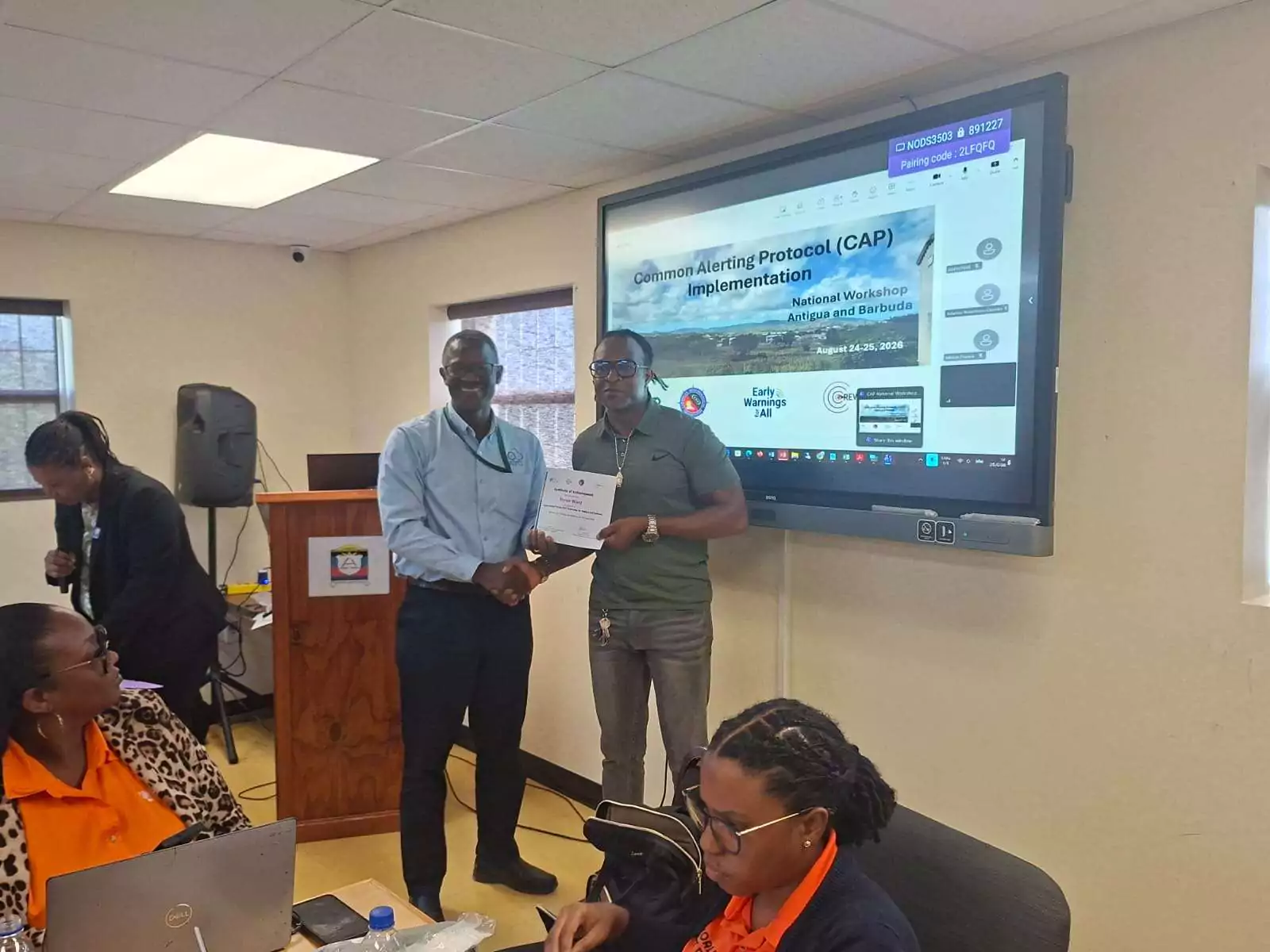
Certificates were presented to participants at the conclusion of the programme in recognition of their commitment to strengthening disaster preparedness and public-warning capabilities.

Participants also shared their experiences and lessons from the workshop. One attendee admitted being initially reluctant to participate but said the training provided a much deeper understanding of CAP and left them with “no regrets” about attending.

The reflections highlighted the practical value of the programme and the need for continued capacity-building among the agencies responsible for disaster preparedness, emergency response and public communication.

Advertise where your customers click first.
Get your brand seen on Antigua’s #1 news platform. Email: [email protected] or call 268-7724369

About The Author

Editorial Staff

The Editorial Staff refers to all reporters employed by Antigua.news. When an article is not an original creation of Antigua.news—such as when it is based on a press release, other media articles, letters to the editor, or court decisions—one of our staff members is responsible for overseeing its publication. Contact: [email protected]

0 Comments

Submit a Comment

Your email address will not be published. Required fields are marked *

Antigua News - Breaking stories that captivate
Privacy summary

This website uses cookies so that we can provide you with the best possible user experience. Cookie information is stored in your browser and performs functions such as recognising you when you return to our site or helping our team understand which parts of the site you find most interesting and useful. More information in Privacy Policy