
Trial Project to Address Soil Erosion on Barbuda Using Vetiver Grass

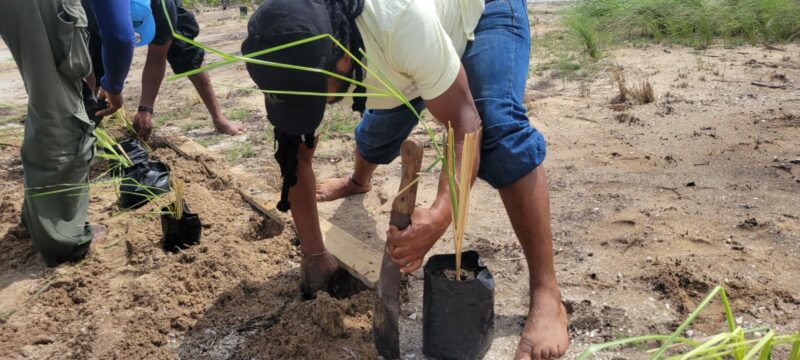
The issue of soil erosion on the Sister Ilse, Barbuda, is receiving some attention.
A section of the sandbar in Low Bay, which encloses the Codrington Lagoon is being eroded and a trial project, using the vetiver grass, is being jointly implemented by the Inter-American Institute for Cooperation on Agriculture (IICA), and the Caribbean Biodiversity Fund (CBF) to help solve the issue
As part of the implementation, 300 slips of vetiver grass were shipped to Barbuda between May and June and will be planted over several weeks, after acclimatizing to the conditions there.
The grass will be planted over several weeks “utilizing various agronomical practices, building on lessons learned in using the vetiver green engineering system at the Cooks Landfill in Antigua and from the exchange of experiences from a recent field visit to EbA project sites in Dominica”, according to a media statement
This trial is applying nature-based solutions for soil erosion control, supported by the project to strengthen coastal and marine climate resilience through upland and coastal ecosystem-based adaptation (EbA) and community engagement, implemented by the Inter-American Institute for Cooperation on Agriculture (IICA).
Chairman of the Barbuda Council Agriculture and Fisheries Division Mr. John Mussington, says this increases the exposure, vulnerability, and risk to the lives and livelihoods of all Barbudans.
“Without urgent and strategic interventions, this situation will further compromise the ability to utilize adaptation strategies to cope with the consequences of the climate crisis. This is a visible and direct climate change impact, i.e., sea level rise, as well as poor land management evidenced by several ill-advised and unapproved developments. Together, these climate hazards and non-climate stressors have negatively altered the coastal dynamics and the sand budget of the island,” he said.
Mussignton said this situation has caused continued changes in the water chemistry, physical conditions, and habitat quality of the Lagoon. Many of its ecosystems have been negatively impacted and disrupted.
The IICA and Caribbean Biodiversity Fund (CBF) project implemented in Antigua, Dominica, St. Lucia and Tobago is funded by the CBF EbA Facility, supported by the German Ministry of Environment, Nature Conservation, and Nuclear Safety and the International Climate Initiative (IKI).


About the author
The Editorial Staff refers to all reporters employed by Antigua.news. When an article is not an original creation of Antigua.news—such as when it is based on a press release, other media articles, letters to the editor, or court decisions—one of our staff members is responsible for overseeing its publication.
Read our editorial standards and corrections policy. Spotted an error? Contact the newsroom.
More from Antigua and Barbuda
View section
Uroy Joseph Murder Trial: Jury Shown Bloodstained Pipe Linked to Arthur James Case
Uroy Joseph Trial Deepens as Jury Examines Burnt Car and Alleged Murder Weapon
By Cory Wayland

LETTER | Enough Is Enough: Zero Tolerance, Zero Excuses - It Is Time to Take Back Our Nation”
By Editorial Staff

Tevin Willock Jailed for Nearly 11 Months Over Ammunition Possession
Tevin Willock Receives 10-Month, 20-Day Prison Sentence for 9mm Ammunition Possession
By Cory Wayland

More Than 2,500 Students Screened as School Vision Programme Identifies Children Needing Follow-Up
School Vision Screenings Flag Eye Concerns in More Than 280 Students
By Cory Wayland
Comments
Be the first to comment.