
Europe’s vegetable farmers warn of shortages as energy crisis bites
By Ardee NAPOLITANO and Sybille de La Hamaide

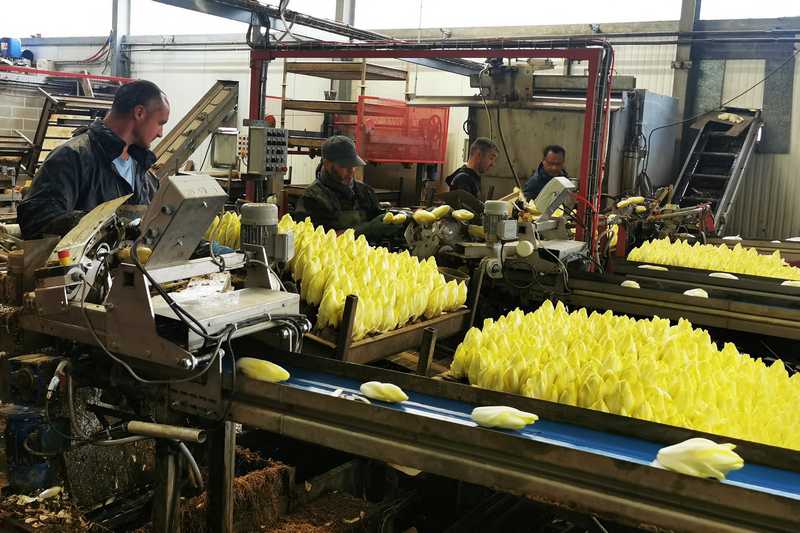
BOUVINES, France (Reuters) – Emmanuel Lefebvre produces thousands of tonnes of endives on his farm in northern France annually, but this year he may abandon his crop because of the crippling energy costs required to freeze the harvested bulbs.
Across northern and western Europe, vegetable producers are contemplating halting their activities because of the financial hit from Europe’s energy crisis, further threatening food supplies.
Surging power and gas prices will impact crops grown through the winter in heated greenhouses such as tomatoes, peppers and cucumbers, and those which need to be placed in cold storage, such as apples, onions and endives.
Endives are particularly energy hungry. After the bulbs are harvested in the autumn, they are stored in below-freezing temperatures and then later replanted in temperature-controlled containers to allow for year-round production.
“We really wonder if we’ll harvest what is in the fields this winter,” Lefebvre told Reuters at the site where his endives are packaged.
European farmers are warning of shortages. The anticipated hit to production and jump in prices means supermarkets may switch to sourcing more goods from warmer countries such as Morocco, Turkey, Tunisia and Egypt.
Surging gas prices are the biggest cost vegetable farmers cultivating inside greenhouses face, farmers said. Meanwhile, two French farmers renewing their electricity contracts for 2023 said they were being quoted prices more than 10 times those of 2021.
“In the coming weeks I will plan the season but I don’t know what to do,” said Benjamin Simonot-De Vos, who grows cucumbers, tomatoes and strawberries south of Paris.
“If it stays like this there’s no point starting another year. It’s not sustainable.”
HEADING SOUTH
Farmers are not just contending with spiralling energy prices. The cost of fertiliser, packaging and transport are all on the rise and jeopardising margins.
“We face an overall increased production cost of around 30 percent,” said Johannes Gross, deputy sales manager at the German cooperative Reichenau-Gemüse whose greenhouses cover some 60 hectares. Energy accounted for anywhere between half and two-thirds of these extra costs, he said.
“Some colleagues are thinking about leaving their greenhouses empty to keep the costs as low as possible. Nobody knows what will happen next year,” he added.
Greenhouse industry group Glastuinbouw Nederland says up to 40% of its 3,000 members are in financial distress.
Even in sun-flushed countries like Spain, fruit and vegetable farmers are grappling with a 25% increase in fertiliser costs.
Jack Ward, chief executive of the British Growers Association, said it was inevitable production of fruit and vegetables would shift to warmer climes.
“We will move production further and further south, down through Spain and into Morocco and bits of Africa,” Ward said.
This story was first published by Antigua News on : antigua.news/2022/09/22/europes-vegetable-farmers-warn-of-shortages-as-energy-crisis-bites. © 2022 Antigua News. Republication without permission is not allowed.

About the author
The Editorial Staff refers to all reporters employed by Antigua.news. When an article is not an original creation of Antigua.news—such as when it is based on a press release, other media articles, letters to the editor, or court decisions—one of our staff members is responsible for overseeing its publication.
Read our editorial standards and corrections policy. Spotted an error? Contact the newsroom.
More from Business and Finance
View section
Liechtenstein register hack exposes the privacy risks of financial transparency
Data concerning 31,000 legal entities were stolen from the principality’s beneficial ownership register. As access moves to an identity-checked service in Vaduz, the unresolved question is whether stronger entry controls can protect the people behind the records.
By Dario Item

How much is Hormuz really adding to Caribbean fuel prices?
The disruption is raising the cost of gasoline and diesel far beyond the Gulf. But refinery shortages, shipping costs and changes to subsidies must be separated to establish what motorists are paying for.
By Dario Item

From Potters to Dallas: Antiguan and Barbudan Ryancia Henry Rises to Top Luxury Hotel Management Role
By Shermain Bique-Charles

Twenty-Three Days to Close a EUR2bn Case Built on Hundreds of Pages: The Novo Banco Judgment That Should Shock Europe’s Bond Market
By Dario Item
Comments
Be the first to comment.