
Longevity in Politics: Whom Does It Serve? | Editorial

 Longevity in Politics: Whom Does It Serve?
By Kieron Murdoch | Opinion Contributor
The Hon. Sir Robin Yearwood MP recently celebrated his 80th birthday and marked forty-eight and a half unbroken years in Parliament as the elected representative for St. Phillip’s North. While we congratulate the honourable MP, his milestone should cause us to think about the topics of political longevity and term limits. The latter is often dismissed by incumbents as undemocratic and needless. The truth is, we may benefit from term limits, despite the fact that politically, they are one of the hardest things to implement.
We often discuss term limits in the context of national leaders – Prime Ministers or Presidents – but many proponents feel the idea should apply to parliamentarians as well. We may benefit from term limits because they would help prevent those with the power of incumbency, whether in public office or in party positions, from leveraging the advantages of said incumbency to unduly prolong their stay in power. When elected officials do this, it prevents a healthy and periodic refreshing of the guard.
Power, left unchecked, has a tendency to amass itself. This has happened in all political systems throughout time. The longer a person occupies an office, the longer they make themselves indispensable through the relationships of power, control and dependency which they are likely to build with those around them, depending on their nature.
Elected officials often have the power to dole out patronage to their benefit. They have the power to affect appointments of people to public posts, to generate employment through the public sector, to impact decisions on the awarding of contracts, to fastrack or stall official processes, and to do favours and collect debts. Left for too long, such a person may do such a fine job at creating loyalty around them through relationships of patronage, that the circumstances naturally favour their re-election. The fates of too many become tied to their preservation.
The objective of term limits ought to be to limit the opportunity for power accumulation and for the crowding out of newer generations of politicians. A refreshing of the guard can and does happen naturally in our and other Caribbean systems such as with the UPP in the 2014 election, where their defeat sparked a departure of most previous candidates from their slate, or the ABLP in 2023 when their near defeat sparked an ongoing refresh of the slate with younger and newer faces.
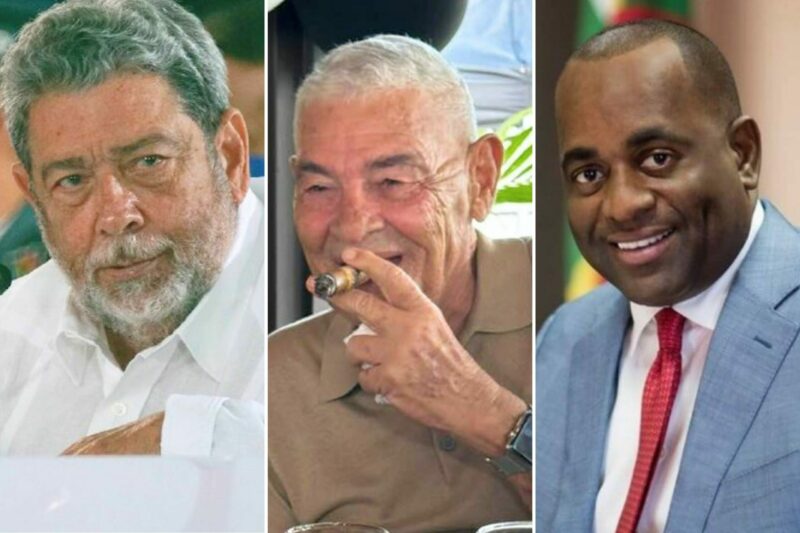
Limiting power accumulation can only be to the people’s benefit, even though incumbents themselves detest the idea of a deadline being set on their exit from office. Imagine being a Prime Minister, like a Ralph Gonsalves or a Roosevelt Skerrit. Imagine that for the past 20+ years, you have had the power to affect appointments to the Cabinet, the Senate, appointments to Ambassadorial roles, appointments to commissions and boards, and appointments to high ranking posts in the police force.
A Prime Minister or party leader will also affect the selection of candidates within their party, the approval or disapproval of major projects or investors, the waiving of taxes and granting of concessions, and the distribution of government aid through support for education and social care. That’s a lot of influence to wield. What impact does it have when you wield it for 20+ years?
In terms of the limit imposed, the duration of the term does not need to be particularly short. It should only seek to prevent an unduly long overstay in power. For example, why not limit a Prime Minister to three terms or a cumulative 15 years in power? Surely, after 15 years in power, you have had the opportunity to make a meaningful contribution to national development and you can pass the torch to someone else in your party.

And what of MPs? Why not limit MPs to 25 years in the role or a cumulative 5 terms? Why after 25 years, should a constituency not mandatorily have a refresh of its representative? If you are elected at age 25, you would age out at 50. If you are elected at 35, you would age out at 60. What’s wrong with that? The objective should simply be to curb the occurrence of unduly long terms in office, and there is surely room for debate on how long would be reasonable to allow an MP to serve.
Such a situation would also compel parties to refresh legacy candidates and open up certain constituencies to representation from a new generation of politicians. It would also force parties to think seriously about succession in the case where a Prime Minister’s term is ending after winning at least three elections and serving for 15 years in office. It also emphasises to incumbents in Parliament and in the premiership that their power is temporary.
Opponents of these restrictions argue that term limits stop voters from electing whoever they want, and that this violates the very idea of democracy. But we must remember that democracy needs guardrails in order for it to work best. We never practise democracy in its most raw forms. We fine tune it, and specify procedures under which it plays out. We don’t have direct democracy, but we have representative democracy instead. We don’t have absolute power in representative democracy, but require a direct democratic process to amend our fundamental rules (the Constitution).
We have voting systems which favour a two party system, which proponents will argue ensures some stability and less fragmentation in Parliament, as opposed to a democracy where the voting system promotes as many parties in the assembly as possible. We take certain powers like policing and prosecution away from elected leaders and give them to other authorities because we recognise the danger in giving all power to the same authority, regardless of whether that authority is democratically elected.
We chose to appoint persons to certain positions as opposed to electing them because we realise that having popular voting politics around certain offices would be detrimental to their effective and transparent functioning. In doing all these things, we recognise that there are practical rules and constraints that need to be put in place for democracy to serve the people. One of those practical constraints is limiting those who serve as democratically elected representatives from serving without any time limits.
To our credit, as a country, we do not have very many examples of a Prime Minister being in power for what might be considered an excessively long time, though we can find current examples in our neighbours. We do have some examples of MPs who are going the distance but not many. Yet, this should not prevent us from guarding against the risk of such a thing occurring by considering term limits as part of Constitutional reform.
About the writer:
Kieron Murdoch worked as a journalist and later as a radio presenter in Antigua and Barbuda for eight years, covering politics and governance especially. He is an opinion contributor at antigua.news. If you have an opinion on the issues raised in this editorial and you would like to submit a response by email to be considered for publication, please email [email protected].
This story was first published by Antigua News on : antigua.news/2024/10/02/longevity-in-politics-whom-does-it-serve-editorial. © 2024 Antigua News. Republication without permission is not allowed.

About the author
The Editorial Staff refers to all reporters employed by Antigua.news. When an article is not an original creation of Antigua.news—such as when it is based on a press release, other media articles, letters to the editor, or court decisions—one of our staff members is responsible for overseeing its publication.
Read our editorial standards and corrections policy. Spotted an error? Contact the newsroom.
More from Editorial
View section
Before You Shoot, Think: An Open Letter to the Young People of Antigua and Barbuda
By Dario Item

From Captive Child to Russian General: Hannibal, the Unconquered Mind and the Unfinished Work of Emancipation
By Editorial Staff

LETTER: Our Children Need Extra Protection
By Editorial Staff
Water, Flour, And Smoke: Assertion Is Not Fact—And Propaganda Is Not Proof | EDITORIAL
By Editorial Staff
Comments (5)
If we're being honest October 2, 2024, 2:17 PM
Faithful national #1 October 2, 2024, 7:21 PM
If we’re being honest, in our style of democracy, the key ingredient is the electorate who decides which individual or party it wishes and trusts to better/best chart a course for its future development and well-being. If we’re being honest, it is the people who decide, not some select group of persons who wish to redefine the democratic process. The people, rich and / or poor, from Freetown to Five Islands share the unfettered privilege to chose their leader(s). Enter our learned deviants who unilaterally wish to dictate and limit the persons for whom one could vote citing criteria which, if we are to honest, betray the basic concept of freedom of choice in a true democracy. Interestingly, this argument rears its mal-formed head only in instances when an incumbent leader or government is doing very well in the eyes of the electorate. It should not be designed to give a “pardna”a chance to call himself leader. Is this the case here presently in Antigua and Barbuda?
Watching from afar October 4, 2024, 6:09 AM
Josh October 2, 2024, 8:23 PM
Martin October 2, 2024, 10:55 PM