
















Sumatran orangutan observed self-medicating to heal wounds
Scientists on the Indonesian island of Sumatra have made the illuminating discovery that the orangutan has the capacity to self-medicate.
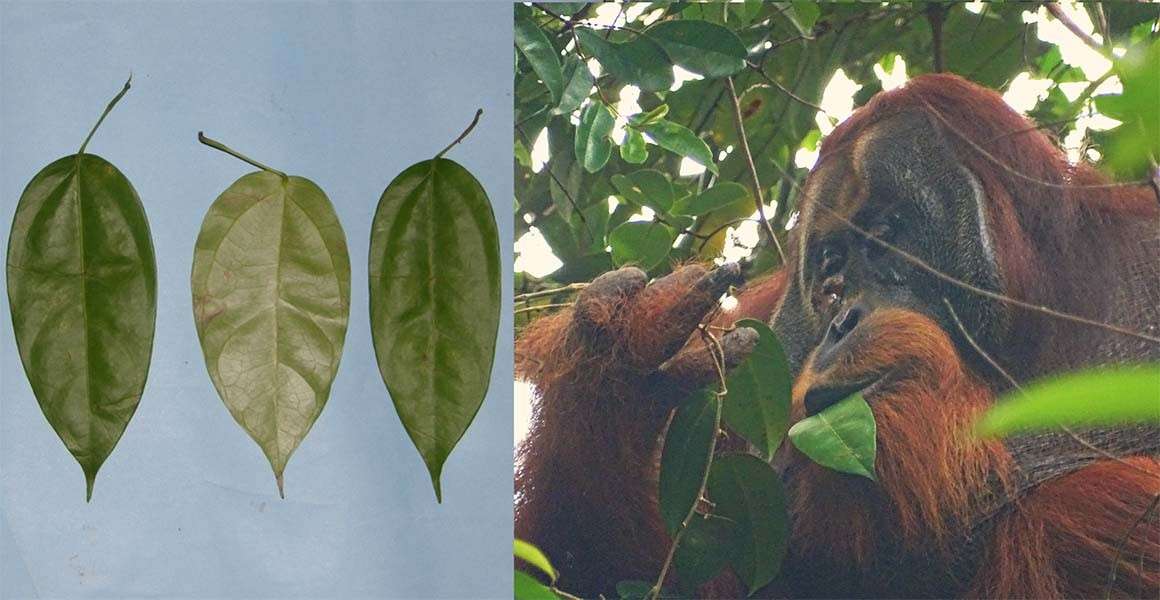
A large male, given the name Rakus at the Gunung Leuser National Park, was seen to have a deep wound on his cheek, but researches spotted the animal taking a known medicinal plant and chewing it up into a paste before using it almost as an anti-inflammatory treatment.
It was the first time a creature in the wild has been recorded using nature in this way and after observing Rakus continuously, they saw how the wound closed within five days and was fully healed just a couple of weeks later.
The plant is called Akar Kuning and has healing properties which many in Southeast Asia can testify, as it is used to treat malaria and diabetes.
How Rakus knew to use this particular plant is not yet clear, because orangutans very rarely eat the plant in the peat swamp forested area.
Highly intelligent
Experts were already aware that great apes used medicine to try to heal themselves, but seeing it in the wild was a first and considered to be a real treat.
The research and scientific teams believe Rakus was badly hurt when fighting with rival orangutans as he is regarded as one of the dominant males. He was seen to apply the “paste” to his injury repeatedly for several minutes, before completely smearing it with the mushed up liquid solution.
He also fed on the leaves which are not regarded as part of an orangutan’s diet, almost as if he knew it was helping the healing process.
The paste and leaves did the trick with no sign of infection occurring, the wound healed perfectly, and the animal retured to normal health just a few weeks later.

Possibly discovered by accident
Dr Isabella Laumer at the Max Planck Institute in Germany pointed out that these great apes are humans closest relation and this was a good example of the similarities between us.
“We are more similar than we are different,” the biologist said in her role as lead author of the research team.
She believes that it was possibly the first time Rakus had done this type of treatment and may have discovered it inadvertantly.
“It could be that he accidentally touched his wound with his finger that had the plant on it and then because the plant has quite potent pain relieving substances he might have felt immediate pain relief, which made him apply it again and again”
Critically endangered
Rakus is one of around 150 critically endangered Sumatran orangutans, hence why they are monitored so closely and Dr Laumer suggested alternatively he could have learned the method from watching others in his group.
Not unkown in the ape world
Chimpanzees in multiple locations have been observed chewing on the shoots of bitter-tasting plants to soothe their stomachs.
Gorillas and bonobos have been seen to swallow certain rough leaves whole to get rid of stomach parasites; but this is the first time an orangutan has been witnessed what can only be described as self-medicating.



0 Comments