
Once in a generation planetary parade to be viewable on last day of month

By Mick the Ram
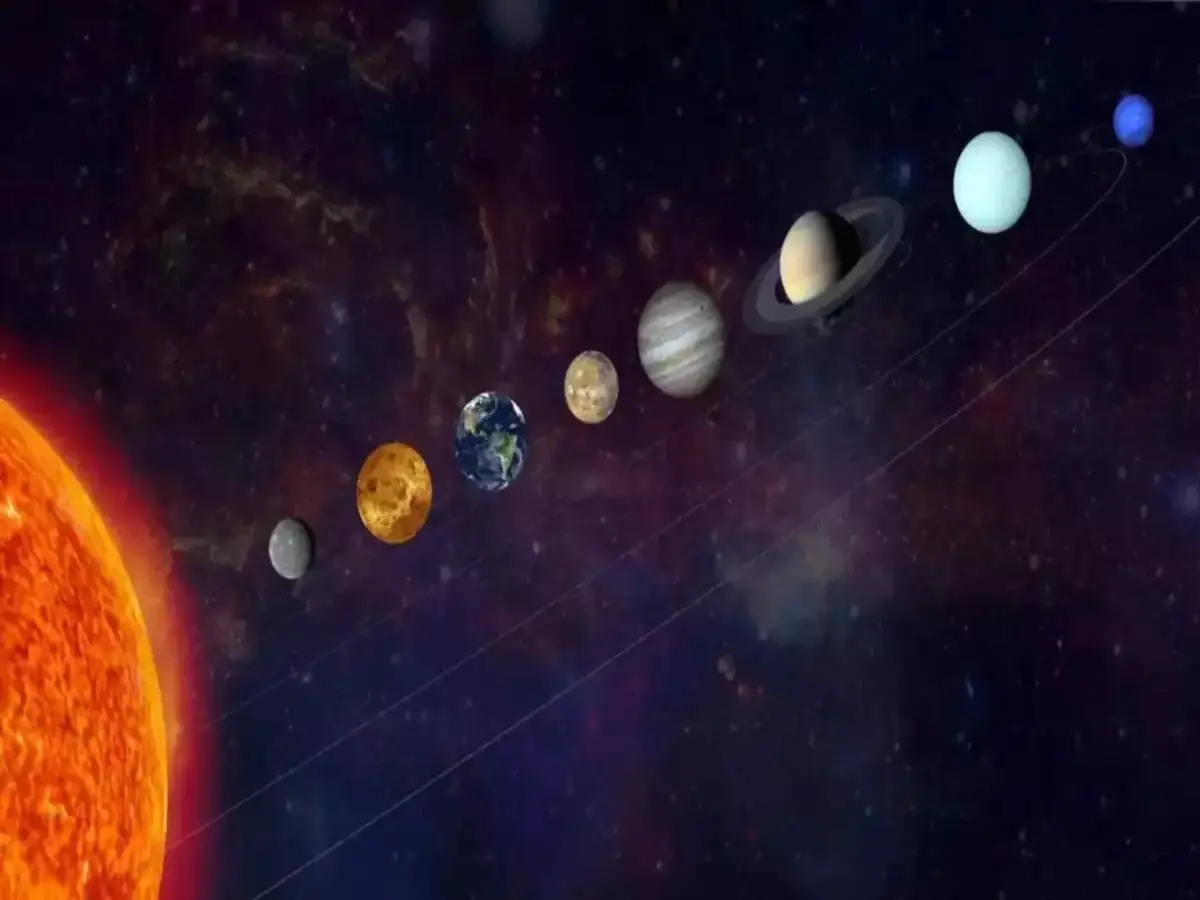
On Friday 28 February 2025, the world will witness a remarkable planetary alignment, a spectacle which will not be seen again until September 2040.
This stunning configuration will see all seven planets aligning and for the majority of the amazing occurrence, it can be viewed without any specialized equipment.
The term “planetary alignment” is essentially an astronomical term meaning that several planets gather closely on one side of the Sun at the same time and for all seven to be in this position at the same time is an extremely rare event.
Experts are advising that the best time to catch a glimpse of this phenomenon will be in the early evening, shortly after sunset, irrespective of location.
Seemingly four of the planets (Mercury, Venus, Jupiter, and Mars) will be easily visible to the naked eye, but Uranus and Neptune will require some assistance through binoculars, or a small telescope.
Saturn is likely to be the most challenging, as it has a very limited observation window, so some planning will be required to capture the full effect.
Always lined up
The planets are in actual fact, always lined up in a fashion, but under normal circumstances they are simply not viewable all at once. They line up in something called an ecliptic, essentially the plane where they orbit the Sun.
However, on rare occasions, as the planets race around the Sun each at different speeds, they do find themselves on the same side of the Sun, allowing them to appear closely together in the night sky.
Very few to definitely miss opportunity
A clear, but dark sky, will permit the best vantage of the western horizon and as the 28th is not when a full moon is occurring, the hope is that in some places around the world, the sight will be quite spectacular.
It is predicted that without cloud cover, only the furthest north latitudes will miss the treat of the dramatic show.
Tips from the experts
It naturally will help to know just what to look for, so expert astronomers advise that the “reddish” looking Mars will be the highest in the sky within the Gemini constellation; whilst Jupiter – the second brightest planet – will be sat a little lower in the constellation Taurus, with Uranus nearby.
Closer to the western horizon will be the brightest planet – Venus, with Neptune located above, although this is the faintest of all the planets, so this will definitely require the clearest of visions and very possibly a good pair of binoculars.
Timing is key
Mercury, which is often the most elusive of the planets, pops up in the constellation Aquarius, close to the Sun, but it is Saturn that will create the most difficulties.
This is because despite being really bright – and therefore normally easily visible in the night sky – the down side is that on this occasion it will be very close to the Sun, so in order to view it it will be necessary to not only find a time when the Sun is already below the horizon, but also one at which Saturn hasn’t yet set in that location.
Recommendations for best views
Amateurs wanting to see the alignment in all of its amazing glory are recommended to find a dark viewing area, as light-pollution makes it so much harder to spot the planets and stars.
A clear view of the western horizon without any obstructions, such as trees or tall buildings is also suggested; so ideally perhaps a park, or an open field in the countryside.
Simple determining factors
Inexperienced star-gazers are being instructed to be sure that what they are looking at are definitely the planets and not just stars.
Venus should be straightforward enough due to it being the brightest celestial object in the sky, after the moon – which hopefully everyone can distinguish!
The most simple way of determining the difference is the planets – unlike the stars – do not twinkle.
Further advice is NOT to look at mobile phones just before, as eyes can take up to ten minutes to adapt to darkness; also if using a torch to negotiate dark surroundings, a red filtered version will bring the best results.
No adverse reaction
Some media sources falsely claim that planetary alignments can cause tsunamis, earthquakes, and other global disasters, but these theories have been repeatedly disproved.
Indeed, astronomers have again reassured everyone that alignments do not in any way affect gravity, or human life – other than to encourage people out on potentially cold evenings!
The next planetary alignment of five or more planets will be in late October 2028, and then again in February 2034. It will be 15 years before all seven align again.

About the author
Mick Burrows is an independent freelance author based in the UK, boasting over 20 years of experience in the online writing landscape. His extensive background has enabled him to develop a diverse range of material, marked by a unique and distinct style. Recognized as a platinum-level expert author by leading e-zine publications, Mick excels in optimizing content for Search Engine Optimization (SEO) through effective keyword density and distribution. He has served as the lead reviewer for a travel enterprise and the senior previewer at a sports prediction company, melding his passions for sport—particularly football and cricket—with his love for travel, having explored more than 50 countries worldwide.
Read our editorial standards and corrections policy. Spotted an error? Contact the newsroom.
More from World
View section
Antigua and Barbuda, Octopus Energy to Explore Cheaper, Cleaner Power
By Shermain Bique-Charles

Afreximbank issues a $29 million guarantee to scale EAC Customs Bond, easing movement of goods across East Africa
By Editorial Staff

Browne Pushes Small-State Priorities at UN General Assembly
By Shermain Bique-Charles

Afreximbank and ATDC sign US$500 million facility to expand African trade and distribution
By Editorial Staff
Comments
Be the first to comment.
Comments are temporarily unavailable.