
Public response to Chantel’s murder encouraging, but concerning | Editorial

By Kieron Murdoch | Opinion Contributor
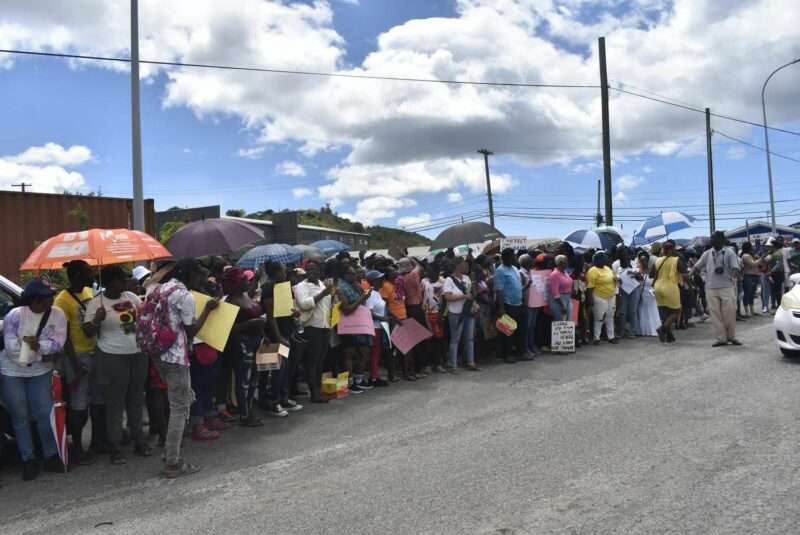
Seldom in Antigua and Barbuda does an act of violence so shock the public consciousness and offend our morality that people are galvanised into collective action. We witnessed that recently with the alleged abduction and murder of 9-year-old Chantel Crump. There was an outpouring of concern upon news of her abduction, a willingness of many to volunteer to help find her, and collective outrage, sorrow and protest at her death.
Before going further, we take this opportunity to express again our deepest sympathy to Chantel’s family, her friends, and her community, who are in mourning. We also recognise the many people who came forward to assist in different ways. We say thank you to the police, who, throughout this harrowing incident, have faced significant criticism, at times unfairly, despite what appears to have been their best and sincere efforts, which at least led to the discovery of Chantel’s remains and the arrest and charging of her alleged killer.
While it is heartening that the nation demonstrated that there are limits to our apathy when it comes to the social ills and acts of vileness and injustice the affect us individually and collectively, the public reaction to this crime was coloured by fury and sorrow, and was at times, beastly and unweildy, to put it mildly.
In corner stores, in living rooms, on buses, in bank lines, on the radio and social media, residents discussed at length what they supposed were the details of the crime and who they believed to be involved with much of it born of conjecture and rumour. At every point, sordid and unverified claims were bandied about liberally. We later found ourselves debating the death penalty as opposed to talking about ways of improving child safety. We witnessed xenophobic comments being aimed at the Hispanic community, due to the background of the accused.
With some weeks having now passed, we must move forward with cooler hearts and settled minds to reflect on some of the issues related to this tragedy.
Aside from justice, our number one interest as a thinking population should be improving child protection in Antigua and Barbuda, and understanding what that should look like. Many have discussed having an alert system that notifies as many people as possible as quickly as possible of an abducted child. It is an idea that has generally found favour and has also garnered interest from the government.
Still, while what happened in this instance was allegedly an abduction, it would be prudent that the scope of our efforts to improve child protection in the wake of this crime should be broader than strictly attempting to avert similar acts. This is a moment for parents, PTAs, communities, schools, NGOs, health professionals, social workers, and state institutions to come together to consider how we can make children safer across the board.
It is also a moment for leadership, not just from the political directorate (though we place heavy emphasis here) but also from all institutions connected with the safety and nurture of the nation’s children. It may be worth commissioning a report into improving child safety. This need not be a flashy or costly affair, but merely a competent and qualified group of individuals examining the many ways in which our children are vulnerable to harm and adverse experiences and recommending ways in which all groups and institutions can better meet their obligation to provide for the safety and protection of young people.
Second, we may also reflect on our reaction and behaviour during this horrible saga. Let us consider the very real dangers of misinformation, especially in times of public anxiety or crisis. It is reasonable to say there was a deluge of rumours and unsubstantiated claims surrounding the missing child that created near hysteria across the nation. Everyone because a purveyor of truth. Every vitz and every fit became suspicious. It seemed like reports of suspicious cars shadowing children were popping up every day.
The most gory and ghoulish accounts of the state of the child’s remains – missing eyes, harvested organs, missing limbs – were being circulated online and by word of mouth, only to later be dismissed by the police as falsehoods. One commentator was even heard on the radio saying that the events happening in Antigua were linked to the occurrence of a blood moon.

Anger, shock, sadness, superstition, anxiety, a tendency to dismiss official information, a tendency to believe what is unconfirmed as truth revealled, and an appalling appetite for luridness – all of these combine during times of public angst or crisis to flip the usual flow of information onto its head and replace it with rapid torrent of conjecture, rumours, and falsehoods. We must learn this lesson and learn it well.
Similarly, let us remember the horrid and xenophobic comments that were directed by some in our community toward members of Antigua and Barbuda’s Hispanic community as a consequence of the fact that the alleged perpetrator was also Hispanic. Let us acknowledge it as a cause for national shame and endeavour never to descend into such mindless mobbery again.
Let us also take time to consider our attitude towards those accused of serious crimes. The most vile and sadistic comments were shared and liked online, perhaps suggesting to the world that our public appetite for cruelty and horridness was not so dissimilar to the appetite for the same that many might presume the alleged killer must have possessed to have committed so heinous a crime. Let us recognise our lapses in this respect and individually make conscious choices to do better. Supporting justice through due process is where our interest and the interests of the victim and those who mourn her lie.
Finally, let us reflect on the police and the impact on them as individuals when they work on cases like these, operating with suboptimal resources provided to them by the state, working under unthinkable pressure, navigating through an ocean of misinformation, bearing the brunt of public anger and criticism while themselves, being human, being fathers, mothers, sisters, brothers, aunts, and uncles, were no doubt feeling the same anxiety and creeping despair as we who chastised them, but who were duty bound to carry on despite it.
If we can honestly reflect on these things, understanding where we did good and where we can do better, we may yet be able to avoid repeating our mistakes.
About the writer:
Kieron Murdoch is an opinion contributor at antigua.news. He worked as a journalist and later as a radio presenter in Antigua and Barbuda for eight years, covering politics and governance especially. If you have an opinion on the issues raised in this editorial and you would like to submit a response by email to be considered for publication, please email [email protected].
This story was first published by Antigua News on : antigua.news/2025/04/22/public-response-to-chantels-murder-encouraging-but-concerning-editorial. © 2025 Antigua News. Republication without permission is not allowed.

About the author
The Editorial Staff refers to all reporters employed by Antigua.news. When an article is not an original creation of Antigua.news—such as when it is based on a press release, other media articles, letters to the editor, or court decisions—one of our staff members is responsible for overseeing its publication.
Read our editorial standards and corrections policy. Spotted an error? Contact the newsroom.
More from Editorial
View section
Before You Shoot, Think: An Open Letter to the Young People of Antigua and Barbuda
By Dario Item

From Captive Child to Russian General: Hannibal, the Unconquered Mind and the Unfinished Work of Emancipation
By Editorial Staff
LETTER: Our Children Need Extra Protection
By Editorial Staff

Water, Flour, And Smoke: Assertion Is Not Fact—And Propaganda Is Not Proof | EDITORIAL
By Editorial Staff
Comments (6)
Antigua Surf April 22, 2025, 7:39 AM
Unruly One April 22, 2025, 8:19 AM
Rhea April 22, 2025, 7:47 AM
Devorn Carter April 22, 2025, 7:49 AM
food4thought April 22, 2025, 7:49 AM
Teacher for Life April 22, 2025, 7:44 PM