


















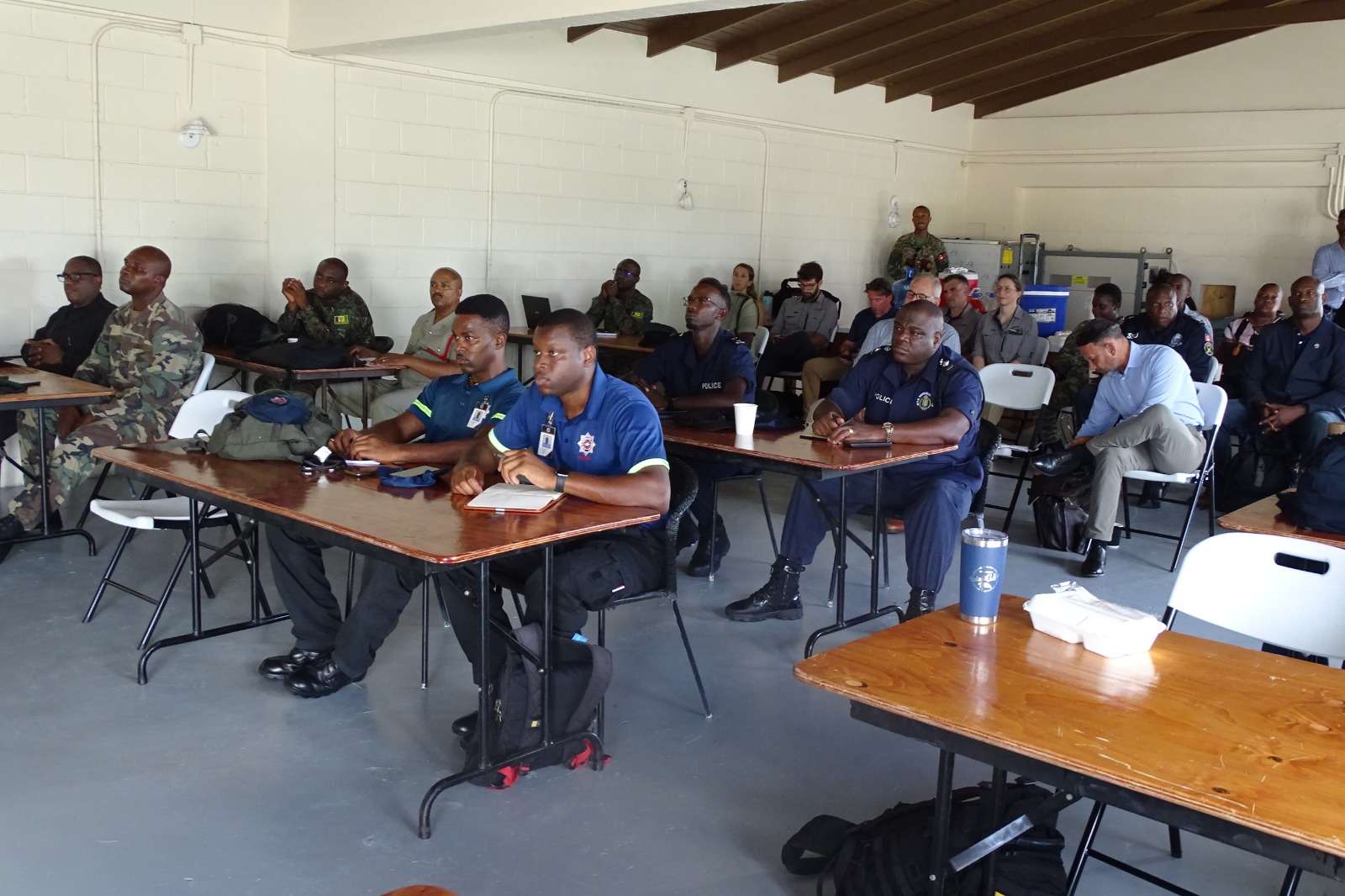
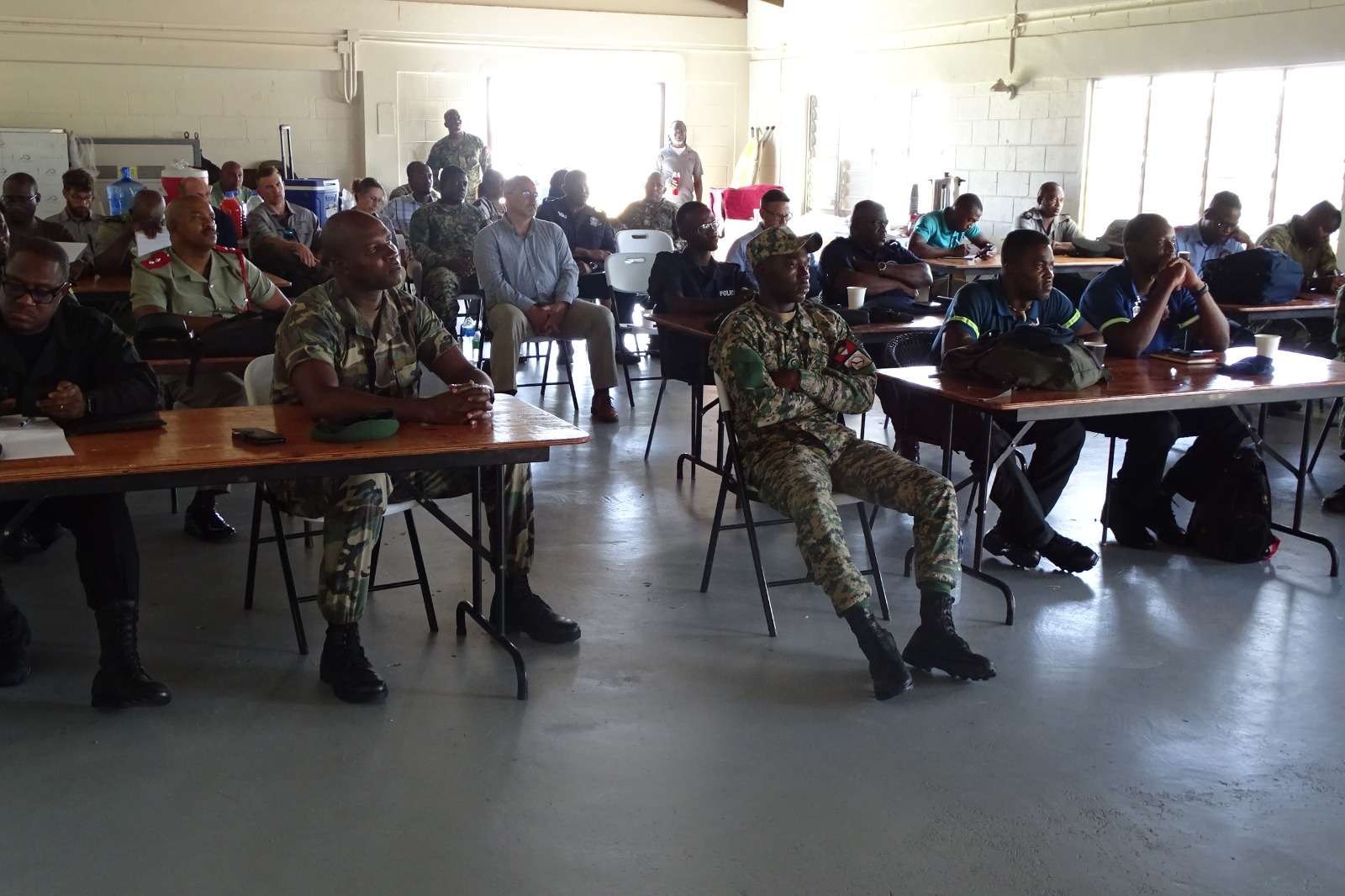
Officers from local police and defense forces, along with disaster management professionals, are engaging in a week-long Caricom Disaster Relief Unit (CDRU) training session in Antigua and Barbuda. This initiative aims to bolster their disaster response capabilities alongside regional counterparts.
Hosted by the Caribbean Disaster Emergency Management Agency (CDEMA) in collaboration with the Regional Security System (RSS), the training involves approximately 40 participants from various countries, including Antigua and Barbuda, St. Kitts/Nevis, Grenada, Montserrat, the British Virgin Islands, St. Lucia, Dominica, and St. Vincent and the Grenadines.
The Caricom Disaster Relief Unit is a crucial first response mechanism, consisting of military, fire service, and police personnel from CDEMA member states. The unit is designed to offer immediate humanitarian aid, manage logistics, support emergency communications, and coordinate both national and regional relief efforts.
During the opening session on Monday, Rasheed Pinder, Programme Director at CDEMA, who spoke on behalf of Executive Director Elizabeth Riley, emphasized that this training is an essential step towards improving the region’s readiness and resilience in light of increasing frequencies and severity of disasters.

Craig Cole, Deputy Director of the National Office of Disaster Services (NODS), highlighted the importance of participants not only focusing on personal development but also contributing to the overall strength of the region. Lieutenant Colonel Eugene Philip of the Antigua and Barbuda Defence Force believes that fostering camaraderie among attendees will improve teamwork.
The training has also received support from the United States Southern Command (US Southcom), represented by Coalition Affairs Director David Greene. US Southcom consists of military and civilian personnel dedicated to contingency planning, operations, and security cooperation throughout the Caribbean and beyond.
Conducted at Crabbes, the Caricom Disaster Relief Unit training covers various critical topics, including regional relief logistics, telecommunications, basic safe building practices, engineering techniques, and enhanced team coordination.


With all these workshops I really do hope that we are ready for responding to these challenges
This isn’t just about theory; it’s about practical, hands-on training that prepares them for real-world scenarios. It’s a significant investment in the safety of our citizens across the region.