


















CBI/CIP Countries Poised to Pass New Law for Establishing Regional Regulator
Following extensive consultations, Eastern Caribbean nations participating in Citizenship By Investment Programs (CBI/CIP) are on the brink of enacting legislation to create a regional regulator. This new law is set to be finalized in September 2025 across all five member countries.
This legislation marks the culmination of a significant period of cooperation and dialogue surrounding these essential Programs, which are crucial for maintaining fiscal and financial stability within these nations.
Key milestones during this engagement process include:
1. The inaugural US-Caribbean Roundtable in February 2023 in St. Kitts and Nevis, where a six-principle agreement was signed between the USA and the five CBI/CIP nations.
2. A roundtable discussion in October 2023 with representatives from the USA and the five CBI/CIP countries.
3. Signing of a Memorandum of Agreement among CBI/CIP Heads in March and June 2024.
4. A meeting with EU officials in January 2024 in Dominica.
5. Implementation of a minimum price of US$200,000 for all CBI/CIP Programs starting July 2024.
6. A multi-nation roundtable with the USA, UK, and EU in August 2024 in Grenada.
7. Another significant roundtable involving the UK, USA, and EU in January 2025 in London.
8. Comprehensive stakeholder consultations on the establishment of a regional CBI/CIP regulator held from March to July 2025.
9. Engagement sessions with the USA and UK in April 2025 in Antigua and Barbuda.
10. Reception of feedback on the draft legislation from the USA and UK in July 2025.
Throughout these discussions, all parties have acknowledged that CBI/CIP Programs are legitimate services that have been instrumental in enhancing the economic resilience of these countries by providing critical revenue for infrastructure and development projects.

The economic significance of these Programs has become even more pronounced, particularly in light of the existential challenges faced by small island states due to climate change and the impact of recent global crises, including the pandemic and ongoing conflicts, such as the war in Ukraine.
It has been widely accepted that dismantling these Programs could jeopardize the future and prosperity of these nations, leading to a series of detrimental social outcomes.
The CBI/CIP countries have reiterated their commitment to collaboratively protect their financial systems against illicit activities, including money laundering, fraud, and financing of terrorism.
Key features of the upcoming legislation for the CBI/CIP regulator include:
1. Creation and funding of a regional CBI/CIP regulator, aimed at enhancing the transparency, security, and sustainability of these vital Programs. The regulator will enforce binding standards for all CBI/CIP Units (CIUs) and licensees involved.
2. Implementation of strong enforcement mechanisms to ensure compliance. The regulator will have the authority to hold CIUs and licensees accountable and will publish annual compliance reports.
3. Collection of biometrics from all new applicants during the interview process to strengthen the vetting of applications.
4. Introduction of residency requirements for all approved applicants. This will enhance the connection between new citizens and their countries, facilitate biometric verification, and promote tourism and economic opportunities.
5. Financial support for CARICOM IMPACS/JRCC, boosting the Joint Regional Communications Centre’s capacity to vet all applicants through a centralized system, crucial for the approval process.
The initiative has been guided by an Interim Regulatory Commission (IRC) comprised of members from all five CBI/CIP nations, as well as representatives from the Organisation of Eastern Caribbean States (OECS) Commission, CARICOM IMPACS/JRCC, and the Eastern Caribbean Central Bank (ECCB). Legal Drafting Consultant Ms. Lydia Elliott has played a key role in this effort, which received oversight from the Heads of Government of Antigua and Barbuda, Dominica, Grenada, St. Kitts and Nevis, and Saint Lucia.
The CBI/CIP countries extend their gratitude to international partners, particularly the USA and UK, for their constructive feedback on the draft legislation provided earlier in July 2025 and other local stakeholders.



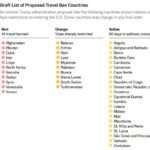

That might be a little too late for us where satisfying the US is concerned but at least we can save our programmes from other countries who are scrutinizing it.
It’s about time. For a while now, the region’s Citizenship by Investment (CBI) programs have been under intense international scrutiny.