












Antigua and Barbuda has launched a new surveillance initiative aimed at protecting the nation’s pork industry from African Swine Fever (ASF), a highly contagious virus that has devastated pig populations in several parts of the world.
The pilot project, a collaboration between the Ministry of Agriculture, the Inter-American Institute for Cooperation on Agriculture (IICA), and the United States Department of Agriculture (USDA), will test local pig herds to confirm that the deadly virus is not present in the country.

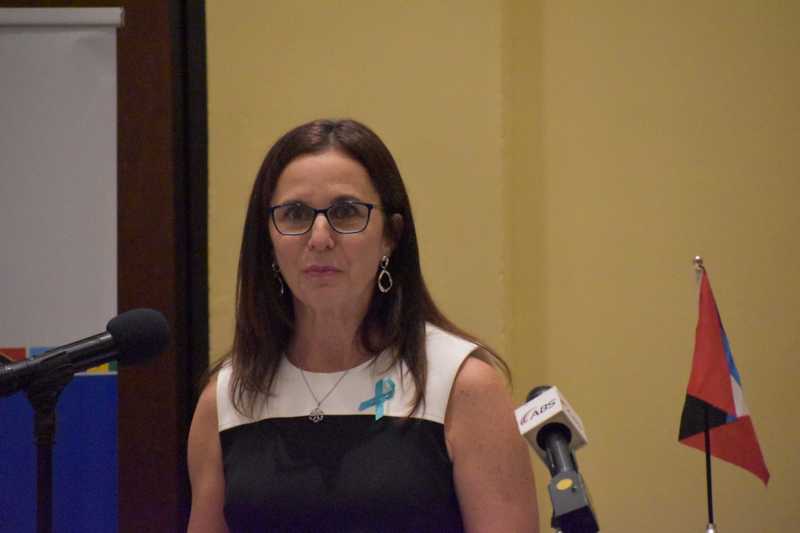
Gregory Bailey – Giving feature address
IICA’s National Specialist for Antigua and Barbuda, Craig Thomas, said the initiative began with a two-day workshop for 15 veterinary technicians from the ministry’s Veterinary Division. The training will equip participants with the knowledge and field skills needed to carry out farm inspections and collect diagnostic samples.
“As part of this project, we’ll be surveying several farms across the island to detect any possible signs of the virus,” Thomas explained. “African Swine Fever poses a serious threat to livestock, it can wipe out entire herds, but thankfully, it does not infect humans. However, humans can carry it from one farm or country to another, often unknowingly.”

Craig Thomas – Welcoming all the participants

So far, similar surveillance exercises in about eight CARICOM countries have turned up no cases of the virus, but Thomas cautioned that ASF has already been confirmed in the Dominican Republic. He warned that improper biosecurity practices, especially by travelers who may come into contact with infected pigs, could lead to accidental transmission.
According to IICA, Antigua and Barbuda has roughly 25 commercial pig farms, each housing 50 or more animals, contributing to the nation’s pork supply. Despite this, a large quantity of pork continues to be imported, another potential pathway for the virus to enter the island.
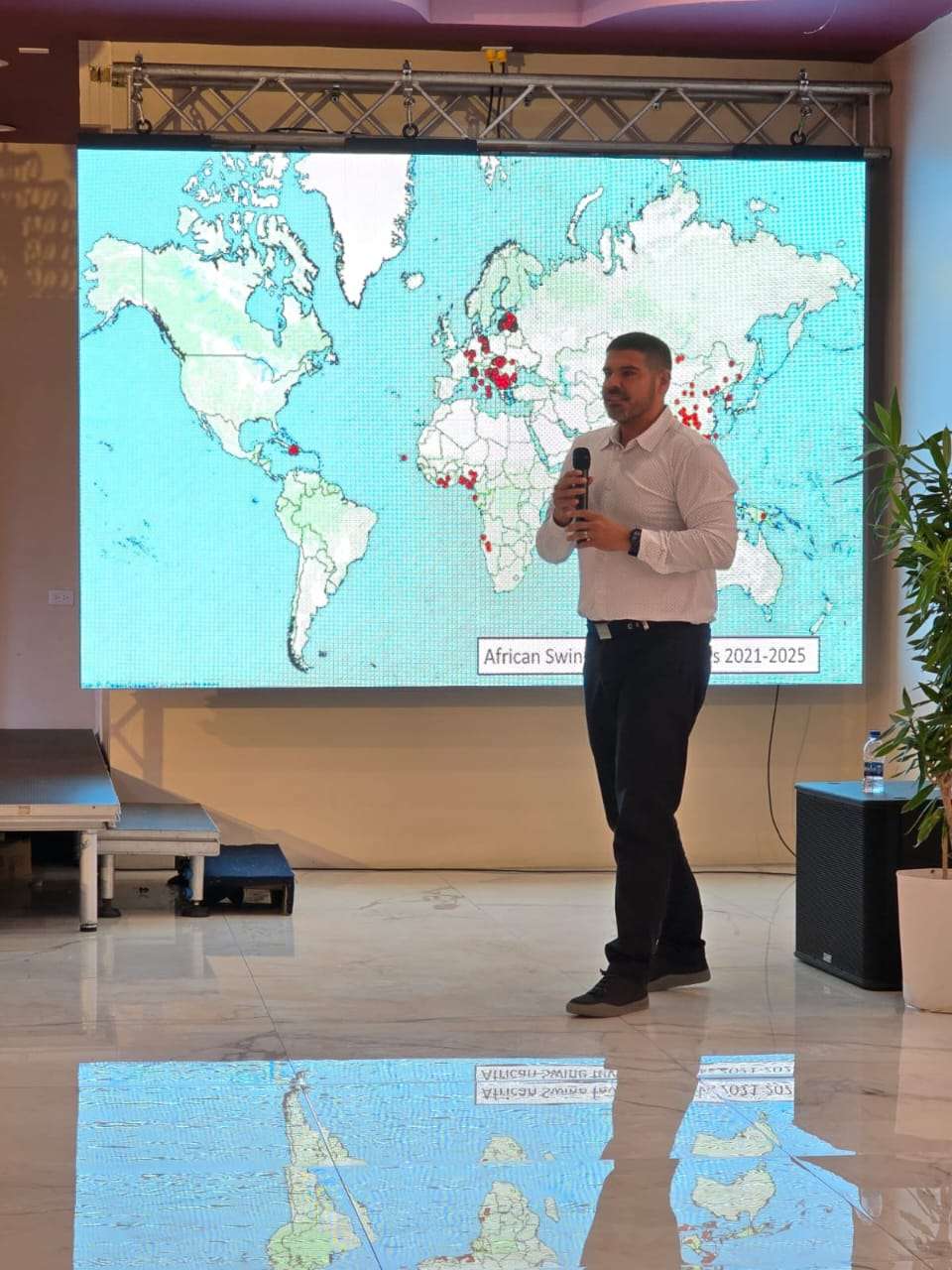
Dr. Christopher Hamilton – West – Consultant presenting epidemiological surveillance
On Tuesday, officials will visit four local farms to collect samples, which will be sent abroad for laboratory testing.
Thomas noted that this pilot marks only the first step in what the Ministry hopes will become a continuous surveillance programme. “The goal,” he said, “is to ensure early detection and prevention. With proper funding and vigilance, Antigua and Barbuda can remain ASF-free and safeguard our farmers’ livelihoods.”



No pork in my pepperpot this independent nor on my plate Christmas
How come all these new diseases are labeled African this or African that? Next thing you know they will be introducing all types of vaccines for use on these animals and later people. Let us research and solve our own problems especially as far as our food security is concerned. Trust no CIA operatives , my over gullible, black Antigua/Barbuda “specialists!
Two-day workshop for 15 vets sounds promising, but let’s hope it’s part of a sustained effort, not just a one-off training
This is a big step for food security and local agriculture. Well done to those leading the project.