
Antigua and Barbuda strengthens biosecurity under ASF Sampling Pilot

Protecting Our Pigs, Protecting Our Future by Brent Simon and Bernella Vidal
Antigua and Barbuda has taken another major step toward strengthening its animal health and bio-security systems through the African Swine Fever (ASF) Sampling Pilot, a collaborative initiative led by the Inter-American Institute for Cooperation on Agriculture (IICA) and the United States Department of Agriculture (USDA), in partnership with the Ministry of Agriculture, Lands, Fisheries, and the Blue Economy.
The program brought together veterinary officers, livestock specialists, and regional experts to reinforce national surveillance capacity and field response readiness against animal disease threats — particularly African Swine Fever, a highly contagious viral disease that affects pigs and poses severe economic risks to the swine industry.
The opening day, held at the People’s Place Conference Room on Nugent Avenue, set the foundation for the activities. During this session featured opening remarks from Craig M. Thomas of IICA, Mr. Fernando Hugo/representative from the USDA, and Dr. Ericka Calderon, ASF Project Manager at IICA Headquarters.
Delivering the feature address, Mr. Gregory Bailey, Director of Agriculture, emphasized the Ministry’s commitment to proactive surveillance and early detection systems, noting that preparedness and rapid response remain essential to protecting national food security and livelihoods.
The technical presentations that followed introduced participants to the regional ASF surveillance framework and Antigua and Barbuda’s own diagnostic capabilities. Dr. Tubal Edwards/Chief Veterinary Officer provided an overview of the local swine industry, disease preparedness measures, and the Veterinary Services Division’s ongoing work in improving animal health monitoring system.
Dr. Christopher Hamilton-West, Epidemiologist, further explored the principles of epidemiological surveillance, supported by a visual presentation showcasing best practices in field data collection and disease containment.
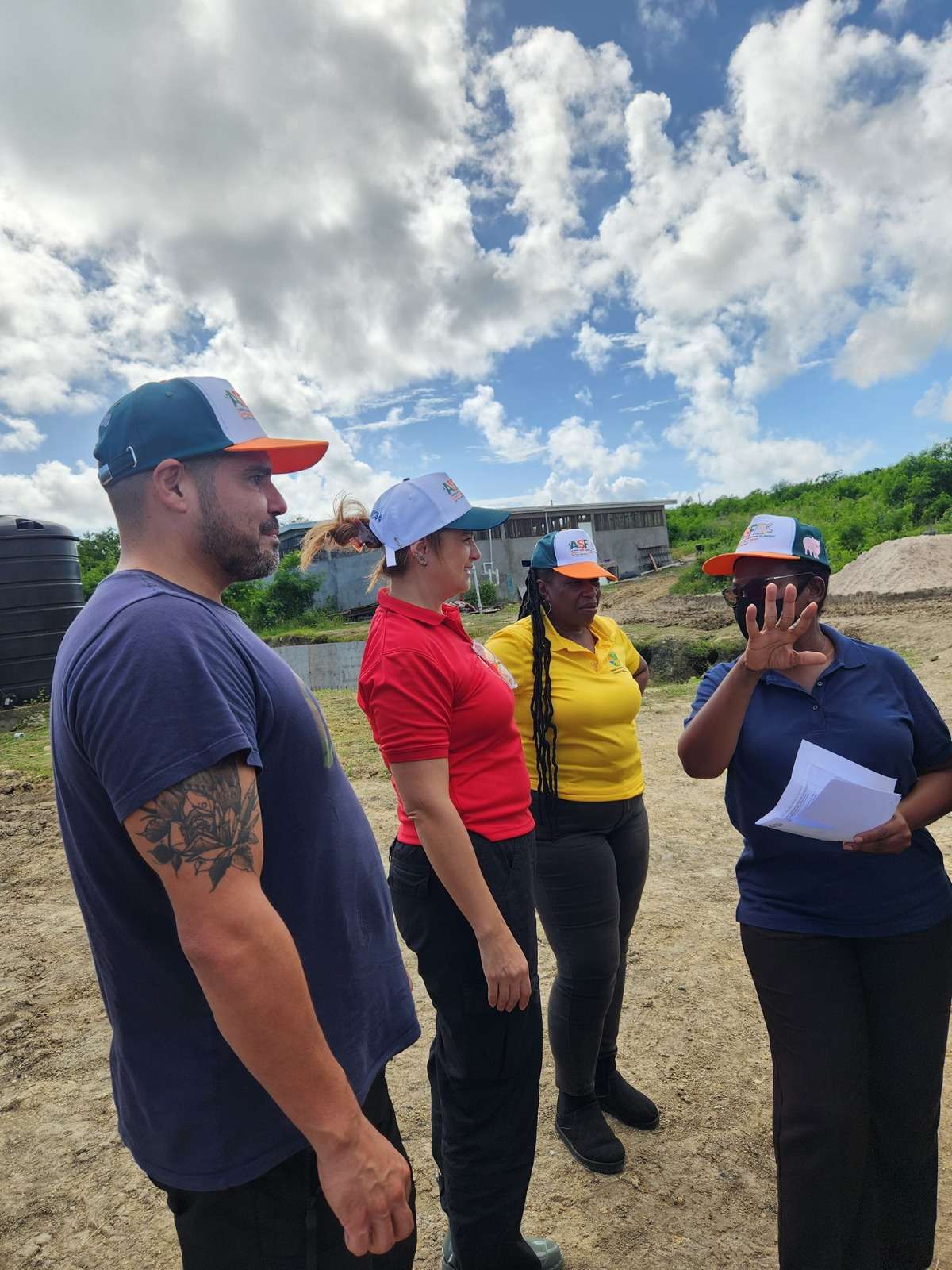
On the second day, participants transitioned from theory to practical application. Gathering early at the Ministry of Agriculture headquarters, they were divided into two teams for simultaneous farm visits across the island — including the His Majesty’s Prison Farm.
A total of 35 pigs were sampled as part of the exercise, with each tube carefully labelled to maintain accurate traceability and grouping records. The samples are being prepared for overseas laboratory analysis to determine disease presence and guide future animal health strategies.
The field visits served not only to test surveillance procedures but also to strengthen the discipline and precision required in real-world disease investigation. Participants demonstrated the correct use of personal protective equipment (PPE), safe animal restraint, sample collection, and detailed data recording. Equal emphasis was placed on the removal and sanitation process for PPE and equipment to ensure that no infectious material was transferred between premises.
According to Dr. Dane Hartley/Veterinarian and an Agricultural Health, Safety Agri-Food Quality Specialist with the EECOM, the practical experience reinforced critical lessons learned from the previous day.
This story was first published by Antigua News on : antigua.news/2025/11/01/antigua-and-barbuda-strengthens-biosecurity-under-asf-sampling-pilot. © 2025 Antigua News. Republication without permission is not allowed.

About the author
The Editorial Staff refers to all reporters employed by Antigua.news. When an article is not an original creation of Antigua.news—such as when it is based on a press release, other media articles, letters to the editor, or court decisions—one of our staff members is responsible for overseeing its publication.
Read our editorial standards and corrections policy. Spotted an error? Contact the newsroom.
More from Antigua and Barbuda
View section
Antigua and Barbuda First in Eastern Caribbean to Sign UN Development Framework for 2027–2031
The agreement will guide cooperation on economic diversification, climate resilience, social protection and other development priorities.
By Shermain Bique-Charles

Parker Defends Call for Age of Consent at 18 in Response to ASPIRE
Senator calls for stronger protection against sexual exploitation alongside adolescent healthcare, education and safeguards for relationships between young people close in age.
By Shermain Bique-Charles

Greene Says CHOGM Could Open Doors for UWI Five Islands
Foreign minister identifies international student recruitment and academic connections as potential longer-term opportunities. Meta description: Greene says CHOGM could help UWI Five Islands promote its programmes and build connections with Commonwealth countries.
By Shermain Bique-Charles

West Indies Oil Seeks Coordination on Fuel Deliveries During CHOGM
Police ask the company to provide delivery dates and times so movements can be coordinated with security arrangements.
By Cory Wayland
Comments (3)
Tromos November 1, 2025, 12:37 PM
Juju Bee November 1, 2025, 12:50 PM
Informed citizen November 1, 2025, 7:54 PM