













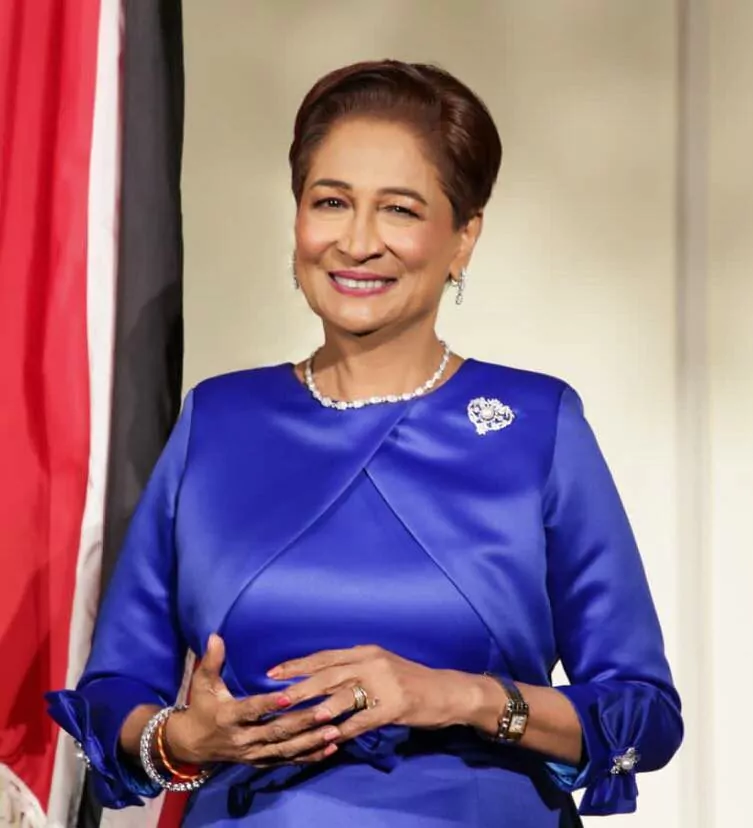
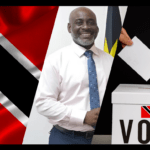
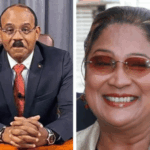
Trinidad and Tobago’s Prime Minister Kamla Persad-Bissessar
Trinidad and Tobago’s Prime Minister Kamla Persad-Bissessar has ignited a diplomatic firestorm within the Caribbean Community (CARICOM) after remarks widely interpreted as a rebuke of Antigua and Barbuda’s Prime Minister Gaston Browne and other regional leaders over their posture toward the United States.
Speaking publicly, Persad-Bissessar warned Trinidad and Tobago nationals against what she described as “bad-talking” Washington, stressing that thousands of citizens hold U.S. visas and maintain close ties with the United States “because people like to go and visit the U.S.”
She went further, framing the issue in stark geopolitical terms.
“If Trinidad and Tobago were to be attacked, who will stand up to defend us?” she asked, underscoring what she described as her country’s strategic partnership with Washington.
In a pointed comparison that reverberated across the region, Persad-Bissessar cautioned, “Careful you don’t end up like Antigua and Barbuda and Dominica… bad-mouthing the U.S. and guess what happened… all their visas rescinded now.”
The comments triggered swift backlash, with critics accusing the Prime Minister of undermining regional unity and publicly singling out fellow CARICOM states at a time of heightened diplomatic sensitivity.
Former Trinidad and Tobago Prime Minister Stuart Young described the remarks as “disturbing” and “quite frankly sad,” arguing that they inflicted serious damage on CARICOM as a regional institution.
In a sharply worded social media post, Young said Persad-Bissessar had “harmed CARICOM” and disrespected long-standing bilateral relationships with neighbouring states—pointing directly to the public reaction from Antigua and Barbuda’s prime minister as evidence.
“Diplomacy is an art form,” Young wrote, “that when properly understood and practised permits countries to find middle ground—even to take positions without harming others or compromising your own sovereignty in the long term.”

He added that the governing United National Congress (UNC) had demonstrated a troubling lack of diplomatic judgment, warning that the country’s external relations were being “worsened on a daily basis.”
Meanwhile, Prime Minister Browne responded without naming Persad-Bissessar directly but left little doubt about the target of his criticism.
“It has been brought to my attention that one of our colleague heads, instead of standing in solidarity, publicly accused us of cursing the U.S. administration,” Browne wrote. “I challenge that leader to back her statement with facts.”
Browne also seized the moment to deliver a broader critique of regional leadership, warning that internal divisions continue to weaken CARICOM’s collective voice.
“The inertia and insularity within CARICOM continue to undermine the effectiveness of our integration movement,” he said.
Despite the sharp exchanges, Browne struck a note of guarded optimism, reaffirming his long-held commitment to Caribbean unity.
“However, as a hardcore integrationist and an eternal optimist, I remain hopeful for a stronger and more effective integration movement,” he added.
The escalating war of words has exposed deep fractures within the regional bloc, raising fresh questions about solidarity, diplomacy, and the future coherence of CARICOM at a moment of growing external pressure.



Caricom will be hard to complete knowing how each nation thinks they are better than the other.
I believe is not she alone thinks like that but she was bold enough to show where she stand.She and any other will throw anyone under the bus to save themselves.
At least she brave enough to say whats on her mind and not tell everyone expect those who it is about.
Old hen. She dont even understand what caribbean unity is about
The thing about it is that America political climate will change in the future. Trump has about 3 years. Kamla just got in office and has about 5 years.
No matter what, Venezuela will now view Trinidad differently negatively. And America will not be there to help you all the time.
But we will see how it goes. Caricom should always stand together for it’s own sake.
Venezuela need to take care of their citizens so they don’t run away and always be a burden to other countries.
She is not Brave to utter those words, she is more foolish!! She seriouly believe she would get any help from Trump? Its people who think like her are the reason why there is still disunity in the region. Such a dumb comment!
The point remains, Antigua’s PM wants to be the ‘mangy mongrel’ for the Caribbean, and knowing that the Pit Bull, Trump is his match!
Just kool out! You have nothing to prove to the Caribbean. You have a twin island of loyal citizens that need urgent attention.
On a different note, All Saints Rd. and numerous other roads need your attention!
Sing for your supper grandma. I pray Trump never throw you under the bus!
That’s what you call the height of greed. Carry on Kamla. Time will tell.
Look how Trinidad PM turned around and crook CARICOM.
Kamla shame on you!
Never see come see. she frighten she in office
Trinidad is the most affected hy the drug trade and crime from it. The rest of the Caribbean like to talk as if they know what we go through. You all don’t know and you all don’t help. Trump is helping and we appreciate it.
This sounded more like fear talking than leadership. So we must stay silent forever just to keep visas? That feels small.
There is obviously no UNITY in this current situation