
OPINION | Gadgets: Creating More Problems in Education

by Derrick Nicholas
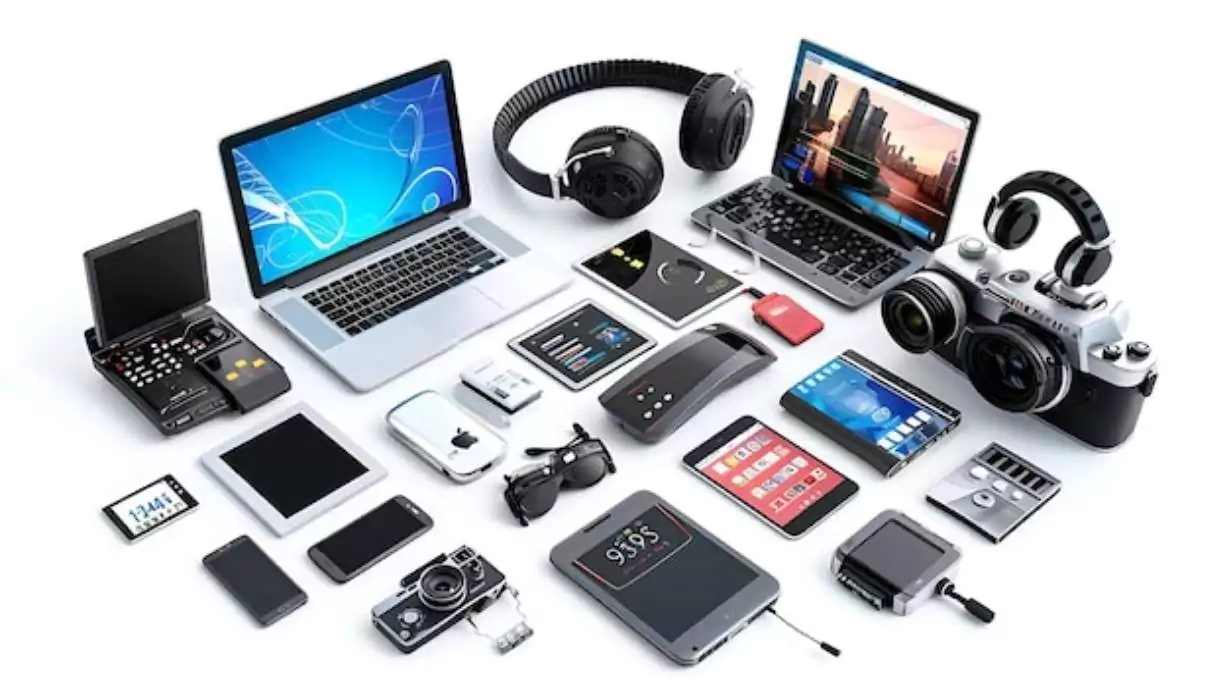
I recently read an article in the Jamaica Gleaner, in which Linvern Wright, the president of the Jamaica Association of Principals of Secondary Schools (JAPSS), was expressing his concern that the proliferation of technology as a learning tool in schools may be creating more problems than it solves while robbing children of critical skills they would have learned traditionally.
I, too, have remarked publicly about the systematic replacement of critical thinking by technological devices, some of which are deemed as ‘essential’. “There are disagreements about this, but I really believe that one of the things that we are recognizing as schools is that gadgets are presenting more challenges than they are solving problems in schools. All the research is showing that these things are more of a distraction than they are of assistance, especially if things are not properly organized pedagogically,” said Wright.
Of course, I am in agreement. The introduction of calculators as early as primary schools has turned our children into button pushers, who lack the critical skill needed to do mental arithmetic.
Wright continued: “… technology is attractive and it is something that gets the dopamine [a brain hormone vital for movement and focus] in children going, I think we have mistaken that kind of dopamine response for effectiveness. However, I think it has more effects on the brain that are adverse where education and child development are concerned, that I don’t think we are paying sufficient attention to.”
The JAPPS President also cited the students’ ability to write notes. “One of the things that our children are doing less now is that our children are writing less. All the research has shown that, when a child writes notes, versus typing notes, it actually has a better effect on memory and on storing of long-term memory, because of the processes that are involved.”
Interestingly, in 2023 the United Nations Educational, Scientific and Cultural Organization (UNESCO), issued a report which stated, inter alia, that learning benefits may be affected if technology is used in excess or if it replaces qualified teachers.
Meanwhile, Mark Malabver, president of the Jamaica Teachers’ Association (JTA), is urging the Ministry of Education, Skills, Youth and Information to pause and reassess the country’s heavy reliance on technology in classrooms, warning that emerging research suggests it may be eroding students’ critical thinking and problem-solving skills.
According to the JTA president, recent research is increasingly showing that students are becoming distracted by digital devices, with serious implications for learning and cognitive development.
“The research is saying that many students are too distracted by technology, and you know it robs them of critical thinking and problem-solving skills,” he stated. “There was a point in time when we felt that the technology was the magic wand, the silver bullet to solving our pedagogical problems……but the research is saying that is no longer so.”
This writer is not calling for a complete ban on technology in the classroom. My students are not allowed to use their calculators except for solving trigonometry problems. An urgent conversation must be held with the Ministry of Education and its stakeholders on arriving at a balance, where the benefits of modern technology can be incorporated into the classroom. However, this must not be at the expense of traditional learning, where foundation skills, including sustained concentration, independent reasoning, and problem-solving skills remain critical to student success.

About the author
The Editorial Staff refers to all reporters employed by Antigua.news. When an article is not an original creation of Antigua.news—such as when it is based on a press release, other media articles, letters to the editor, or court decisions—one of our staff members is responsible for overseeing its publication.
Read our editorial standards and corrections policy. Spotted an error? Contact the newsroom.
More from Antigua and Barbuda
View section
Think Before You Press Send: Jeffers Urges Greater Care in Workplace Communication
Management consultant Vernon A. Jeffers Sr. warns that careless emails, unnecessary copying and emotionally charged responses can damage workplace relationships and unnecessarily escalate issues.
By Cory Wayland

Alzarri Joseph Lands US$230,000 Gulf Giants Deal in ILT20 Auction
Antiguan fast bowler Alzarri Joseph was snapped up by Gulf Giants for US$230,000 in one of the biggest deals of the DP World ILT20 auction.
By Cory Wayland

Chief Magistrate Visits Prison, Leads Workshop on Treatment of Inmates
Ngaio Emanuel meets new Prison Superintendent Albert Wade and leads a workshop on prisoner treatment, use of force, ethics and remand deductions.
By Shermain Bique-Charles

Jury Acquits Man of Serious Indecency and Indecent Assault After Four-Hour Deliberation
An 8–1 majority verdict cleared the accused of both charges arising from allegations made during a hot-stone full-body massage at a spa in February 2025.
By Cory Wayland
Comments (6)
Randy January 21, 2026, 3:38 PM
Ben simmons January 21, 2026, 2:39 PM
Terry January 21, 2026, 7:04 AM
Informed citizen January 20, 2026, 11:19 PM
Apex Jones January 20, 2026, 9:08 PM
Randy January 20, 2026, 9:05 PM