
CXC holds inaugural regional education conference amid calls for Caribbean-wide digital transformation

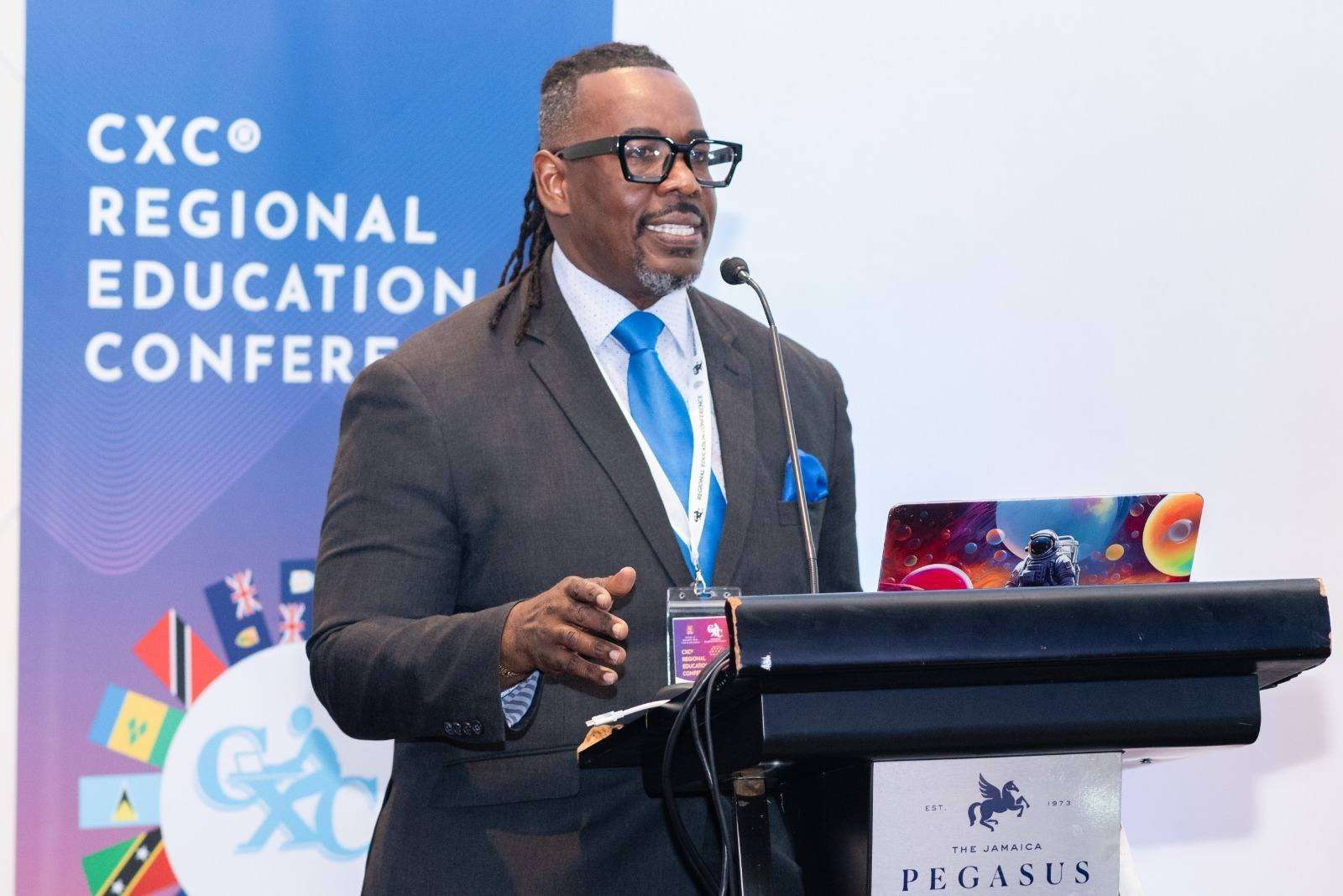
The Caribbean Examinations Council (CXC) has officially opened its inaugural Regional Education Conference in Jamaica, bringing together more than 350 delegates and 13 ministers of education from across the Caribbean to address the growing demand for digital transformation in the region’s education systems.
The conference, themed “Navigating the Digital Age: Rethinking Learning, Teaching, and Assessment,” is being held at the Jamaica Pegasus Hotel and draws participants from 27 countries, including Malta, Canada, the United Kingdom, the United States, and the Netherlands.
The gathering, which was originally scheduled for October 2025, was postponed due to the impact of Hurricane Melissa on the Land of Wood and Water.
CXC Registrar and CEO Dr Wayne Wesley told delegates that Caribbean education systems are now operating in a world already defined by artificial intelligence and digital technology, and that the pace of change demands a new approach.
“We must, as an education community, be in a perpetual state of transformation,” he said. “We must remain agile to prepare our students to take on what this new world is going to be.”
He pointed to the recent implementation of fully electronic and hybrid examinations during its January 2026 cycle across 17 Caribbean states, involving more than 10,000 candidates.
“The results were clear. Students across the Caribbean are ready for examinations that are electronic,” Wesley said.
Dr Marcia Potter, Deputy Chair of CXC, told delegates that the conference’s theme was both timely and necessary.
“Artificial intelligence, automation, data analytics, and digital platforms are reshaping every sector of society, and education is no exception,” she said.
Potter challenged participants to move beyond adaptation. “The future of learning is not something that will simply happen to us. It is something we must design together,” she said.
Delivering the opening address, Jamaica’s Minister of Education, Skills, Youth and Information, Senator Dr Dana Morris-Dixon, said the challenge before Caribbean education ministers is not whether artificial intelligence will enter schools, but how it is managed.
“The question is whether we as leaders have clear frameworks for its responsible use,” she said. “Whether we will build digital literacy, not just digital exposure.”
She outlined several initiatives underway in Jamaica, including the imminent launch of a Jamaica Learning Assistant, described as a 24-7 AI-powered academic assistant trained on the national curriculum and adapted to be culturally relevant, including the ability to respond in Patois.
“When this is launched, every child in Jamaica will have access to this,” Morris-Dixon said. “It doesn’t replace a teacher. What it does is give you additional tools at home that you can engage with the lessons in the way that you learn.”
The minister also cautioned that inclusion must remain central to any digital strategy, noting that children with disabilities are two and a half times more likely to be out o
school than their peers, and said AI tools must be deployed with a rights-based approach.
Opening keynote speaker Professor Paloma Mohammed-Martin, Vice-Chancellor of the University of Guyana, told delegates the region is experiencing a complete paradigm shift, not simply a change in tools or methods.
“Nothing is staying still,” she said. “We have moving frontiers.”
Professor Mohammed-Martin called on every government ministry in the region to immediately establish dedicated units focused on futures thinking, warning that the pace of technological change is too rapid to be addressed through voluntary or after-hours efforts.
“We need to establish really quickly focal points or offices or units for futurist work immediately in every single government ministry and agency in this region,” she said. “It has to be resourced.”
She also questioned the absence of young people from the conference proceedings, arguing that meaningful planning cannot take place without the voices of those being planned for.
The conference, which runs over four days, will examine sub-themes including generative AI in teaching and learning, literacy and numeracy standards, flexible education pathways, and technology-enhanced assessment.
This story was first published by Antigua News on : antigua.news/2026/03/17/cxc-holds-inaugural-regional-education-conference-amid-calls-for-caribbean-wide-digital-transformation. © 2026 Antigua News. Republication without permission is not allowed.

About the author
The Editorial Staff refers to all reporters employed by Antigua.news. When an article is not an original creation of Antigua.news—such as when it is based on a press release, other media articles, letters to the editor, or court decisions—one of our staff members is responsible for overseeing its publication.
Read our editorial standards and corrections policy. Spotted an error? Contact the newsroom.
More from Antigua and Barbuda
View section
‘No Free Lunch’: Browne Blasts Posters Demanding Free Housing at Pelican Court
The prime minister called those circulating the posters “rotten, lazy, entitled bastards” and said former homeowners would receive a swap while former tenants would pay rent at the China-funded development.
By Shermain Bique-Charles

Fire Destroys Wooden House in Vernons
Firefighters from All Saints and St. John’s extinguished the blaze on Sunday afternoon. The Antigua and Barbuda Fire Brigade is investigating its origin.
By Shermain Bique-Charles

New Five Islands Primary School to Feature STEM Lab and UWI Partnership
The school, already under construction, is expected to work with the neighbouring university campus on teacher training and technology education.
By Shermain Bique-Charles

PM Browne Urges Action as About One in Three Adults in Antigua and Barbuda Live With Obesity
The prime minister called for individual and collective action, highlighting diet, exercise and adequate rest.
By Shermain Bique-Charles
Comments (1)
Apex Jones March 18, 2026, 12:30 PM