












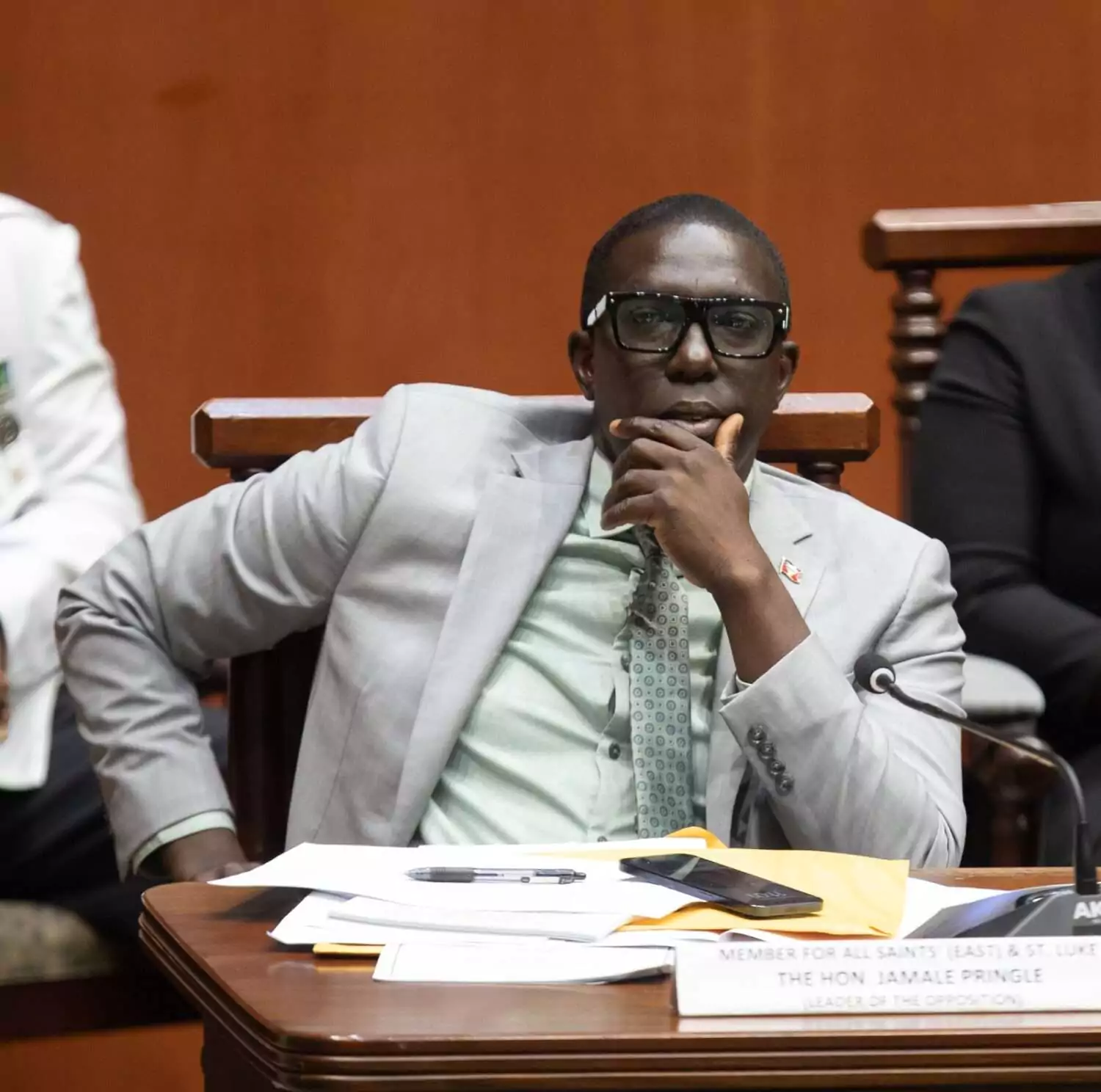
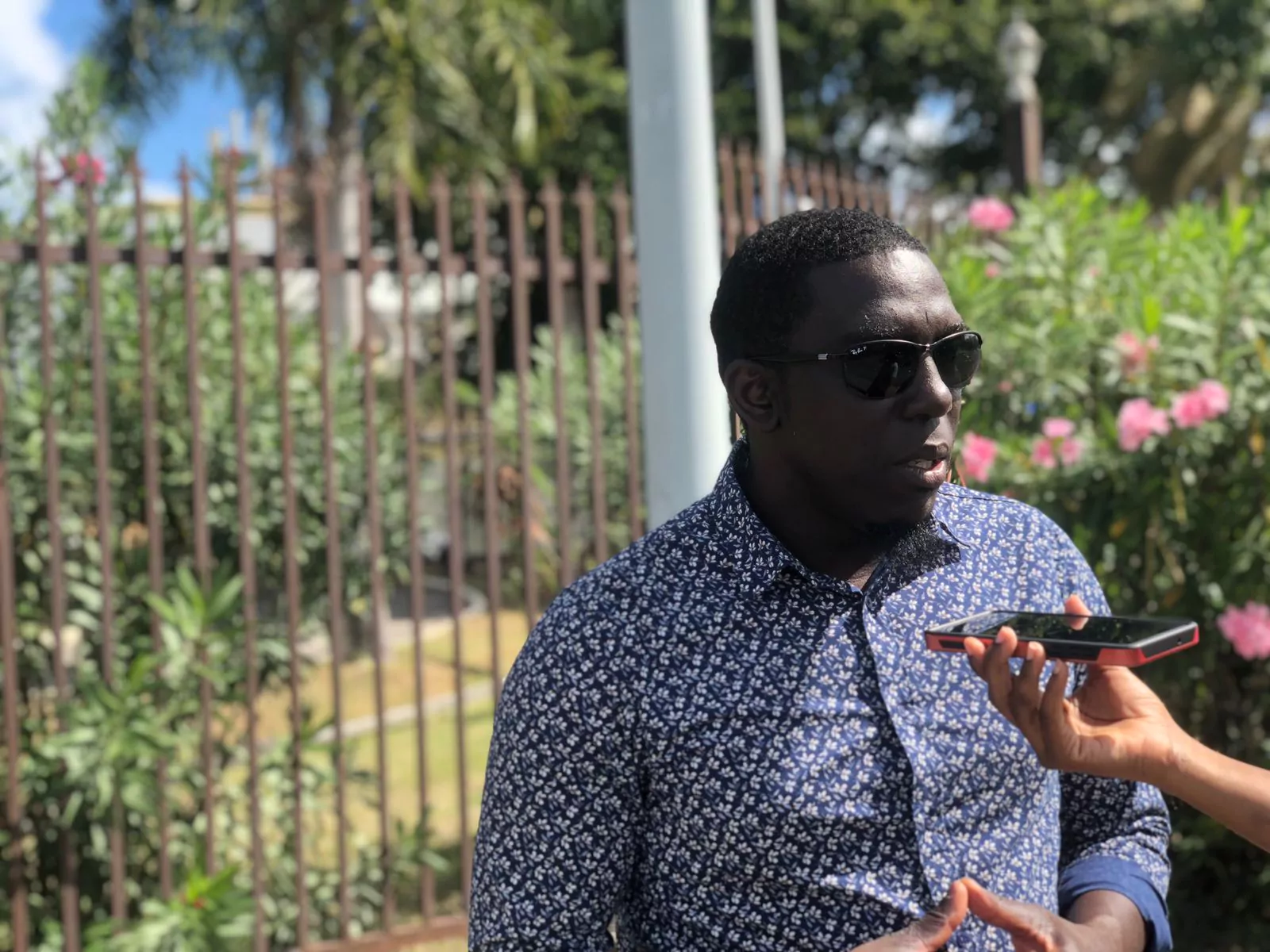
UPP Political Leader and Opposition Leader Jamale Pringle (photo by Wayne Mariette)
The United Progressive Party (UPP) is facing one of its most defining internal crises in recent years, as revelations surrounding Opposition Leader Jamale Pringle’s near-resignation expose deep fractures within the party’s leadership and electoral strategy.
Last week’s media reports suggesting that Pringle was on the brink of stepping down were not without merit. According to multiple party insiders, the Opposition Leader had in fact decided to resign after two internal polls—conducted by regional political analysts Linley Winters and Don Anderson—reportedly showed that the UPP stood little chance of winning the upcoming general election under his leadership.
Those findings are said to have triggered urgent discussions at the highest levels of the party.
A Decision Made — Then Reversed
Sources indicate that Pringle met with former Political Leader Harold Lovell and Deputy Leader Sherfield Bowen, where he signaled his willingness to step aside to allow Lovell to return to the helm in a bid to strengthen the party’s electoral prospects.
But what appeared to be a strategic pivot quickly unraveled.
Insiders say the proposed transition did not sit well with Deputy Leader Bowen, who reportedly believed he should ascend to leadership, particularly given his position within the party hierarchy. The disagreement exposed underlying tensions over succession and authority—issues that have long simmered beneath the surface of the UPP.
Before any formal announcement could be made, news of the internal decision was leaked to the media.
That leak proved to be a turning point.
Pressure from the Ground
Following the reports, Pringle is said to have faced immediate backlash from his constituents, many of whom reportedly warned that stepping down could cost him his seat. That reaction appears to have prompted a dramatic reversal.
Pringle ultimately chose to remain as leader.
However, insiders argue that the damage had already been done.
Some within the party question whether the backlash from constituents was truly the decisive factor, noting that the information had already entered the public domain. “Whether constituents learned about it 24 hours before or after an official announcement, the political reality wouldn’t have shifted,” one source suggested.
Growing Unease Within the Party
Pringle’s decision to stay has reportedly deepened unease among several candidates and executive members, with concerns now centering on the party’s ability to mount a credible challenge in the upcoming election.
One notable development was the withdrawal of St. Paul candidate, attorney Wayne Marsh. While there were claims that Marsh cited constitutional concerns about dual citizenship, insiders suggest his decision was influenced more by broader doubts about the party’s direction under its current leadership.
“Marsh is a very intelligent attorney who knows the law. The constitution did not catch him by surprise, but he wasn’t willing to give up his US citizenship with Pringle as leader, knowing the UPP could not form the next general elections”, the source said.
Privately, some members have become increasingly blunt in their assessments.
“Politics is about people and numbers,” one executive member told Antigua.news. “We have to separate personal feelings from reality. This is not about personalities or sentiment. It’s about winning elections—and right now, we are not positioned to do that.”
The same source added that while there is no personal animosity toward Pringle, there are serious questions about his readiness for national leadership at such a critical political moment.

A Party Divided
The situation now unfolding within the UPP highlights a deeper identity crisis—one that goes beyond a single leadership decision.
At its core is a fundamental question: can the party unify behind its current leader and present a viable alternative to the electorate, or will internal divisions continue to undermine its chances?
The apparent tug-of-war between experience, hierarchy, and electability has left the party struggling to define a clear path forward.
What Comes After the Election
Perhaps most striking are indications that the current tensions may not end with the general election.
Sources suggest that, depending on the outcome, the UPP could face a wave of resignations at the executive level. More significantly, there are whispers that some departing members may seek to form a new political movement—one aimed at reshaping the opposition landscape entirely.
If realized, such a development could mark a major political shift in Antigua and Barbuda, potentially fragmenting the opposition vote while simultaneously creating space for new leadership and ideas.
The Bigger Picture
For voters, the unfolding situation raises broader concerns about stability, readiness, and governance.
In a political environment where elections are often decided on leadership strength and public confidence, internal discord can prove costly.
The UPP now finds itself at a critical juncture—one where decisions made in the coming weeks could determine not only its electoral fortunes, but its very future as a cohesive political force.
As the country edges closer to a general election, possibly by the end of April, one thing is clear: the battle within the UPP may prove just as consequential as the one at the polls.


We are all waiting for the LIAR to come on the media and deny the fact again. In most truth, Jamale is not fit to run the country. UPP people are leadership hungry! It’s not about the people it’s about who’s at the top of their table. That cannot win you a general election.
So glad you said this. I’m trying to wonder what’s wrong with these people
I dont think the issue is Jamal Antigua Surf. The issue is that the man is only trying to secure his pension he has two more years in the service to go. Also Jamal is not really passionate about being a politician. He sees it as a job and eitherway he is well set. Indeed he need to leave but left him run out his two years still.
That’s the reason why the UPP can’t win an election they are not ready, Pringle, I would never vote for you. You are not a people person, you should remove yourself from the party enterly, you putting way too much of your personal feelings in and not thinking of the people, you all need to study, read more books about leadership, my grandpa use to say EDUCATION IS NOT COMMON SENSE.Hey, thats my thought.
From a political standpoint, this situation signals a party in trouble and we have to all admit that…But not because a leader nearly resigned, but because the entire episode exposes a deeper crisis of confidence, control, and direction within the UPP. When internal polls convince leadership that victory is unlikely, and that triggers a near leadership change that is then reversed after a leak and internal pushback, it tells voters the party is reacting to pressure rather than leading with clarity. The clash between Pringle, Bowen, and the possible return of Lovell highlights not just personalities, but the absence of a clear succession plan and unified strategy, while the leak itself underscores a breakdown of trust at the highest levels. The explanation that constituents forced a reversal feels more like political cover than the true driver, especially given how quickly internal disagreements surfaced, and the withdrawal of a candidate like Wayne Marsh reportedly tied more to doubts about electability than constitutional issues, reinforces the perception that even insiders are hedging against defeat. Altogether, this paints a picture of a party struggling to convince both its own members and the public that it is ready to govern, and unless the UPP can quickly project unity, decisiveness, and a credible path to victory, the greatest threat it faces may not be its political opponents, but the growing belief that it cannot win.