
Spectacular lightening strike on world’s tallest building captured on video

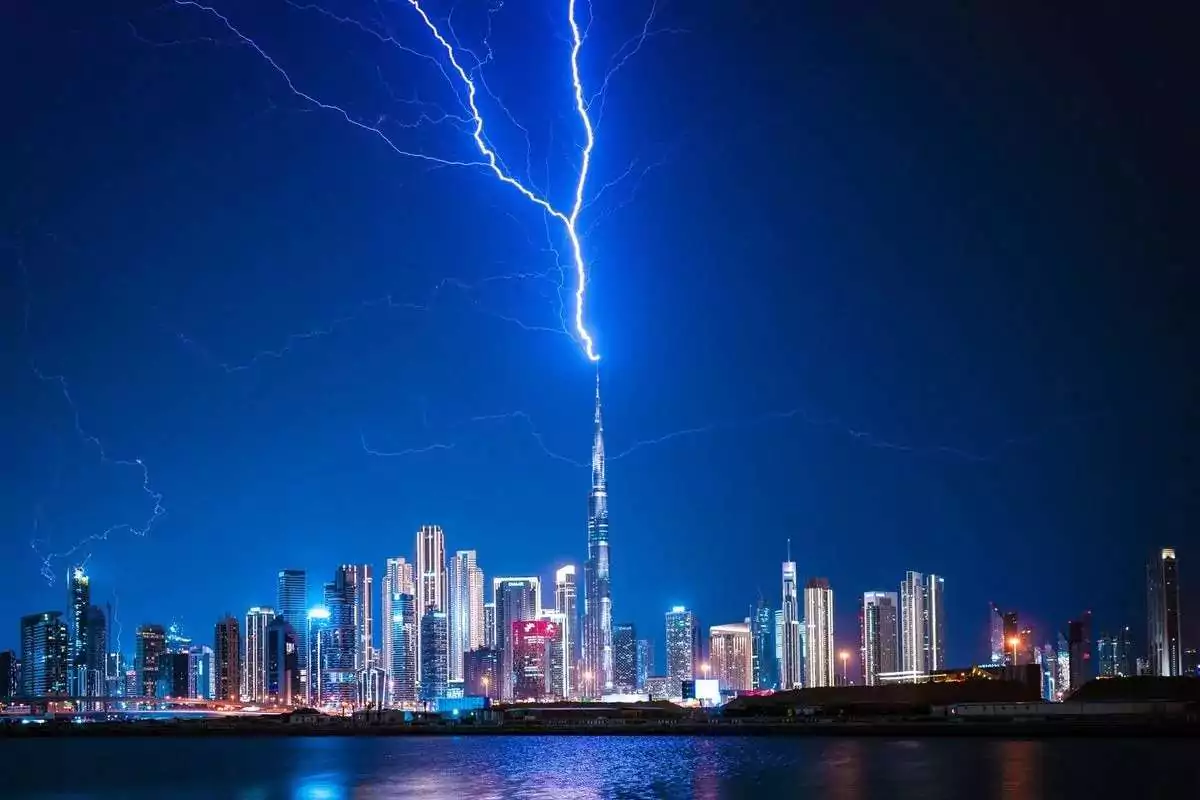

Violent storms which swept across the UAE helped provide a spectacular image when a lightening bolt struck the Burj Khalifa – the world’s tallest building.
The dramatic picture was captured as the 829m/2,722ft structure suffered a direct hit during what was described as an “unstable weather system” driving in from west of the Gulf city.
Despite the extraordinary occurrence, Dubai’s iconic 163-floor tower nor its occupants were ever in serious danger. That is as a result of smart engineering design, which saw a safety system created that essentially acts as the city’s lightning rod, safely attracting and directing lightning away from surrounding areas.
Once lightning strikes, the electrical current is guided along a network of metal conductors running down the exterior of the building to the bottom where a grounding system sends all the lightning electricity safely into the earth, protecting the interior lighting, elevators and all other equipment from being damaged, or causing harm to anyone.
So whilst it may have looked incredibly scary, in reality it simply provided Dubai with a fantastic light show. It is the second time the tower has been hit during March following missile debris striking the building in the first days of the on-going US-Israeli and Iran.
The rest of the city didn’t escape quite so easily with heavy flooding and travel chaos after “intense downpours”. Residents were warned to stay away from beaches, flood-prone areas, as well as mountainous regions. Authorities activated emergency measures and issued safety alerts across the country, but they were keen to deny that the storm was a cyclone.

About the author
The Editorial Staff refers to all reporters employed by Antigua.news. When an article is not an original creation of Antigua.news—such as when it is based on a press release, other media articles, letters to the editor, or court decisions—one of our staff members is responsible for overseeing its publication.
Read our editorial standards and corrections policy. Spotted an error? Contact the newsroom.
More from World
View section
Antigua and Barbuda, Octopus Energy to Explore Cheaper, Cleaner Power
By Shermain Bique-Charles
Afreximbank issues a $29 million guarantee to scale EAC Customs Bond, easing movement of goods across East Africa
By Editorial Staff
Browne Pushes Small-State Priorities at UN General Assembly
By Shermain Bique-Charles
Afreximbank and ATDC sign US$500 million facility to expand African trade and distribution
By Editorial Staff
Comments
Be the first to comment.