












Jolly Harbor property owner files appeal over monthly fees
A Jolly Harbour property owner has filed an appeal to the Eastern Caribbean Court of Appeal, asking whether a private developer in Antigua can lawfully demand thousands of dollars in monthly charges from a registered freeholder without any binding contract.
Cyprian Kowalczyk, representing himself, is appealing the 2 April 2026 ruling of High Court Justice Williams, which dismissed his application for an interim injunction against Caribbean Developments (Antigua) Limited (CDAL) and ordered him to pay $2,000 in costs.
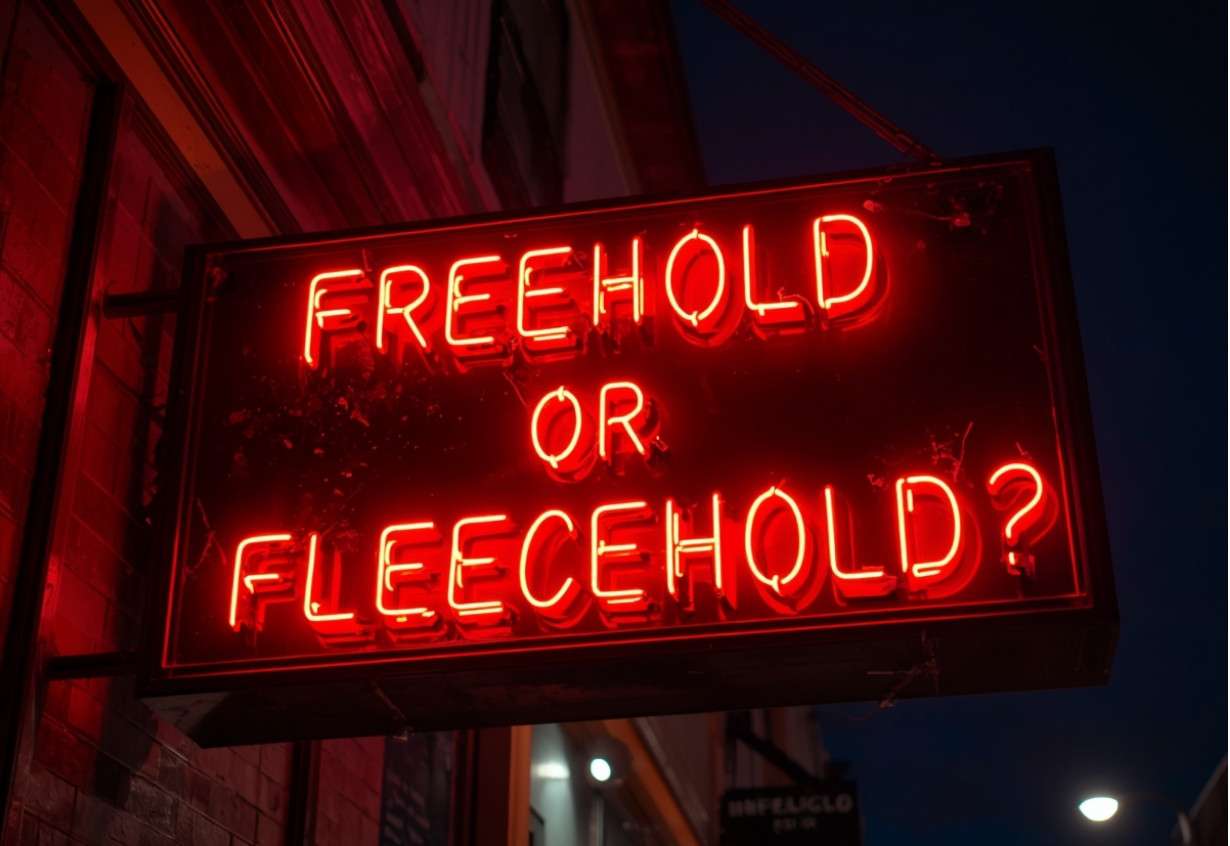
In the appeal, Kowalczyk is pressing a question he says has never been answered in Antigua: “Do I own a freehold, or a fleecehold?”
“The answer matters for every homeowner in this country who bought land from a developer,” Kowalczyk said. “If a developer can bill you forever with no contract and no cap, what exactly did we buy?”
At the centre of the appeal is an arrangement reached in open court that the ruling then disregarded. According to the certified transcript of the 12 February Zoom hearing, Justice Williams himself proposed that CDAL stop sending monthly demands and instead issue an account statement once every 90 days. “Is there a possibility that you can send it every 90 days and just update it?” the judge asked CDAL’s counsel, Dr. Errol Cort. “It just changes the interaction with the individual.”
Dr. Cort agreed, telling the court he saw “no difficulty” with the arrangement and giving a formal undertaking on the record: “I give you the undertaking that CDAL will only send him invoices every three months, notwithstanding how this application goes, because there’s no intention to harass him.”
Justice Williams then told Kowalczyk: “These are the order I’m prepared to make. One, that there’s no publicity given to the fact of calling you a bad debtor. Two, that they’re going to only send you a bill every 90 days.” Kowalczyk accepted.
When the ruling was handed down six weeks later, neither term appeared. The application was dismissed in full.
“I logged off that Zoom hearing believing the monthly demands would stop and that my name would not appear on any non-payer list, regardless of how the case went next,” Kowalczyk said. “The ruling does not mention the undertaking the defendant gave in open court.”
The High Court dismissed the application primarily on the ground that Kowalczyk had not provided a cross-undertaking in damages — a standard promise to compensate the other side if an injunction is later found to have been wrongly granted.
Kowalczyk says the hearing record tells a different story. Justice Williams himself asked Dr. Cort: “Isn’t it open… to an applicant to ask the court to dispense with the undertaking?” Dr. Cort conceded that “yes, the court can waive an undertaking in damages.” In his reply affidavit and again at the hearing, Kowalczyk offered to give one if the court so directed.
“Nowhere in my application did I decline an undertaking,” he said. “The judge acknowledged he could dispense with it. None of that made it into the ruling.”

The appeal raises two questions Kowalczyk describes as of broader public importance. The first is whether section 94 of Antigua’s Registered Land Act permits anything other than restrictions on the use of land to be registered against a freehold — he says it does not, and that section 94(3) expressly provides that registration cannot give a covenant “any greater force or validity” than it would otherwise have. The second is whether monthly demands for a disputed sum, coupled with public “debtor” labels before any court has ruled, amount to actionable harassment. He relies on Rhone v Stephens and Cayman Shores v Strata Plan No. 79 on the first; and on Ferguson v British Gas, Roberts v Bank of Scotland and Iqbal v Dean Manson Solicitors on the second.
Kowalczyk also points to the Cayman Islands, whose land law is drawn from the same source as Antigua’s. Cayman’s legislature passed the Registered Land (Amendment) Law 2017 to expressly permit positive covenants to run with the land — a step, he argues, that would have been unnecessary if the original wording already covered payment obligations. Antigua has not amended its Act.
He has also filed a separate restitution claim for charges he says were paid under mistake of law and duress, and an action concerning another Jolly Harbour property where, according to correspondence from CDAL’s attorneys, payment was founded on a 1994 agreement for sale never renewed when the property changed hands. CDAL’s community charges, he notes, also include a line item for the developer’s legal fees, spread across the homeowners.
“I am paying the lawyers who are suing me,” Kowalczyk said. “CDAL knows how to write contracts when it wants to. It does not want to write one with me, because the moment it does the charges become negotiable — the last thing a developer billing 849 homeowners wants.”





Monthly charges with no cap and no contract? That’s not ownership, that’s rent in disguise
This sounding like a test case. Could shake up the whole real estate sector depending on the outcome.
Another dramatic story ftom that dude in jolly habour?
Why homeowners paying developer legal fees too? That part hard to swallow.
This case bigger than one man. Plenty people in gated communities watching this closely
Just some examples of CDAL charges to Homeowners.
1. CDAL spend $300,000 USD on sage software. Why? And why are they billing homeowners for this?
2. Hundreds of thousands for electric for the desalination plant that has not bee in use for years all water comes from APUA.
3. $3500 USD for accommodation for the generator engineer.
4. Charging more for electric and water than APUA charge (illegally)
5. Millions charge for security which are just gate openers. And when there is issues they do nothing. Staff are not trained properly.
6. Blocking peoples parking with big rocks (what cleaver person made this decision)
7. CDAL charge double what they should do.
8. Our covenants on our deeds say we should pay for service for our plot, CDAL charge for more.
Wait… so the judge said one thing in court and the ruling said something else? That not sitting right at all