











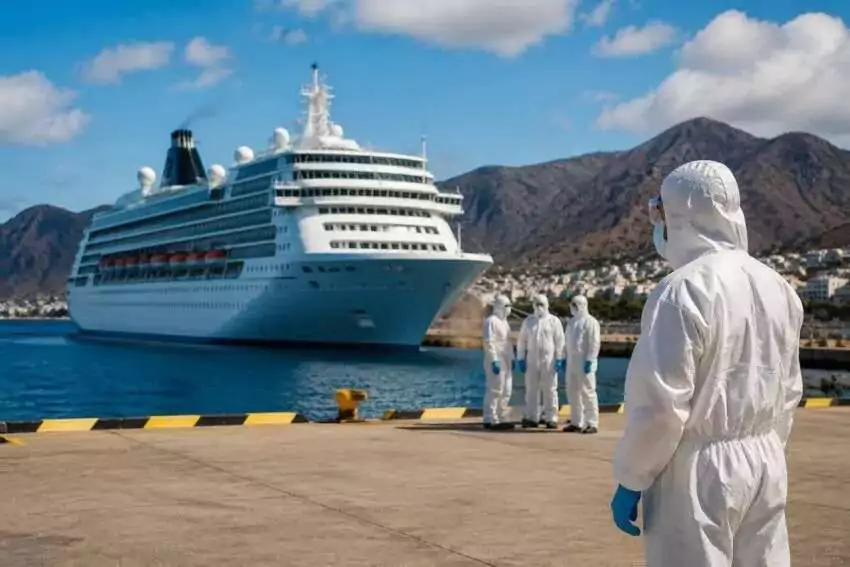
The MV Hondius on which 3 people have died from hantavirus is now heading to Tenerefe (The CSR Journal)
An outbreak of the rare and deadly hantavirus pulmonary syndrome (HPS) onboard a Dutch-flagged polar expedition vessel has led to the death of three people, and several others amongst the approximately 150 passengers and crew have developed symptoms consistent with the infection.
The ship, The MV Hondius, which departed Ushuaia, Argentina, on 1 April 2026 for an Antarctic and South Atlantic expedition, had been ordered to remain offshore near the West African archipelago nation of Cape Verde, while international health agencies coordinated evacuations, testing and contact tracing.
Three of those aboard have been evacuated already, as the craft now heads towards Tenerefe – which is part of Spain’s Canary Islands – where upon arrival everyone on the ship will undergo a medical assessment and if fit to travel, foreigners will be repatriated to their home countries, where they will be required to undergo a period of quarantine.
Initial fatality
The first known fatality on The MV Hondius, which is operated by Ocean-wide Expeditions, occurred on 11 April involving a 69-year-old Dutch passenger and his body, along with his wife, was disembarked at St Helena on 24th of the month.
Tragically, she later died in a Johannesburg hospital after testing positive for the hantavirus. Then a third passenger also died on the ship, prompting more evacuations to South Africa and the Netherlands for specialist care.
By early May, the World Health Organisation (WHO) confirmed at least five laboratory-verified cases and several more described as “suspected” cases.
How the outbreak unfolded
Investigations revealed that the outbreak very likely began weeks before it was actually recognised. Passengers had travelled through remote regions, including Antarctica and isolated South Atlantic islands, complicating early detection and response.
Some passengers disembarked at St Helena before the outbreak was fully understood, prompting international efforts to trace potential contacts. Health authorities identified the Andes strain of hantavirus as the cause.
This strain which is primarily found in Argentina and Chile, is notable because unlike most hantaviruses it has demonstrated rare human-to-human transmission, especially in close-contact environments. This raised the stakes considerably for global health agencies monitoring the ship’s movements.
Possible source of infection
It is believed that the virus may have been brought onto the vessel after a Dutch couple visited a rubbish dump during a bird-watching exercise, where they may have encountered infected rodents, which could have spread it via particles from their urine, droppings, or saliva.
These two were the first to die from the effects of the virus.

Mixed feelings
After days of consultation, Spanish authorities agreed to the move to Tenerefe, but the Canary Islands’ president Fernando Clavijo has opposed the plan. “I cannot allow it to enter the Canaries, as this decision is not based on any technical criteria and nor have we been given enough information.”
However, Spain’s Health Minister Mónica García said that the evacuation would “avoid contact” with Canary Island citizens and there would be “no risk” to them when it arrives in Tenerife.
He also confirmed that any Spaniards on the ship will be sent to a defence hospital in Madrid to quarantine.
What is the Andes strain of hantavirus?
Hantaviruses, which are named after a river in South Korea, describe a family of viruses rather than one single disease. Indeed there are more than 20 different viral species, according to the WHO – almost all of them linked to infection by rodents, typically rats and mice.
Nevertheless – and crucially in this case – the Andes virus is the one strain thought to spread by human-to-human transmission, although it would need to be prolonged contact.
It can take anywhere between one and eight weeks for symptoms to appear which starts with fatigue, fever, and muscle aches, followed by headaches, dizziness, chills, and abdominal issues. In severe cases respiratory problems can develop, at which point patients need urgent medical attention.
There is no specific treatment for hantavirus infections, but the type of care recommended can include oxygen therapy, mechanical ventilation and even dialysis.
Tragic death of actor’s wife
In February 2025, Betsy Arakawa, the wife of Oscar-winning actor Gene Hackman, died from a respiratory illness linked to hantavirus. Medical investigators believe Ms Arakawa contracted HPS – the most common strain in the US – which led to her death.
Nests and some dead rodents were found in outbuildings of her house.



Nobody wants that ship to dock in their port cause this shit is scary. Kudos to the Canary island
That sounding very serious yes. Hope the situation get under control quickly.
The world really can’t take another major health crisis right now.
They need to get these people off that boat