












End in Sight for St. John’s Sidewalk Barriers After 15 Years
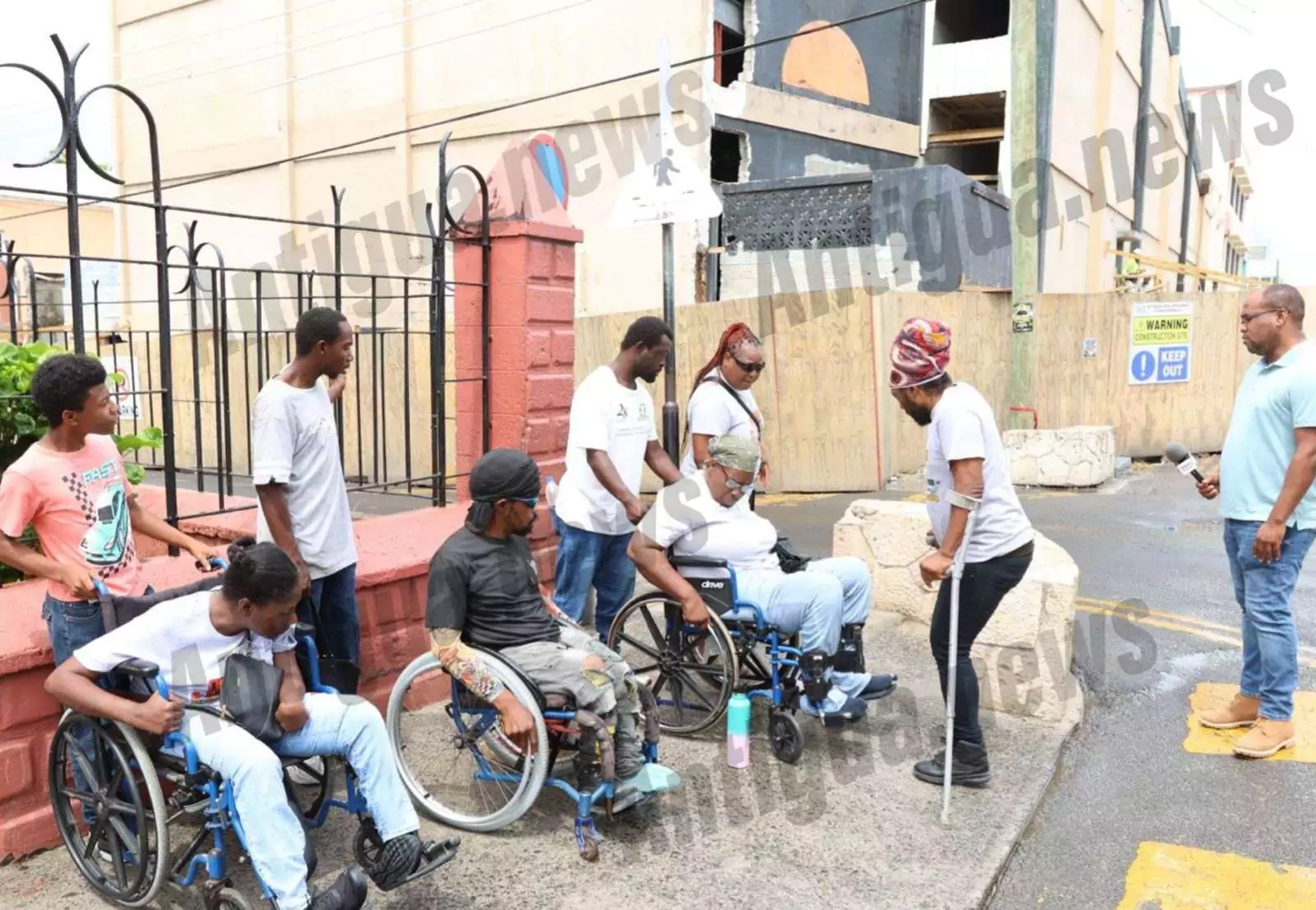
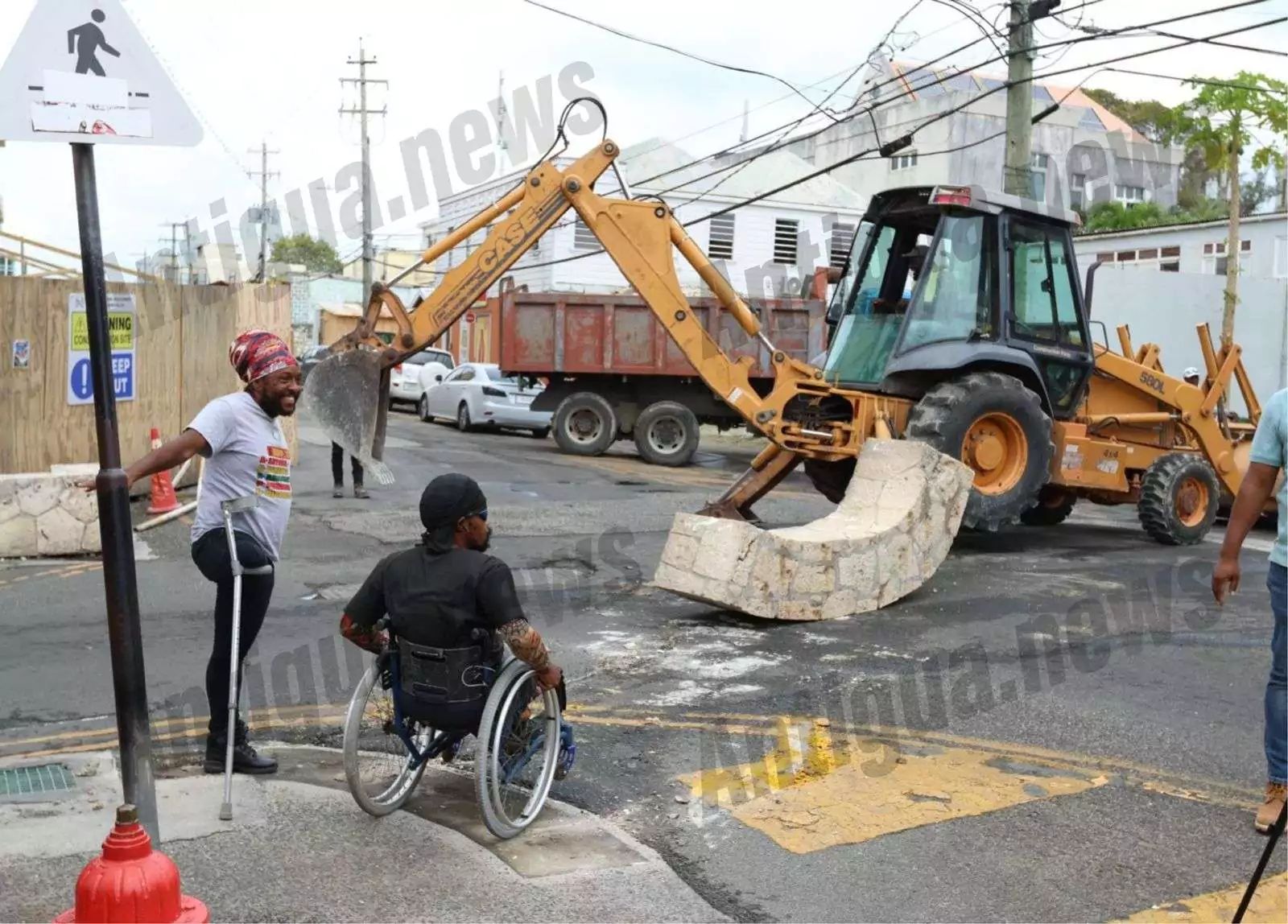
The long-criticized concrete barriers that have blocked sidewalk access across St. John’s for more than fifteen years are finally beginning to come down, marking what many disability advocates describe as the start of a long-overdue transformation of the capital city.
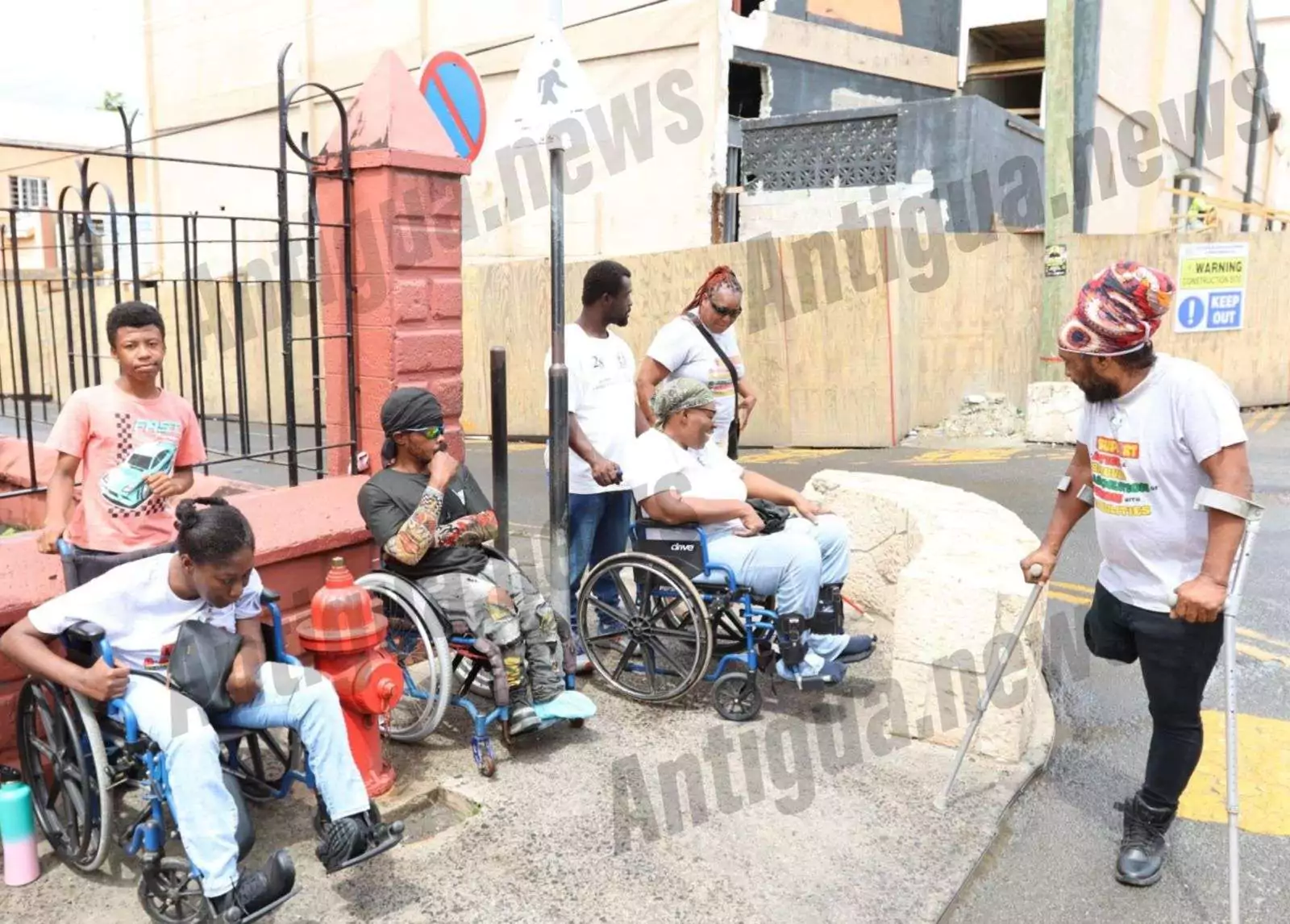
The barriers, installed at intersections across St. John’s, have long been condemned by wheelchair users, visually impaired residents and ordinary pedestrians who say they made navigating the capital difficult and dangerous.
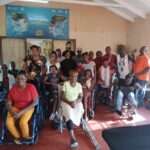
Minister of Social and Urban Transformation Rawdon Turner met on Sunday with members of the Antigua and Barbuda Persons Living with Disabilities Association, where they witnessed the removal of the first sidewalk corner barriers and outlined plans for the creation of fully accessible pedestrian corridors throughout the city.
Turner said the government’s first major accessibility corridor will connect the East Bus Station to the West Bus Station, creating a guaranteed accessible pathway through the heart of St. John’s.
According to Turner, the project will gradually expand street by street in collaboration with disability advocacy groups and the Ministry of Housing and Works under Minister Maria Browne.
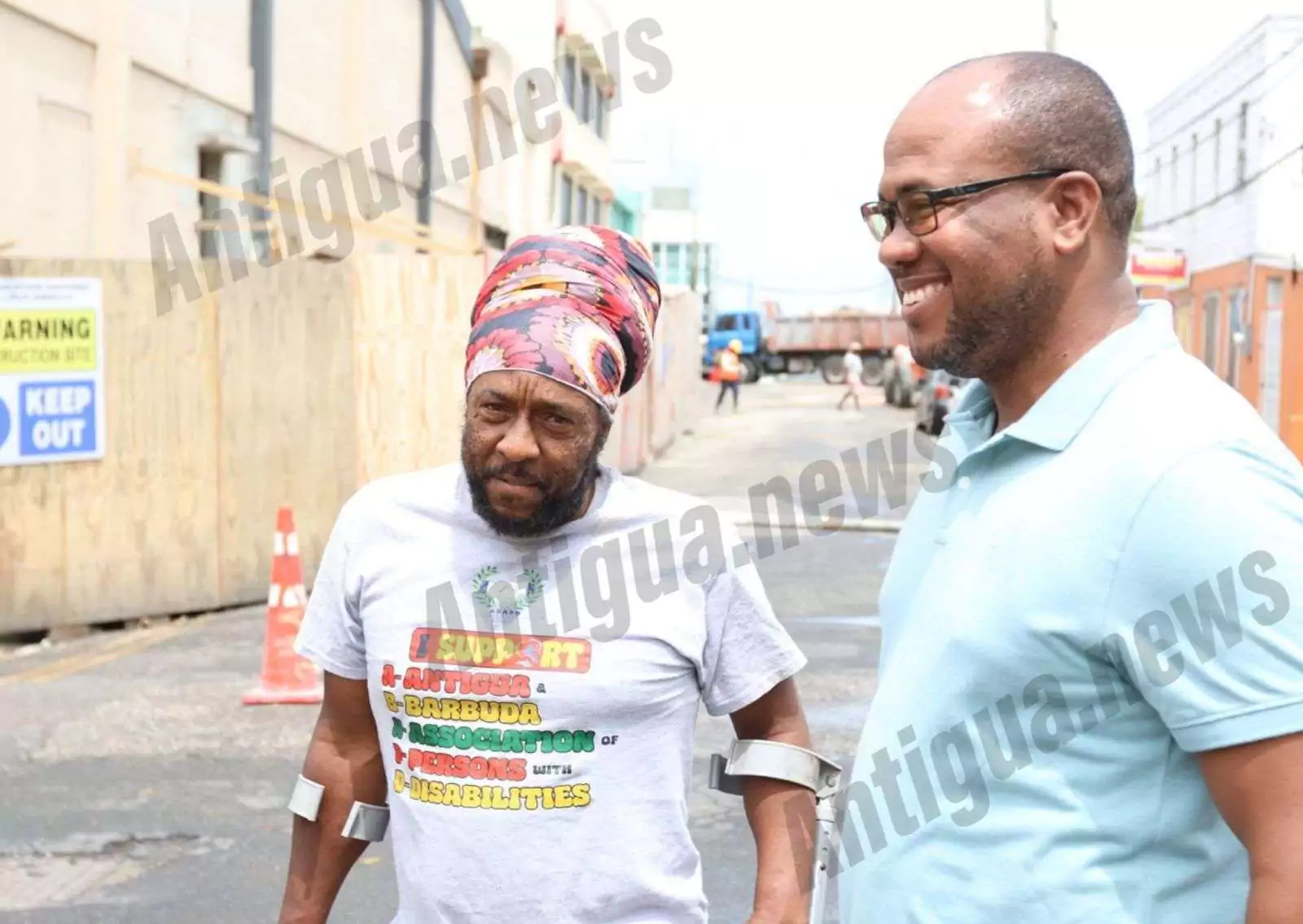
President of the Disabilities Association Bernard Warner & Minister of Social and Urban Transformation Rawdon Turner
“I’m just happy that I’m in a position where I can help make these changes by listening to our people and working for your people,” Turner said.
He added that the initiative represents the beginning of a broader effort to modernize the capital while ensuring no citizen is left behind.
“This is not just about removing concrete blocks. It’s about restoring dignity, safety and equal access for every person who uses this city,” Turner said.
President of the Disabilities Association Bernard Warner said the barriers routinely forced persons with disabilities into busy streets because sidewalks could not be accessed safely.
“This has been a major challenge for persons with disabilities for years. Many times people in wheelchairs are forced into the road because they simply cannot access the sidewalks safely,” Warner said.

Warner also pointed to the wider tourism implications, noting that many cruise ship visitors with disabilities are effectively unable to explore St. John’s beyond the Heritage Quay area because of inaccessible sidewalks, poor road conditions and heavy traffic.
“We have tourists coming off cruise ships who want to experience the city, but many of them cannot move around freely because the infrastructure just isn’t there,” he added.
His concerns mirror repeated criticisms from international travel accessibility reviewers who have warned wheelchair users against venturing too far into the city because of poor pedestrian infrastructure.
Wheelchair users Wendy Valentine and Kemoy George told Antigua.News that the barriers are only one part of a much larger accessibility problem affecting St. John’s.
“As someone with a disability, there are still many businesses I can’t enter on my own. Sometimes I have to wait outside while someone goes in for me, and that shouldn’t be the reality in 2026,” Valentine said.
George said true accessibility must go beyond simply removing barriers from sidewalks.
“This is a good start, but accessibility has to be about the entire experience, sidewalks, buildings, entrances and public spaces. People with disabilities deserve independence too,” George stated.
Meanwhile, visually impaired resident Gaynelle Augustus highlighted additional hazards throughout the capital, including damaged sidewalk grilles, missing ramps and holes in roadways that create safety risks and physical strain for persons navigating the city daily.
“The missing ramps and damaged grilles are dangerous for visually impaired people. There are places where you can easily trip or fall because the sidewalks are not properly maintained,” Augustus explained.
She also called for businesses and public buildings to install ramps fitted with handrails to make the city safer and more inclusive.
So far, the first two barriers at the intersection of High Street and Cross Street have already been removed.
Only 62 more remain.




I am so impressed with Mr Turner and what he has accomplished so far in such a short space of time in his ministry. Keep it up Seku
You know i never really understood while these big slap of concrete was placed there like a gigantic nonsense
I’m happy to see the government so engaging with the disability movement
Sounds like things are on the right track with improving the city.
Great vibes. And warner like to be in things so see him at the front