
OPINION: The Americas’ Unfinished Development Agenda

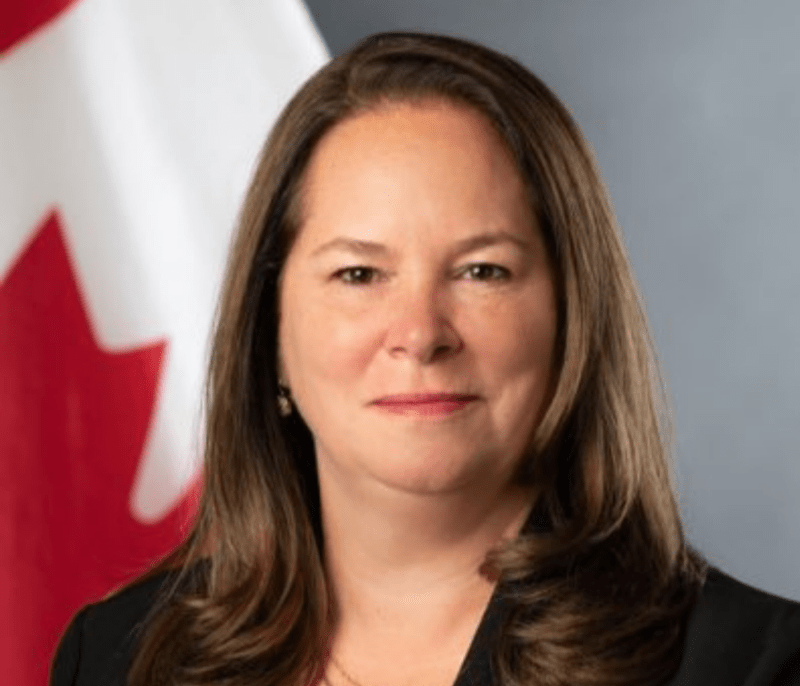

By Ambassador Isabelle Valois, Executive Secretary for Integral Development of the Organization of American States (OAS)
As we approach the 56th OAS General Assembly in Panama City, the Americas have an opportunity to reaffirm that a stable and prosperous hemisphere rests on the mutually reinforcing pillars of peace, democracy, security, and development. While significant progress has been achieved across the region, advancing economic, social, and human development remains a shared priority for many of our Member States.
Under the theme Strong Multilateralism, representatives from across the hemisphere will gather in Panama from June 22 to 24 to reaffirm the value of cooperation in addressing shared challenges and delivering meaningful results for the people of the Americas. In a region as diverse as ours, cooperation remains one of the most effective tools for sharing knowledge, building capacity, mobilizing resources, and advancing solutions that no country can achieve alone. Development is not separate from our goals for peace, security, and democratic governance, it is one of the foundations that make them possible.
At the OAS, we recognize that development is most effective when it is approached in an integrated manner. Access to education, robust job opportunities, environmental sustainability, innovation-forward and competitive economic environments are closely interconnected. Advancing these priorities together helps create conditions for more prosperous, resilient, and stable societies where human rights are respected, democracy can flourish and people can live in security. These challenges are particularly pronounced in small island developing states and other vulnerable economies, notably in the Caribbean and Central America.
Across the Americas, countries are facing development landscapes shaped by weather-related events, economic uncertainty, rapid technological change and persistent gaps in infrastructure, services and opportunities. The challenges are real: more than 160 million people in Latin America and the Caribbean still lack safe drinking water; half of all workers remain in informal jobs without basic protections; and nearly 10 million children[2] and youth are out of school. These realities highlight the urgent need to invest in education, skills, and access to opportunities so that people can build more secure and stable futures.
Countries are also stepping up to build resilience to severe meteorological events, modernize infrastructure, expand connectivity while making the most of innovation and digital technologies. Meeting these challenges will take practical support and strong partnership that help countries learn from each other and move faster toward shared goals.
Within this broader agenda, trade, investment, and economic integration are essential to inclusive growth. When aligned with strong institutions, security and democratic values they can strengthen competitiveness, expand markets, and create more resilient value chains. Supporting small businesses, enhancing supply chains and expanding digital trade can help ensure communities across the Americas see lasting benefits.
This economic agenda is part of a wider effort by the Executive Secretariat for Integral Development to support Member States in translating priorities into practical solutions that deliver tangible benefits for citizens.
The Secretariat works across key sectors to strengthen competitiveness and enterprise development, with a focus on building institutional capacity and advancing sustainable prosperity across the hemisphere.
The OAS occupies a unique place within the Inter-American system by bringing together political dialogue, development cooperation, partnerships, and knowledge exchange under a common framework enabling Member State to connect ideas to action and results.
In the Trifinio region shared by El Salvador, Guatemala, and Honduras, an OAS-supported initiative strengthened water security, benefiting more than 12,700 people and over 7,200 hectares of land. Through the Development Cooperation Fund, the OAS has committed US$1.875 million to support 14 projects advancing resilience, technological transformation, and institutional capacity across the hemisphere. These efforts bring more than seven decades of work alongside Members States to strengthen institutions, build technical capacity, and deliver shared solutions to common challenges.
In 2025 alone, OAS scholarship and training programs opened doors to 2,779 students unlocking an estimated US$19.5 million in educational opportunities across the hemisphere. The Rowe Fund expanded that impact with more than US$1 million in financing for students from 18 Member States attending 46 U.S. universities. Meanwhile the Americas Competitiveness Exchange (ACE), a flagship OAS initiative, continues to turn connection into action, facilitating over 900 cooperation agreements and partnerships including those sparked at its most recent gathering in Memphis Tennessee.
The Americas’ development agenda remains unfinished, and this moment demands renewed commitment to multilateralism grounded in measurable results. It is not enough to convene, we must deliver. By aligning efforts across governments, institutions, and communities, we can turn cooperation into outcomes that matter most: stronger economies, more resilient societies, and a more stable, democratic hemisphere. Only then can we translate ambition into progress and ensure that development delivers real prosperity for the people of the Americas.
This story was first published by Antigua News on : antigua.news/2026/06/19/opinion-the-americas-unfinished-development-agenda. © 2026 Antigua News. Republication without permission is not allowed.

About the author
The Editorial Staff refers to all reporters employed by Antigua.news. When an article is not an original creation of Antigua.news—such as when it is based on a press release, other media articles, letters to the editor, or court decisions—one of our staff members is responsible for overseeing its publication.
Read our editorial standards and corrections policy. Spotted an error? Contact the newsroom.
More from Antigua and Barbuda
View section
Rents Rise 9.3% as Housing and Utility Costs Keep Climbing
The housing and utilities index rose 13.5% over the year, its largest increase in the 13 months shown in the October report.
By Shermain Bique-Charles

Sandals Foundation’s EC$54,607 Literacy Project Brings New Library Signs to Five Antigua Schools
The signs mark the latest phase of a partnership between the Sandals Foundation and Hands Across the Sea that has provided books and reading resources for 1,192 students.
By Shermain Bique-Charles

Five Young Women Set Their Sights on Miss St. John’s Rural West 2027 Crown
Destiny Morris, Teshanya Francis, T’Nasia Thomas, Alexia Farrell and Otezzéa Luke have been officially introduced as contestants for the upcoming pageant, themed “BLOOM: The Art of Becoming.”
By Cory Wayland

Plans Advance to Restore Historic Museum of Antigua and Barbuda Building
World Monuments Fund representatives briefed Governor-General Sir Rodney Williams and Dame Sandra Williams on efforts to conserve and rehabilitate the historic courthouse in St. John’s.
By Cory Wayland
Comments
Be the first to comment.