
Antigua Will Not Sacrifice CIP Programme Even if UK and EU End Visa-Free Travel


Antigua and Barbuda will not dismantle its Citizenship by Investment Programme (CIP) even if Britain and the European Union revoke visa-free access for the country’s passport, Prime Minister Gaston Browne has declared.
Speaking on the Browne and Browne Show, Browne said the programme remains one of Antigua and Barbuda’s most important sources of non-tax revenue and is critical to financing national development.
He acknowledged that Caribbean countries face growing pressure from European governments over concerns that citizenship by investment programmes could provide criminals with easier access to Europe.
“There are these threats taking place within Europe,” Browne said.
Despite the possibility of further restrictions, Browne said his government has no intention of abandoning the programme.
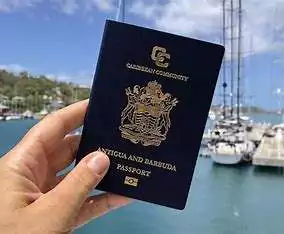
“With or without those visa-free arrangements, our CIP programme continues. It is too important a source of non-tax revenue to give it up.”
The Prime Minister argued that Antigua and Barbuda has significantly strengthened its due diligence systems and rejected suggestions that the country’s investment migration programme presents an unusual security risk.
According to Browne, no immigration programme anywhere in the world is completely foolproof, but Antigua’s system compares favourably with those operated by much larger countries.
He noted that even programmes in the United States, Canada and Europe have admitted individuals later linked to criminal activity.
Instead of imposing blanket restrictions, Browne said European governments should work more closely with Caribbean states on security cooperation, including biometric data sharing and intelligence exchanges.
He said Antigua has already implemented several reforms requested by international partners and remains willing to adopt additional safeguards.
Caribbean Programmes Under Growing Scrutiny
Citizenship by Investment programmes have become increasingly controversial across Europe.
The European Commission has repeatedly warned that visa-free access should not be linked to the sale of citizenship, arguing that wealthy individuals from high-risk countries could potentially exploit Caribbean passports.
The issue has become more pronounced following sanctions against Russia and increased international efforts to combat money laundering.
Several Caribbean countries, including Antigua and Barbuda, St. Kitts and Nevis, Dominica, Grenada and St. Lucia, jointly agreed last year to tighten regional standards governing their programmes.
PM Says Caribbean Being Unfairly Targeted
Browne accused larger countries of applying double standards.
He argued that wealthy investors could often obtain visas directly from Britain, Europe or North America based solely on their financial standing, making criticism of Caribbean programmes inconsistent.
The Prime Minister also challenged suggestions that Caribbean governments lack integrity in administering their programmes.
He said that during his 12 years in office he has never intervened to approve a citizenship application that had been rejected by the Citizenship by Investment Unit.
“I can say definitively that our programme is run with integrity,” Browne said, adding that Antigua’s system is “better run than many of those countries pointing fingers at us.”
He warned that removing visa-free access would unfairly punish small developing states that rely on investment migration to diversify their economies while offering little benefit to European security.
This story was first published by Antigua News on : antigua.news/2026/06/28/antigua-will-not-sacrifice-cip-programme-even-if-uk-and-eu-end-visa-free-travel. © 2026 Antigua News. Republication without permission is not allowed.

About the author
The Editorial Staff refers to all reporters employed by Antigua.news. When an article is not an original creation of Antigua.news—such as when it is based on a press release, other media articles, letters to the editor, or court decisions—one of our staff members is responsible for overseeing its publication.
Read our editorial standards and corrections policy. Spotted an error? Contact the newsroom.
More from Caribbean
View section
VIDEO: Doctors at Dominica China Friendship Hospital Stage Protest Outside Medical Facility
Healthcare professionals at the Dominica China Friendship Hospital gather outside the medical facility in an apparent protest, raising concerns over issues yet to be officially confirmed.
By Cory Wayland

St. Kitts DPP Seeks Antigua’s Help in Outstanding Case Involving Former Resort Clerk
By Shermain Bique-Charles

Royal Caribbean in Talks to Buy Half of Sandals in Reported $3 Billion Deal
By Shermain Bique-Charles

Four Killed in Latest US Military Strike on Suspected Drug Vessel in Caribbean
By Shermain Bique-Charles
Comments (6)
Themba June 28, 2026, 2:54 PM
Apex Jones June 28, 2026, 3:02 PM
Anonymous June 29, 2026, 8:00 AM
Mina June 29, 2026, 12:19 PM
Liz June 29, 2026, 10:04 PM
Cherry July 2, 2026, 11:11 AM