












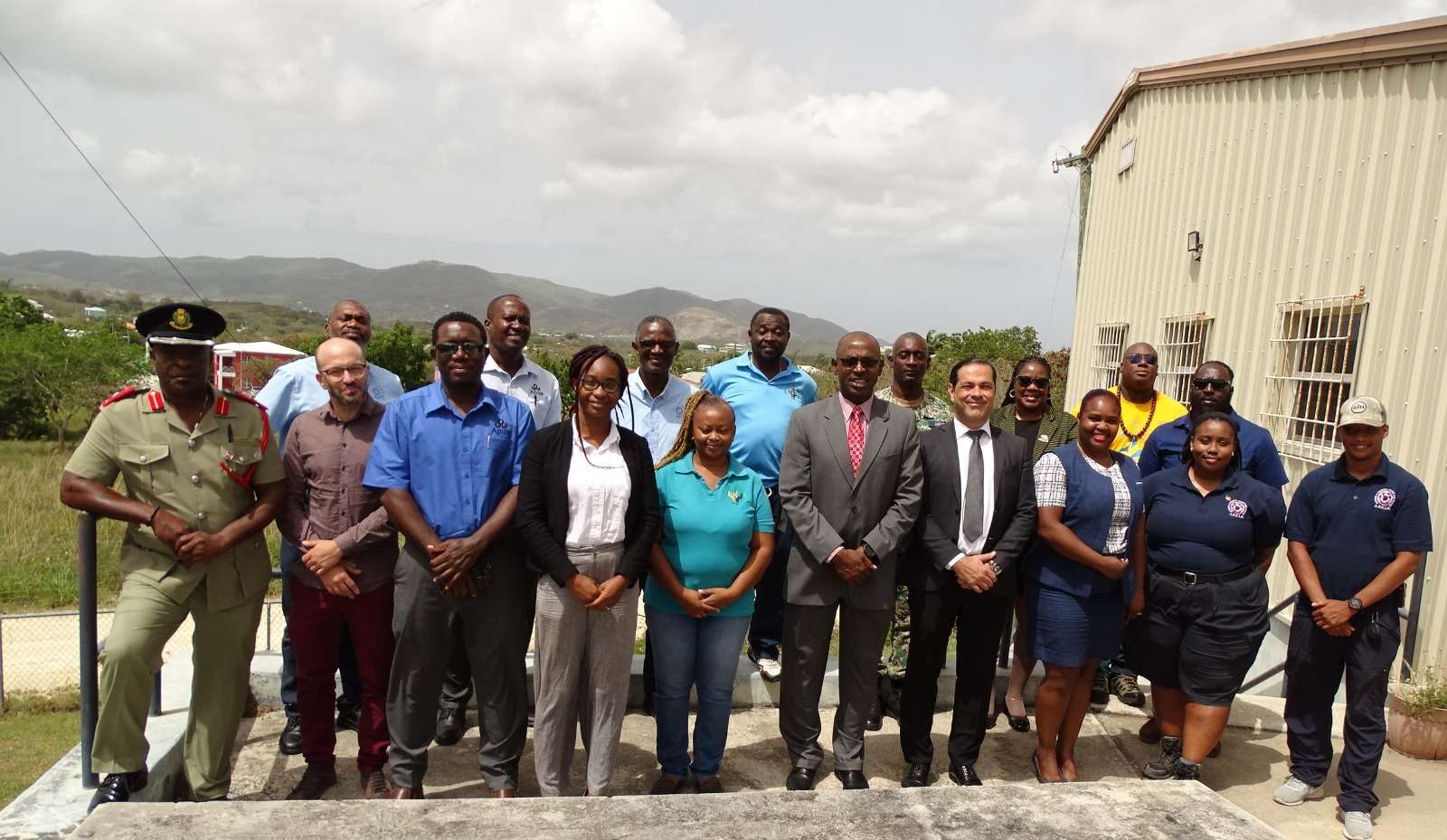
Antigua and Barbuda has taken another significant step toward strengthening its disaster preparedness and climate resilience following the successful completion of a two-day national workshop aimed at developing Standard Operating Procedures (SOPs) for flood forecasting and early warning.
Hosted by the Antigua and Barbuda Meteorological Service (ABMS) in collaboration with the World Meteorological Organization (WMO), the workshop brought together government agencies, emergency responders, utility providers, academics and private sector stakeholders at the National Office of Disaster Services (NODS) to establish a coordinated national framework for flood forecasting and warning.
The initiative formed part of the Early Warning Systems for Floods (EWS-F) Project, funded by the United States Department of State, and supports Antigua and Barbuda’s broader efforts to strengthen climate resilience, disaster risk reduction and multi-hazard early warning systems.
The workshop was one of the flagship initiatives under the ABMS Meteorological Renaissance 2030 programme and contributes to the global Early Warnings for All (EW4ALL) initiative.
Representatives from the Antigua Public Utilities Authority, Ministry of Agriculture, Ministry of Works, Survey Department, Department of Environment, Development Control Authority, St. John’s Development Corporation, National Office of Disaster Services, Antigua and Barbuda Search and Rescue (ABSAR), the insurance sector, the University of the West Indies and the Antigua and Barbuda Meteorological Service participated in the sessions.

Throughout the workshop, participants reviewed the country’s end-to-end flood forecasting and warning processes, clarified institutional responsibilities, strengthened interagency coordination and communication, and developed draft national Standard Operating Procedures designed to improve the dissemination of flood warnings and emergency response.
A key outcome of the workshop was laying the groundwork for the implementation of the Urban and Flash Flood Information System (UFFIS), an advanced forecasting and decision-support platform that will significantly enhance the country’s ability to monitor, forecast and respond to urban and flash flood events.
Once operational, UFFIS will provide authorities with sophisticated tools to anticipate flood impacts, improve preparedness and support faster, evidence-based decision-making before, during and after flood emergencies.
The project places Antigua and Barbuda among a small group of Caribbean nations set to benefit from the advanced technology, positioning the country as one of the regional leaders in modern flood forecasting and climate resilience.
Director of the Antigua and Barbuda Meteorological Service, Dale Destin, described the workshop as a major milestone in strengthening the country’s early warning capabilities.
“Flood warnings must be more than forecasts—they must be actionable guidance that leads to timely decisions and protective action,” Destin said.
“This workshop represents a critical step toward building a truly integrated, impact-based flood early warning system for Antigua and Barbuda. By bringing together all relevant stakeholders, we are strengthening the institutional partnerships and operational procedures necessary to ensure that warnings reach the right people at the right time and lead to meaningful action.”
The workshop concluded with a renewed commitment among participating agencies to continue collaborating on the development of a comprehensive, sustainable and nationally coordinated flood early warning system capable of protecting lives, livelihoods and critical infrastructure as climate-related hazards become increasingly frequent and severe




Brace for the inconvenience. I can only imagine the mess that will happen during CHOGM when movement will be restricted in town
This was meant for the CHOGM STORY